
Choosing the right machine can determine whether an ABS sheet line runs smoothly or wastes expensive resin. For global buyers, an Abs Board Making Machine must deliver stable output, accurate thickness, and dependable long-term performance. A polished brochure is not enough. Real decisions require closer inspection.
This guide reviews ten leading ABS board making machines from a buyer’s perspective. It considers extrusion capacity, screw design, heating-zone control, die accuracy, calibration systems, and cooling efficiency. These details affect board flatness, surface finish, and production speed. A machine producing 2-millimeter boards may need different controls from one producing 8-millimeter panels. Small differences matter.
Energy consumption also deserves attention. So does maintenance. Easy access to filters, heaters, rollers, and electrical cabinets can reduce costly downtime. We also examine automation, operator safety, spare-parts support, installation guidance, and compatibility with local technical standards. Reliable suppliers should provide clear specifications, traceable testing records, and realistic performance data. Promises without evidence deserve caution.
No machine is perfect. A high-output model may demand greater floor space and stronger cooling infrastructure. A lower-cost option may create hidden expenses through slower service or difficult calibration. Buyers should compare total ownership costs, not only purchase prices. This overview is a practical starting point, not a substitute for factory trials. Request sample production. Inspect the board closely. Then question every assumption before signing.
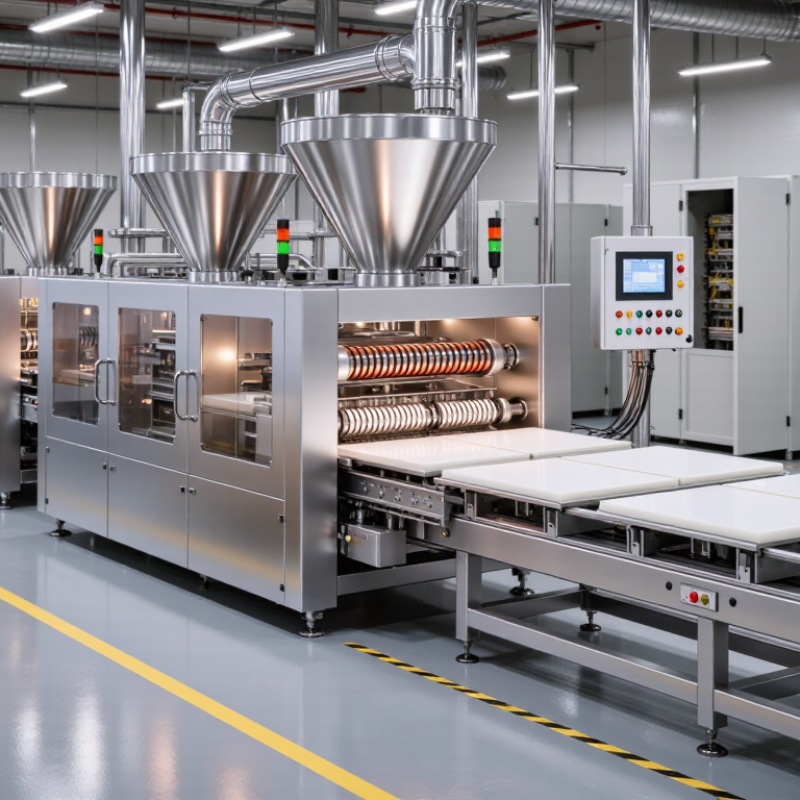
ABS board making machines are industrial extrusion systems that convert ABS resin pellets into flat, durable sheets. These machines commonly include a drying unit, feeding system, extruder, filtration section, flat die, calender rolls, cooling table, and cutting equipment.
The process starts with carefully dried ABS pellets. Moisture can cause bubbles, silver streaks, or weak surfaces. The extruder then melts the material inside a heated barrel. A rotating screw mixes and pushes the melt forward. A screen changer removes contaminants before the material reaches the flat die. The die spreads the melt into a wide, continuous sheet.
The calender rolls control thickness and surface texture. Cooling rollers stabilize the board before trimming and stacking. Small temperature changes can create visible warpage. Operators should monitor melt pressure, roll temperature, line speed, and sheet thickness during production. A reliable thickness gauge helps, but it cannot replace regular manual checks. Production is rarely perfect. Even an advanced line may need adjustments for different colors, recycled content, or board widths. Buyers should examine heating accuracy, screw design, energy use, maintenance access, and safety controls. These details often matter more than impressive output figures.
Selecting an ABS board making machine starts with the production method, not the advertised output. A single-screw extrusion line suits standard ABS sheets with stable formulations and moderate thickness. It offers simpler control, lower maintenance, and consistent melt flow. The line usually includes a hopper dryer, extruder, screen changer, T-die, three-roll calender, haul-off unit, and cutter. Surface finish matters here. Small roller-temperature changes can affect gloss and flatness.
For layered boards, a co-extrusion machine is more suitable. It combines separate ABS or modified polymer layers through a feedblock or multi-manifold die. This method can create a tough core, colored surface, or improved impact layer. Twin-screw extruders are useful when the formulation contains fillers, recycled material, or several additives. Their stronger mixing action improves dispersion, but excessive shear may increase heat and degrade the resin. That risk is easy to underestimate.
Some factories use extrusion lines followed by thermoforming equipment for shaped panels and interior components. Others select a compact laboratory or pilot line before investing in full production. Buyers should inspect die design, temperature zones, vacuum calibration, cooling capacity, and automatic thickness control. Ask for trial sheets using your actual resin and target thickness. A machine can perform well in a showroom and behave differently during long production runs. Energy use, spare-part access, operator training, and regional electrical standards also deserve careful review. No single configuration fits every ABS board plant.
When comparing the 10 best ABS board making machines for global buyers, specifications matter more than showroom claims. PlasticsEurope’s Plastics – the Fast Facts 2023 reported 400.3 million tonnes of global plastics production in 2022. That scale makes stable, repeatable sheet production essential.
Check the usable board width, thickness range, extrusion output, and line speed. Confirm whether the machine maintains thickness within ±0.1 millimetre across the sheet. Temperature zones should provide independent control, especially near the die and calender rolls. Ask for measured energy consumption per kilogram, not only installed motor power. Cooling capacity, roll surface quality, automatic trimming, and scrap-recovery options also affect operating cost. ISO 20430:2020 provides a useful reference for plastics machinery safety requirements. However, compliance documents should be verified for the destination market.
Tips: Request a factory acceptance test using your ABS grade, colour, and target thickness. Record output, surface defects, edge waste, and power use. A lower price may hide expensive changeovers. Service response times also deserve a written limit. My scoring sheets are never perfect; operator skill and local utilities can change results. Leave space for those uncertainties.
Selecting an ABS board machine depends on thickness, surface quality, output volume, and local power conditions.
A twin-screw extruder is suitable for stable compounding and high-volume production. A single-screw extruder fits simpler recipes and lower investment plans. A co-extrusion line creates multilayer boards with improved appearance or impact resistance.
A sheet calender controls thickness for furniture panels and interior partitions. Check melt temperature control carefully. It affects every board.
An embossed sheet line suits decorative wall panels and textured surfaces.
A high-speed cooling roller system works well for thin boards requiring smooth finishes.
A thermoforming machine shapes ABS boards into vehicle trims, equipment housings, and protective covers.
A vacuum forming unit handles prototypes and short production runs with less tooling pressure.
A CNC trimming machine cuts openings for electrical cabinets and custom enclosures. Small errors become visible quickly.
A laminating machine bonds films, foils, or printed layers to boards used in retail fixtures and cleanroom partitions.
An automatic stacking and packing system protects finished sheets during export and warehouse handling. These ten machine types serve different applications, not identical factories.
Buyers should test their own resin blend, target thickness, and cooling speed before signing a purchase order. In practice, advertised output can fall when color changes or recycled content increases. That limitation deserves honest review.
Safety guarding, temperature alarms, electrical compatibility, spare parts, and operator training also deserve written confirmation.
Choosing an ABS board-making machine requires more than comparing output figures. Grand View Research estimated the global ABS market at about USD 27 billion in 2023. Demand is growing, but machine suitability still depends on board thickness, resin grade, width, and local power standards. Ask for verified output tests using your actual ABS material.
Installation planning often decides early performance. Confirm floor loading, ventilation, chilled-water capacity, electrical frequency, and spare-parts availability before shipment. A commissioning checklist should record melt temperature, screw speed, die pressure, roller temperature, and sheet flatness. The International Energy Agency reports that industrial motors account for roughly 70% of industrial electricity consumption. Efficient drives matter. Small utility errors can become permanent operating costs.
Maintenance needs discipline, not optimism. Inspect heaters, thermocouples, filters, rollers, and haul-off belts on a fixed schedule. The U.S. Department of Energy notes that compressed-air leaks can waste 20–30% of compressor output. Leak testing is simple. It is often ignored. Keep maintenance logs with photos and measured values, not vague comments such as “machine checked.” A lower-priced line may look attractive, yet weak technical training can erase the saving within months. Buyers should also challenge supplier assumptions; an installation plan that works in one climate may fail in a humid coastal plant. Performance claims deserve independent verification.
| Rank | Machine Configuration | Typical Board Width | Typical Thickness | Typical Output | Main Production Advantage | Buying Considerations | Installation Requirements | Maintenance Priorities | Recommended Buyer Profile |
|---|---|---|---|---|---|---|---|---|---|
| 1 | Single-layer ABS sheet extrusion line | 600–2,200 mm | 1–8 mm | 150–500 kg/h | Straightforward production, lower capital complexity, and easy material changeover. | Check screw design, die width, melt filtration, temperature zones, and compatibility with recycled ABS. | Requires level foundations, cooling-water circulation, compressed air, electrical capacity, and adequate line clearance. | Inspect heaters, thermocouples, screw and barrel wear, die lips, rollers, and hydraulic oil. | Small and medium processors producing general-purpose ABS boards. |
| 2 | Twin-screw ABS sheet extrusion line | 800–2,500 mm | 1.5–10 mm | 250–800 kg/h | Improved mixing, pigment dispersion, additive dosing, and processing of blended feedstocks. | Evaluate torque, screw segmentation, venting, feeding accuracy, and wear-resistant components. | Needs stronger electrical supply, stable material feeding, dust control, cooling water, and trained commissioning staff. | Monitor screw elements, barrel liners, gearbox lubrication, feeders, vents, and pressure fluctuations. | Manufacturers requiring consistent compounding and flexible ABS formulations. |
| 3 | Co-extrusion ABS/ABS multilayer board line | 1,000–3,000 mm | 2–12 mm | 300–1,000 kg/h | Combines different ABS grades, colors, or recycled cores in one board. | Confirm layer-ratio control, melt-pressure balancing, feedblock or multi-manifold design, and recipe software. | Requires synchronized extruders, additional material lines, accurate leveling, and experienced commissioning technicians. | Clean co-extrusion channels, calibrate dosing systems, inspect melt seals, and verify layer thickness regularly. | Producers of cost-optimized, decorative, or performance-enhanced ABS boards. |
| 4 | ABS/PMMA cap-layer co-extrusion line | 1,000–2,500 mm | 1.5–8 mm | 250–700 kg/h | Provides improved surface gloss, weather resistance, color stability, and appearance. | Verify resin drying capability, interface adhesion, UV-stabilizer handling, and surface-quality controls. | Needs controlled resin storage, drying systems, synchronized extruders, clean-room practices, and cooling capacity. | Maintain dryers, filters, die surfaces, clean-room conditions, and cap-layer thickness sensors. | Automotive, sanitary, appliance, and exterior-panel suppliers needing premium surfaces. |
| 5 | High-speed thin ABS sheet line | 600–2,000 mm | 0.5–3 mm | 300–900 kg/h | High line speed and efficient production of lightweight sheets for forming applications. | Assess haul-off speed, automatic thickness control, cooling-roll design, edge-trim recovery, and web handling. | Requires precise alignment, vibration control, fast response drives, chilled water, and operator training. | Check roll runout, nip pressure, edge-trim knives, tension systems, sensors, and drive calibration. | High-volume producers of thermoforming and interior component sheet. |
| 6 | Heavy-gauge ABS board extrusion line | 1,000–3,000 mm | 8–20 mm | 250–750 kg/h | Produces rigid, impact-resistant boards for industrial, transport, and construction uses. | Check extruder torque, die strength, roller gap range, cooling capacity, and board flatness control. | Requires reinforced flooring, lifting equipment, high-capacity cooling, and sufficient downstream handling space. | Inspect high-load bearings, hydraulic systems, rollers, die bolts, cooling circuits, and cutting equipment. | Industrial board manufacturers prioritizing rigidity and impact performance. |
| 7 | ABS recycled-content sheet line | 800–2,500 mm | 1–10 mm | 200–650 kg/h | Reduces virgin-material consumption when feedstock quality is properly controlled. | Evaluate shredding, metal separation, filtration, degassing, moisture control, and feedstock consistency. | Needs material-preparation equipment, dust extraction, odor management, stable power, and additional storage zones. | Replace screens according to pressure trends, clean filters, inspect vents, and test recycled feedstock regularly. | Buyers seeking material-efficiency improvements and controlled recycled content. |
| 8 | Textured or embossed ABS board line | 800–2,400 mm | 1–8 mm | 200–600 kg/h | Creates repeatable decorative or functional surface patterns during continuous production. | Check embossing-roll material, pattern depth, release performance, roll temperature, and registration control. | Requires accurate roll alignment, controlled cooling, safe roll-access design, and pattern-change procedures. | Clean and protect patterned rolls, inspect bearings, control roll temperature, and verify surface depth. | Manufacturers of decorative panels, flooring components, and non-slip surfaces. |
| 9 | Automatic cut-to-length ABS board line | 600–2,500 mm | 1–12 mm | 180–600 kg/h | Improves length accuracy, stacking consistency, and labor efficiency. | Confirm length tolerance, encoder accuracy, saw or knife selection, stacking format, and production data logging. | Needs synchronized haul-off and cutting controls, guarded moving parts, compressed air, and floor space for stacking. | Maintain blades, guides, sensors, encoders, conveyors, pneumatic components, and safety interlocks. | Export-oriented plants supplying standardized board sizes and repeat orders. |
| 10 | Compact laboratory or pilot ABS sheet line | 300–800 mm | 0.5–6 mm | 10–80 kg/h | Supports product development, formulation trials, and small-batch customer sampling. | Prioritize modular dies, small-batch changeover, data recording, sample collection, and easy cleaning. | Usually requires less floor area and utility capacity, but still needs ventilation, cooling, and electrical protection. | Clean the small screw, die, feed system, and cooling rolls after each material trial. | Research centers, technical institutes, and manufacturers developing new ABS grades. |
It converts dried ABS resin pellets into flat, continuous sheets. The finished boards can have controlled thickness, gloss, and surface texture.
Dried pellets enter the feeding system and heated extruder. A rotating screw melts and pushes the material forward. A screen changer removes contaminants. A flat die spreads the melt into a wide sheet. Calender rolls shape and cool it before cutting.
Moisture may create bubbles, silver streaks, or weak surfaces. Proper drying improves sheet appearance and strength. Small errors matter.
A single-screw extrusion line suits stable formulations and moderate sheet thickness. It usually offers simpler operation and lower maintenance. Typical equipment includes a dryer, extruder, screen changer, flat die, three-roll calender, haul-off unit, and cutter.
Co-extrusion combines separate material layers through a feedblock or multi-manifold die. It can create a tough core, colored surface, or improved impact layer. Layer control must remain stable.
Twin-screw systems help mix fillers, recycled material, and several additives. Strong mixing can improve dispersion. Excessive shear may raise heat and degrade the resin. This risk is easy to underestimate.
Operators should check melt pressure, roll temperature, line speed, and sheet thickness. Small temperature changes can cause visible warpage. A thickness gauge helps, but manual checks still matter.
Review heating accuracy, screw design, energy use, maintenance access, and safety controls. Inspect the die, cooling capacity, thickness control, and spare-part access. Ask for trial sheets using your actual resin and target thickness. A showroom test may not reflect long production runs.
No single configuration fits every plant. Board width, color, recycled content, additives, and thickness may require adjustments. Production is rarely perfect. This limitation deserves honest planning.
This guide introduces the Abs Board Making Machine, explaining how it transforms ABS resin into consistent boards through material feeding, heating, extrusion, shaping, cooling, and cutting. It outlines the main machine types used for different production methods, including standard sheet extrusion, multilayer board production, and systems designed for specialized surface or thickness requirements. Readers will also learn which specifications matter most when comparing international options, such as output capacity, board dimensions, thickness tolerance, temperature control, energy efficiency, automation level, and compatibility with different ABS formulations.
The article presents ten practical machine configurations and highlights the applications best suited to each one, from general-purpose manufacturing to high-precision industrial boards. It also covers essential considerations for global buyers, including supplier evaluation, factory preparation, shipping, installation, operator training, spare parts, safety procedures, and routine maintenance. Together, these insights help manufacturers select reliable equipment, plan production efficiently, and achieve stable board quality over the machine’s service life.