China’s ABS sheet sector is expanding with demand from automotive interiors, luggage, appliances, and technical housings. This growth makes the Extrusion Line For Abs Boards a practical investment decision, not merely a machinery comparison.
Grand View Research estimates that the global ABS market will continue growing through 2030, supported by durable consumer and automotive applications. Plastics Europe reported approximately 414 million tonnes of global plastics production in 2023, showing the scale of the wider manufacturing ecosystem. However, ABS board production requires more than a powerful extruder. Buyers should examine twin-screw stability, melt filtration, die uniformity, roller cooling, thickness control, and energy consumption. Small temperature variations can create visible gloss differences across a two-metre sheet. That detail matters.
Chris Rauwendaal, author of Polymer Extrusion, describes the process clearly: “Extrusion is a process in which a polymer is forced through a die.” His statement remains simple, but machine selection is not. A reliable line must balance output with residence time, thermal control, and low material waste. Supplier testing also matters. Request actual ABS trials, measured thickness data, and samples from continuous production. Brochures are not enough.
This China Top 10 review compares manufacturers through engineering capability, after-sales support, component quality, customization, and operating evidence. The ranking is useful, yet imperfect. Public data can be incomplete, and quoted output may reflect ideal conditions. Buyers should verify every figure before signing a contract. The best Extrusion Line For Abs Boards is not always the fastest one. It is the line that produces consistent boards, manageable scrap, and dependable results over years.
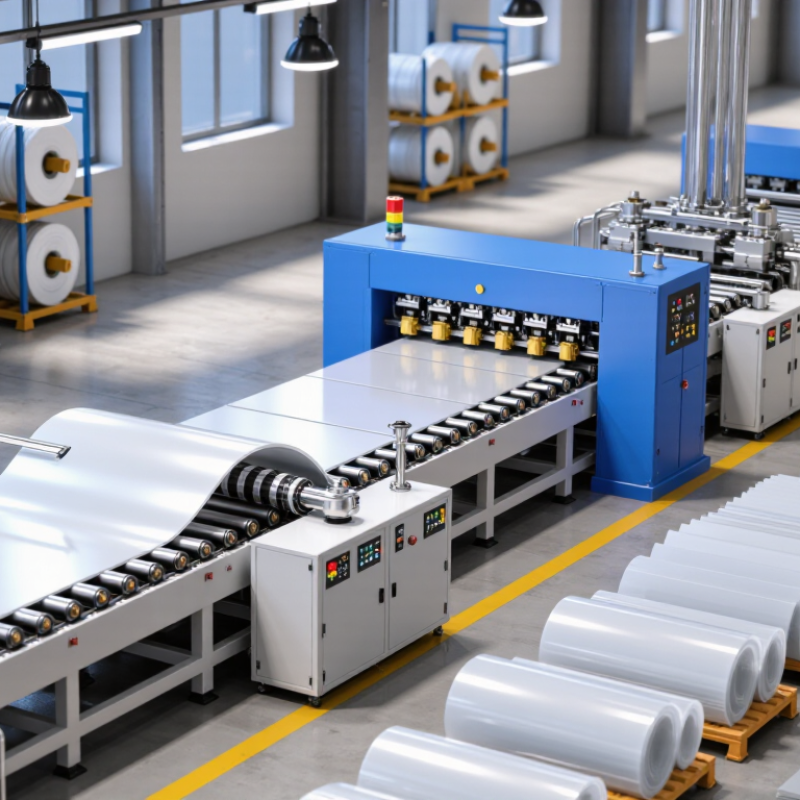
ABS Board Extrusion Line Fundamentals and Selection Criteria
China Top 10 Extrusion Lines for ABS Boards
ABS Board Extrusion Line Fundamentals and Selection Criteria
ABS board production starts with stable feeding, controlled melting, and uniform sheet forming. ABS is moisture-sensitive enough to require proper drying before extrusion. Wet pellets can create silver streaks, bubbles, and weaker edges. A practical line often combines gravimetric dosing, a vented extruder, a wide coat-hanger die, and a three-roll calender. Temperature control must remain steady across every zone. Small fluctuations can visibly change gloss and thickness.
Industry data supports careful capacity planning. PlasticsEurope reported global plastics production of 413.8 million tonnes in 2023. Grand View Research estimated the global ABS market at about USD 26 billion in 2023. These figures indicate strong material demand, but they do not justify purchasing the largest line. A 1,200-millimeter die may be excessive for narrow boards and frequent color changes. Output should match actual orders, not optimistic forecasts.
Selection should examine screw diameter, length-to-diameter ratio, maximum output, die lip adjustment, cooling efficiency, and automatic thickness control. For board production, a stable melt pump can reduce pressure variation and improve gauge consistency. Energy consumption also deserves measurement, especially during long production runs. I have seen specifications look impressive while operator access was poor. That matters. A line that is difficult to clean may lose more production time than it gains in rated capacity. Reports provide benchmarks, but factory trials remain essential. Testing one target thickness is not enough. Test corners, start-up waste, surface gloss, and dimensional stability too.
How China’s Top 10 ABS Extrusion Lines Are Evaluated
China’s top ten ABS extrusion lines should be evaluated through measurable production evidence, not showroom appearance.
I would begin with output stability during a continuous trial. The line should maintain board thickness, width, and surface quality for several hours. Small fluctuations matter. A 3.0-millimeter board should not drift noticeably across the sheet.
Experienced evaluators inspect the drying system, feeding accuracy, screw design, and melt temperature control. ABS can show warping, silver streaks, or uneven gloss when moisture handling is weak. A calibrated die, steady cooling rolls, and reliable haul-off equipment help control these defects. Test samples should be checked for impact strength, flatness, hardness, and dimensional stability under recognized laboratory methods. Factory records are useful, but independent measurements are stronger.
Energy consumption, changeover time, and maintenance access also separate capable lines from average ones. Operators should explain alarm systems, spare-part availability, and cleaning procedures without hiding practical limitations. I would request production data from different board thicknesses, because one successful trial proves little. Some evaluations still overvalue maximum speed. That can be misleading. Lower speed with consistent quality may deliver better real-world value. Documentation, worker training, and after-sales response deserve equal attention. My own assessment would include repeat trials, because even well-designed equipment can perform differently after installation.
Profiles of the Top 10 Chinese ABS Board Extrusion Lines
China’s leading ABS board extrusion lines differ in output, control, and practical flexibility. This profile focuses on ten representative line types used by experienced Chinese manufacturers. The ranking is indicative, not absolute.
The first line emphasizes high-throughput production, with twin-screw processing and automatic thickness control. The second supports medium-width boards for appliance panels and interior components. The third uses a strong melt filtration system, helping reduce black specks and unstable surfaces. The fourth is designed for multilayer ABS boards, combining recycled material with a controlled virgin-material layer. The fifth focuses on narrow boards and frequent size changes. It saves floor space. The sixth line offers precise temperature zoning for glossy or textured surfaces. The seventh is built for thick boards, where cooling speed strongly affects flatness. The eighth uses servo-driven haul-off equipment for steadier sheet dimensions. The ninth targets lower-energy operation through improved barrel insulation and motor control. The tenth combines online inspection with automatic trimming, although operators still need to verify edge quality manually.
In practice, buyers should examine output records, die design, calibration methods, and maintenance access. A polished specification sheet is not enough. Trial production reveals more. ABS can react differently after pigment, filler, or recycled content changes. This remains a common weakness in rushed evaluations. Reliable suppliers provide sample data, dimensional reports, and clear replacement schedules. They also explain limits honestly. No extrusion line is perfect. Skilled operators, stable material preparation, and regular calibration often determine whether these ten profiles perform consistently on the factory floor.
China Top 10 Extrusion Lines for ABS Boards
Comparison of representative ABS board extrusion-line profiles by nominal output capacity. The profiles reflect commonly published technical ranges for Chinese flat-sheet extrusion equipment, while company and brand names are intentionally omitted.
Higher nominal output is generally associated with larger screw diameters, wider die systems, and greater motor power. Actual production depends on ABS grade, board thickness, recycled content, cooling conditions, and operating parameters.
Performance, Output, Materials, and Technology Comparison
China Top 10 Extrusion Lines for ABS Boards
Performance, Output, Materials, and Technology Comparison
China’s top ten ABS board extrusion lines should be judged by measured results, not catalog claims. An experienced buyer should compare output, thickness stability, energy use, and continuous operating time. Typical production rates may range from 150 to 500 kilograms per hour, depending on board width, thickness, and formulation. Output is not everything. A fast line can still produce uneven edges or visible surface marks.
Material flexibility strongly affects performance. Reliable systems should process virgin ABS, approved regrind, impact modifiers, and flame-retardant formulations with stable feeding. Proper resin drying reduces bubbles and silver streaks. Melt filtration also protects the board surface from contamination. Single-screw systems may suit stable formulations, while twin-screw systems offer better mixing for complex materials. The choice depends on the recipe.
Technology comparison should include automatic thickness control, vacuum calibration, roller temperature control, and online inspection. These features help maintain flatness across wide boards. Practical factory trials matter more than polished demonstrations. Real trials decide. Buyers should record melt temperature, motor load, cooling time, and thickness variation during several production shifts. Some lines perform well with thin sheets but struggle with thicker boards. That weakness deserves attention. Energy data can also be incomplete, especially when auxiliary equipment is excluded. A careful evaluation should test the complete line, review maintenance records, and verify output using the intended ABS formulation.
Choosing the Right ABS Board Extrusion Line for Your Factory
China Top 10 Extrusion Lines for ABS Boards
Choosing the Right ABS Board Extrusion Line for Your Factory
Selecting an ABS board extrusion line requires more than comparing advertised output. A factory should match screw diameter, die width, heating zones, and cooling capacity with its actual product range.
Grand View Research estimated the global ABS market at approximately USD 19 billion in 2023, with continued growth expected through 2030. That trend supports investment, but demand alone does not justify an oversized line.
Start with production evidence. Request trial data using your target ABS grade, thickness, color, and recycled content. Measure output stability, sheet flatness, surface gloss, and edge waste for several hours. A line producing 500 kilograms per hour on paper may perform differently with a wide, thin board.
Cooling rolls matter greatly here. Uneven temperature control can create warping, especially near the board edges.
Energy use deserves equal attention. The International Energy Agency reports that industry remains one of the largest global energy consumers, so inefficient heating systems can weaken long-term margins. Check heater response, motor efficiency, insulation, and automatic temperature control.
The OECD’s Global Plastics Outlook also reports that only about 9% of plastic waste is recycled globally. A line prepared for controlled recycled ABS may improve material efficiency, but quality can vary. That part is often underestimated.
Ask for documented tests, maintenance records, spare-parts availability, and operator training. A lower purchase price may become expensive when downtime, unstable thickness, or difficult cleaning appears later.
Conclusion
This guide explains the fundamentals of an Extrusion Line For Abs Boards and the key factors factories should consider before making a purchase. It covers the extrusion process, including material feeding, melting, mixing, sheet forming, cooling, trimming, and surface treatment. To evaluate China’s top 10 ABS board extrusion lines, the comparison focuses on production stability, output capacity, energy efficiency, automation, temperature control, thickness accuracy, maintenance requirements, and overall operating cost.
The article also presents general profiles of ten leading Chinese extrusion line solutions without emphasizing specific brands. Their performance is compared according to material compatibility, board dimensions, production speed, technology integration, quality consistency, and adaptability to different manufacturing conditions. Finally, the guide offers practical advice for selecting the most suitable equipment based on factory space, target output, ABS formulation, labor availability, investment budget, and long-term expansion plans. This structured approach helps manufacturers identify an efficient and reliable line that matches their product goals.