
How to Choose a High Speed ABS Board Extrusion Line?

Time:2026-09-28 Author:Charlotte
0%

Choosing a High-Speed Abs Board Extrusion Line is not simply a matter of buying the machine with the highest advertised output. The line must match the board’s thickness, width, surface finish, and intended use. A fast line can still produce uneven sheets. Watch the melt flow, calibrator temperature, haul-off speed, and cutter timing during a trial. These details affect whether a board leaves the line flat, consistent, and ready for further processing.

Small details matter. A supplier’s headline capacity is only a starting point; ask how it was measured and with which material. Request a production trial using your target formulation, then inspect sample boards for thickness variation, edge quality, and surface marks. Plastics-processing expert Dr. David Kazmer’s work offers a useful principle, paraphrased here: equipment and process settings should be matched to material behavior and product requirements. This is a paraphrase, not a verified verbatim quotation. That distinction matters when evaluating technical claims.

Also examine the downstream equipment. A reliable stacker and cooling arrangement can prevent avoidable handling problems, while clear maintenance access may save time between runs. Ask for documented test results, operator training, spare-parts support, and references from comparable installations. Do not overlook noise, energy use, or the space required for safe material handling. There is no perfect line for every factory. The right choice depends on the products you actually plan to make—and on whether the supplier can demonstrate stable performance, not just promise it.
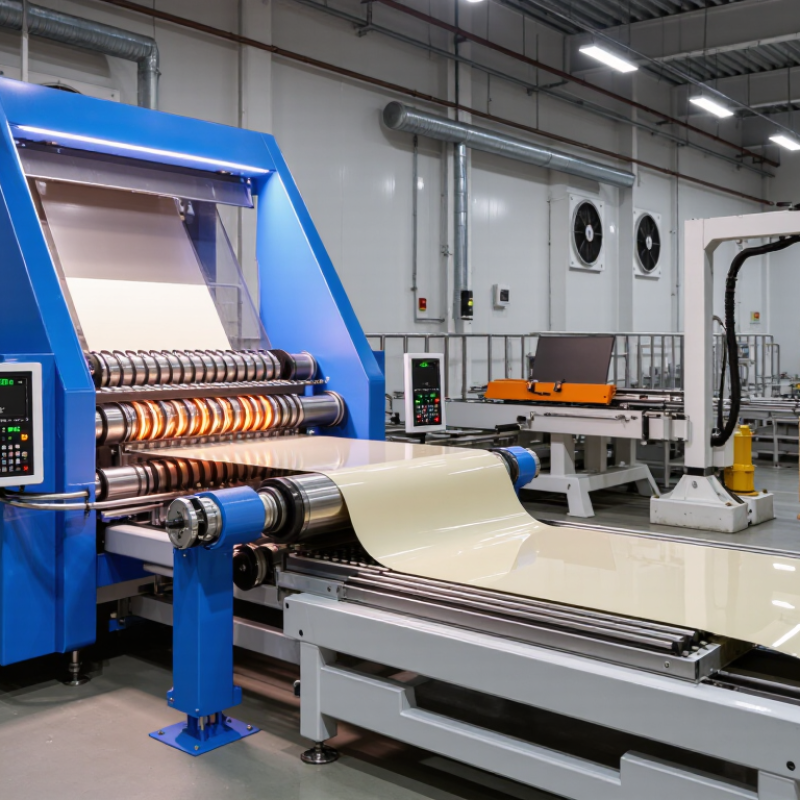
How to Choose a High Speed ABS Board Extrusion Line?

Define the Production Requirements for ABS Boards

Defining production requirements starts with the board, not the machine’s headline speed. Specify finished width, thickness range, length, surface finish, and acceptable dimensional variation. A 3 mm sheet for interior trim has different cooling and handling needs from a thick, rigid panel. Record the resin grade, color, additives, and recycled-content share, since these can affect melt behavior and consistency. Targets change. Grand View Research’s 2023 Acrylonitrile Butadiene Styrene Market report estimated the global ABS market at about US$29.6 billion. This is market value, not board demand, but it signals a substantial material sector.

Then translate the product specification into a realistic output target. Estimate kilograms per hour using board dimensions, density, and planned production hours; include trim waste and changeover time. Ask suppliers to state sustained output at your actual thickness and width, not only peak line speed. Small details matter. Check how the line handles die adjustment, cooling, calibration, haul-off, cutting, and stacking. These steps can limit output even when the extruder runs quickly. Define tolerances for thickness and flatness, plus the inspection method and sampling frequency. A requirement sheet may look complete, yet omit how much variation operators can accept. That gap deserves another review before equipment selection.

Compare Output Capacity and Extrusion Line Specifications

When choosing a high-speed ABS board extrusion line, compare rated output with the board you will actually produce. A line advertised in kilograms per hour may achieve that figure only with a particular resin grade, board thickness, and width. Request a written output range for your target specification, including startup waste and acceptable surface quality. Check screw diameter and L/D ratio, motor power, die width, calender-roll dimensions, and cooling capacity together; a fast extruder cannot compensate for undersized downstream equipment.

Plastics Europe’s Plastics – the Fast Facts 2024 report estimates global plastics production at 413.8 million tonnes in 2023. This broad market figure is useful context, not an ABS-line sizing rule. For a purchase comparison, ask suppliers to document test conditions and stable hourly output on a comparable ABS formulation. Also compare thickness tolerance, edge trim, energy use per kilogram, and changeover time. A neat spreadsheet can still mislead if these conditions differ.

Tips: Run a factory acceptance test using your intended resin and board dimensions. Record output, thickness at several points, and surface defects over a sustained run. Leave room for uncertainty; actual results may vary.

Evaluate Key Components and Process Control Systems

A high-speed ABS board extrusion line is only as steady as its weakest component. Inspect the screw and barrel for suitable wear resistance, and check whether the drive can maintain torque as output rises. The die should distribute melt evenly across the board width. Uneven flow can create thin edges or visible surface streaks. Small details matter.

Downstream equipment deserves equal attention. Calibrating tables, cooling rollers, haul-off units, and cutters must match the planned board dimensions and line speed. Check that adjustments are accessible during operation, not buried behind guards or awkward controls. Fast changeovers sound useful, but a difficult setup can erase the time saved. It happens.

Process controls should track barrel and die temperatures, melt pressure, screw speed, and haul-off speed. A closed-loop system can correct some variation, while alarms help operators respond before defects spread. Add thickness measurement where practical, and compare readings with regular manual checks. An attractive control screen is not proof of accurate sensors. Even a well-specified line may need careful tuning with the actual ABS grade, board thickness, and production conditions. That part is easy to underestimate. Keep startup records; they reveal patterns that a single shift may miss.

Assess Material Compatibility, Energy Use, and Safety

Choosing a high-speed ABS board extrusion line starts with the resin, not the headline output rate. ABS grades vary in melt flow, impact strength, and heat sensitivity. Confirm the line can process your specific grade and any recycled content. Check the screw design, temperature controls, and die width against the board thickness you need. ABS can retain moisture, so verify the drying setup and agree on a trial using your own material. A smooth sample matters. So does stable thickness across the sheet.

Ask for energy figures under realistic production conditions, not just the motor’s rated power. Compare kilowatt-hours per kilogram at your target speed, including heaters, cooling, and startup waste. Insulation and efficient drives can help, but frequent stops may erase those gains. Track output and energy during a full shift. The result may be less tidy than a sales estimate, and that is worth knowing.

Safety features deserve the same scrutiny as throughput. Look for fixed guards around rotating parts, accessible emergency stops, and interlocks that prevent hazardous access during operation. Check how operators handle hot dies and purge material, and whether local extraction controls process fumes. Request clear maintenance and lockout procedures, then observe a real changeover if possible. No checklist catches everything. Small awkward tasks often reveal the gaps.

Verify Supplier Support, Installation, and Long-Term Costs

How to Choose a High Speed ABS Board Extrusion Line?

A supplier’s support plan matters as much as the line’s quoted output. Ask who supervises installation, how many days commissioning takes, and whether operators receive hands-on training. Confirm that the acceptance test uses your ABS grade, target board thickness, and realistic shift conditions. A polished demonstration is not enough. Request written response times for faults, plus local availability and lead times for screws, heaters, sensors, and die components. One missing sensor can stop a line.

Check long-term costs beyond the purchase price: power use, changeover time, trim waste, routine maintenance, and the cost of keeping critical spares. The U.S. Department of Energy’s Operations & Maintenance Best Practices Guide (2010) reports that maintenance can account for 15–40% of production costs across U.S. industry. That broad range is not a forecast for one extrusion line, but it shows why service access deserves scrutiny. Ask suppliers to estimate annual maintenance using stated assumptions, then compare those assumptions with your own production schedule. Still, a neat payback spreadsheet can flatter a machine. I would revisit it after trial runs, when actual scrap and energy readings are available.

FAQS

How should I compare the rated output of an ABS board extrusion line?

Compare output using your actual resin, board width, and thickness. Ask for stable hourly output, startup waste, and acceptable surface quality. Advertised capacity can mislead. Real conditions matter.

Which machine specifications should be reviewed together?

Check screw diameter, L/D ratio, motor power, die width, and cooling capacity. Also review calender-roll size and haul-off speed. A fast extruder cannot fix undersized downstream equipment.

How can I verify the line’s performance before purchase?

Run a factory acceptance test with your intended resin and board dimensions. Record output, thickness at several points, and visible surface defects. Continue the test for a sustained period. Short trials may hide problems.

What problems can an uneven die cause?

Poor melt distribution may create thin edges or surface streaks. Inspect die design and width suitability for the planned board. Small defects become expensive during long production runs.

Why are downstream components important?

Cooling rollers, calibration tables, cutters, and haul-off units must match line speed. Their dimensions should suit the finished board. Accessible adjustments help operators respond quickly. Awkward controls can erase changeover savings.

Which process values should the control system monitor?

Track barrel temperature, die temperature, melt pressure, screw speed, and haul-off speed. A closed-loop system can correct some variation. Alarms should warn operators before defects spread.

Is an attractive control screen enough to ensure accurate production?

No. Sensor accuracy requires practical verification. Compare automatic thickness readings with regular manual measurements. A polished interface proves very little.

What records can improve future production decisions?

Keep startup records, including temperatures, output, thickness, defects, and adjustment times. Review several shifts instead of trusting one result. Patterns may appear slowly. Some uncertainty remains.

Conclusion

Choosing a High-Speed Abs Board Extrusion Line starts with a clear understanding of your production goals, including board dimensions, thickness range, expected output, and product quality requirements. Compare the line’s rated capacity and technical specifications with your actual needs, allowing for future growth without investing in unnecessary capacity. Pay close attention to the extruder, die, cooling and calibration equipment, haul-off system, and cutting unit, as well as the controls that help maintain consistent thickness and surface quality.

Also assess whether the line can process your intended ABS materials and formulations efficiently. Review energy consumption, operator safety features, and maintenance requirements as part of the total operating picture. Before making a decision, confirm what support is available for installation, commissioning, training, and spare parts. Comparing the purchase price with long-term operating and maintenance costs will help you select a reliable line that fits both your production plans and budget.

Charlotte

Charlotte

Charlotte is a seasoned marketing professional with a deep understanding of the company's portfolio and a passion for elevating its presence in the market. With a keen eye for detail and a commitment to excellence, she ensures that our professional blog is regularly updated with insightful articles......