
How to Choose an ABS Plastic Board Production Line?

Time:2026-10-08 Author:Oliver
0%

Choosing an Abs Plastic Board Production Line is not simply a matter of comparing machine prices. The right line must match resin quality, board thickness, output targets, and factory conditions. A line producing thin, glossy sheets behaves differently from one making thick construction boards. Small gaps in calibration can create visible waves, uneven cooling, or unstable dimensions.

Dr. John R. Wagner Jr., a respected polymer processing researcher, has stated, “Successful extrusion depends on controlling the process, not merely purchasing powerful equipment.” This principle deserves attention. A reliable Abs Plastic Board Production Line should include accurate feeding, stable extrusion, effective filtration, uniform calendering, and controlled cooling. Check the screw design carefully. ABS requires consistent melting and steady temperature management. Excessive heat may cause discoloration or surface defects. Poor cooling can leave internal stress that appears later during cutting or forming.

Factory experience also matters. Ask whether the supplier has installed similar lines for comparable board sizes. Request production samples, energy data, maintenance records, and realistic output figures. Do not trust impressive numbers alone. They may describe ideal laboratory conditions.

Look closely at the details. Can operators reach the heater zones safely? Are spare parts available locally? Does the control system record pressure, temperature, and thickness changes? These questions often reveal more than a glossy brochure.

No line is perfect. Even experienced manufacturers may underestimate cleaning time, operator training, or startup waste. That is worth admitting. A careful selection process leaves room for adjustment, testing, and future expansion. The best investment is not always the fastest machine. It is the line that produces dependable ABS boards every day.
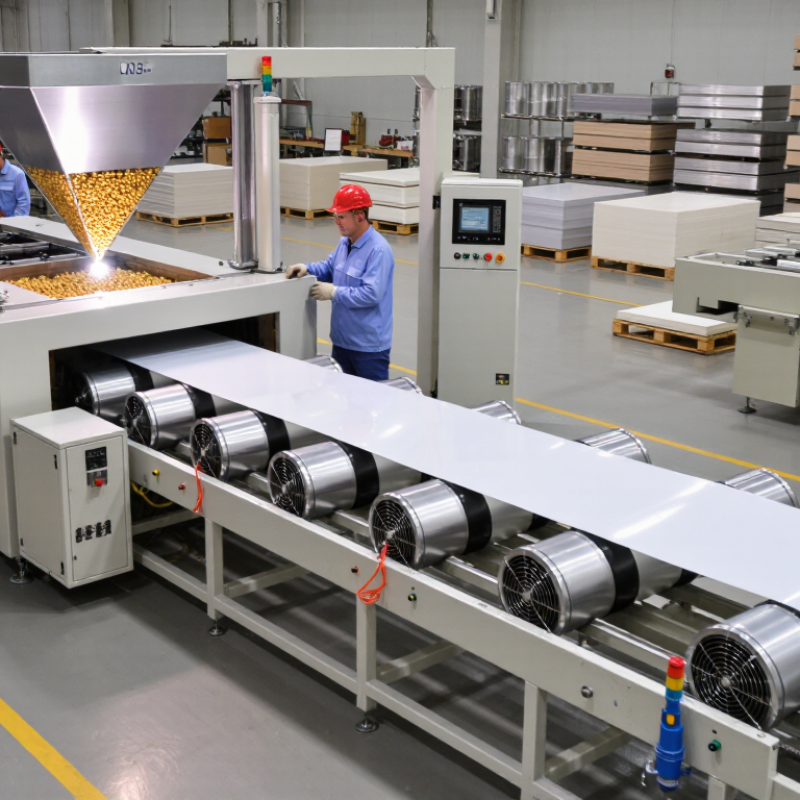
How to Choose an ABS Plastic Board Production Line?

Define the Required ABS Board Specifications and Applications

Before choosing an ABS plastic board production line, define the board’s real purpose. A board for appliance housings needs different performance from one used for vehicle interiors. Record the target thickness, width, length, color, surface finish, and acceptable tolerance. Thickness may range from thin formed sheets to rigid engineering panels. Small errors can affect assembly.

Application conditions matter just as much. Specify impact resistance, heat resistance, flame performance, chemical exposure, and expected service temperature. For thermoforming, the sheet must heat evenly and stretch without obvious whitening. For machining, stable dimensions and consistent hardness are more important. Indoor panels may need good appearance, while industrial covers often require stronger impact protection.

Production capacity should match these requirements. A narrow line may suit small panels, but wide boards need stronger extrusion control and better cooling stability. Ask for trial production using the intended ABS grade, additives, and surface pattern. Inspect thickness across the sheet, not only at the edges. Check color under actual lighting. This step is often skipped.

I have seen projects overvalue maximum output and underestimate changeover time. That decision can increase waste. Define acceptable scrap, startup time, and inspection frequency before selecting equipment. The specification may still change after testing, and that is normal. A practical production line should leave room for correction.

Assess Production Capacity, Board Size, and Material Requirements

Choosing an ABS plastic board production line starts with required output, not the machine catalogue. Estimate monthly demand, operating days, and realistic uptime before comparing extruder capacity. A line rated at 500 kilograms per hour may produce less with color changes, trimming, or maintenance. Leave practical headroom, usually 15 to 25 percent, so urgent orders do not overload the process. Ask for verified throughput using your target ABS grade, rather than relying on general figures. Production data matters.

Board dimensions determine nearly every major component. Define width, thickness, tolerance, and cutting length in writing. A 2,000-millimeter board needs a wider die, stronger calender rolls, and a stable haul-off system. Thin sheets require accurate temperature control and polished rolls to prevent waves or gloss variation. Thick boards cool slowly, so the cooling section must provide enough contact time. If several sizes are planned, check whether die changes are quick and repeatable. A flexible line can reduce inventory, but frequent adjustments may lower actual output.

Material requirements deserve equal attention. Confirm ABS melt flow, recycled content, color, additives, and drying conditions. Moisture can create bubbles, silver streaks, or weak edges. The feeding system should handle the planned blend without unstable dosing. Test samples should cover impact strength, surface appearance, thickness variation, and warpage after cooling. One trial is rarely enough. Seasonal temperature changes can expose weaknesses. I would record every setting, even when the result looks acceptable. Small omissions become expensive later.

How to Choose an ABS Plastic Board Production Line? – Assess Production Capacity, Board Size, and Material Requirements
Line Configuration Typical Net Output Typical Board Size Recommended Thickness Range Suitable ABS Material Typical Material Preparation Key Equipment Requirements Best-Fit Production Scenario
Compact Sheet Line 80–150 kg/h Up to 1,000 × 2,000 mm 1.0–6.0 mm General-purpose ABS pellets; a controlled percentage of clean regrind may be used when the application permits. Store resin in sealed packaging. Pre-dry ABS according to the resin supplier’s specification; a common planning range is approximately 80–85°C for 2–4 hours. Single-screw extruder, gravimetric or volumetric dosing, screen changer, flat sheet die, three-roll calendar, haul-off, edge trimming, and cut-to-length unit. Small and medium-volume production, prototype work, appliance interiors, packaging components, and general fabrication sheets.
Standard Sheet Line Balanced Choice 150–250 kg/h Up to 1,220 × 2,440 mm 1.5–10.0 mm Virgin ABS, impact-modified ABS, flame-retardant ABS, or carefully controlled blends with compatible recycled material. Hopper dryer or dehumidifying dryer, metal separator where required, material conveying system, and melt filtration matched to contamination risk. Medium-volume commercial production requiring stable thickness, consistent surface quality, and flexible material formulations.
High-Throughput Wide-Board Line 250–450 kg/h Up to 1,500 × 3,000 mm 2.0–15.0 mm High-flow ABS grades, impact-resistant grades, or specialty compounds selected for the required stiffness, color, and heat resistance. Automatic feeding, continuous drying, stable blend dosing, efficient melt filtration, and moisture control to reduce bubbles and surface defects. Large-volume board production for transportation interiors, sanitary components, industrial covers, and thermoforming applications.
Heavy-Gauge Board Line 300–600 kg/h Up to 2,000 × 4,000 mm 4.0–20.0 mm ABS or ABS-based compounds with sufficient melt strength and impact performance for thick-section applications. High-capacity drying and conveying, precise dosing, robust melt filtration, and temperature control across the die and calendar stack. Thick boards, fabricated panels, industrial machine guards, transport components, and parts requiring machining or thermoforming.
Co-Extrusion Board Line 200–500 kg/h total output Up to 1,500 × 3,000 mm 2.0–12.0 mm ABS structural core combined with a compatible ABS, ASA, PC/ABS, or recycled ABS surface layer, subject to compatibility testing. Separate drying and dosing for each layer; material residence time, melt temperature, and viscosity must be compatible between extruders. Two or more extruders, co-extrusion feedblock or multi-manifold die, independent temperature control, and a calibrated multi-roll system. Boards requiring improved UV resistance, surface appearance, recycled-content integration, or a specialized functional skin.
Recycled-Content Board Line 120–350 kg/h Up to 1,500 × 3,000 mm 2.0–12.0 mm Clean, sorted ABS regrind or recycled ABS pellets with controlled melt flow, moisture, color, and contaminant levels. Shredding or granulation, magnetic and metal separation, dust removal, drying, blending with virgin resin when needed, and fine melt filtration. Regrind handling system, filtration sized for contamination load, melt-pressure monitoring, and process controls that compensate for feedstock variation. Applications where recycled content is technically acceptable and cost or waste reduction is a primary objective.

Planning note: Output ranges are typical engineering estimates for ABS sheet extrusion and vary with board width, thickness, resin grade, die design, screw configuration, cooling efficiency, and required surface quality. Final line selection should be confirmed through resin trials and a production-capacity calculation based on the target board dimensions and operating schedule.

Compare Extrusion Line Components, Features, and Performance

How to Choose an ABS Plastic Board Production Line?

When comparing extrusion lines, start with melt stability, not advertised output. ABS usually requires drying near 80–85°C before extrusion. Moisture can create silver streaks and weak board edges. The PlasticsEurope report “Plastics—The Fast Facts 2023” recorded 54.1 million tonnes of European plastics production in 2022. This scale shows why energy control and repeatable processing matter.

A reliable line should include a dehumidifying dryer, gravimetric feeders, a temperature-controlled extruder, and efficient melt filtration. A 30:1 or higher screw length-to-diameter ratio often supports better mixing. However, longer screws may increase residence time and thermal stress. That trade-off is easy to overlook.

A gear pump can reduce thickness fluctuation before the flat die. The die should provide uniform flow across the board width. Automatic lip adjustment improves control, but it also raises maintenance demands.

Downstream equipment deserves equal attention. A three-roll calender can improve surface gloss and thickness consistency. Vacuum calibration helps maintain flatness during cooling. A stable haul-off prevents tension marks, while an infrared gauge measures thickness continuously.

Grand View Research has identified automotive, electronics, and appliances as major ABS demand sectors. These applications require different impact, gloss, and heat-performance targets.

A line producing 2,000 kilograms hourly may still fail if edge trim is excessive. Test the complete system with real ABS grades. Lab results rarely predict every production problem.

Evaluate Energy Use, Automation, Maintenance, and Safety

How to Choose an ABS Plastic Board Production Line?

Energy use should be measured per kilogram of finished ABS board, not only by motor power. Ask suppliers for tested figures at your planned thickness, width, and output. Efficient ceramic heaters, insulated barrels, and variable-speed drives can reduce wasted heat. Standby controls also matter during material changes. Numbers can mislead. A low-energy estimate may exclude warm-up time, scrap, or cooling equipment.

Automation should improve consistency without making operators dependent on hidden software settings. A practical line records melt temperature, roller speed, pressure, and board thickness continuously. Automatic gauge control can correct small thickness changes before they become costly defects. During commissioning, operators should test alarms and manual overrides. Too much automation can create confusion when sensors drift. Clear screens and simple procedures remain valuable.

Maintenance access deserves the same attention as production speed. Inspectors should be able to reach heaters, filters, rollers, and lubrication points without awkward climbing. Ask for spare-part lists, service intervals, and fault-history functions. No line is maintenance-free. Safety features should include guarded rollers, emergency stops, thermal protection, and interlocked access doors. Verify that emergency controls stop hazardous movement quickly and consistently. I would also observe a real factory trial, because polished demonstrations rarely show cleaning delays, noisy bearings, or difficult material changes. Safety comes first.

Verify Supplier Support, Compliance, Cost, and Expansion Potential

How to Choose an ABS Plastic Board Production Line?

A reliable ABS board line begins with supplier support, not the lowest quotation. Ask for documented experience with ABS processing, including melt temperature control, die adjustment, calibration, and edge-trim handling. A factory visit or verified production video can reveal more than a sales brochure. Confirm commissioning, operator training, spare-part availability, and response times. Remote support sounds useful, but it may fail during a critical breakdown.

Compliance must match your destination market. Request machine risk assessments, electrical safety records, guarding details, and conformity documentation before signing. ISO 9001 certification supports quality management, but it does not prove machine performance. The OECD Global Plastics Outlook reports that only 9% of plastic waste was recycled globally in 2019. Therefore, ask for measured scrap rates and evidence of stable ABS reprocessing. Recycling claims deserve careful questioning. I would not accept a promise without trial data.

Tips: Compare total ownership cost, not purchase price. Include energy use, labor, tooling, maintenance, rejected sheets, and downtime. Request a factory acceptance test using your target ABS grade and board thickness. Check whether the extruder, die, cooling table, and haul-off can handle future width or output upgrades. A modular design may cost more today, yet protect tomorrow’s investment. Still, expansion forecasts can be wrong. Leave room for uncertainty.

FAQS

What specifications should be defined before choosing an ABS board production line?

Record thickness, width, length, color, surface finish, and tolerance. Small errors matter. Also define impact, heat, flame, chemical, and service-temperature requirements.

Why does the board’s application affect line selection?

Appliance housings may need appearance and heat resistance. Vehicle interiors may require stronger impact performance. Machining needs stable dimensions and consistent hardness.

How should a production line be tested before purchase?

Request trial production with the intended ABS grade, additives, and surface pattern. Measure thickness across the sheet, including the center. Check color under actual factory lighting. Testing is often skipped.

Why is ABS drying important before extrusion?

ABS commonly needs drying near 80–85°C before processing. Moisture can cause silver streaks and weak edges. Use a dehumidifying dryer and confirm moisture results before extrusion.

Which extrusion components deserve careful comparison?

Compare gravimetric feeders, screw design, melt filtration, temperature control, and the flat die. A longer screw may improve mixing. However, it can increase residence time and thermal stress.

What downstream equipment helps produce flat, consistent boards?

Rollers can improve gloss and thickness consistency. Vacuum calibration supports flatness during cooling. A stable haul-off reduces tension marks. Continuous thickness measurement catches defects early.

How should energy efficiency be evaluated?

Measure energy per kilogram of finished board, not motor power alone. Include warm-up, scrap, cooling, and material-change energy. Insulated barrels and variable-speed drives may reduce waste. Estimates can mislead.

What automation features are useful on an ABS board line?

The system should record temperature, pressure, roller speed, and board thickness. Automatic gauge control can correct small thickness changes. Operators still need clear alarms and manual overrides. Too much automation may confuse people.

What maintenance and safety points should be checked?

Inspect access to heaters, filters, rollers, and lubrication points. Ask for spare-part lists and service intervals. Safety features should include guarded rollers, emergency stops, and interlocked doors. No line is maintenance-free.

Why should a real factory trial be observed?

Demonstrations may hide cleaning delays, noisy bearings, and difficult material changes. Observe startup time, scrap levels, and changeover work. A high output number means little if edge trim is excessive. I would still allow room for correction.

Conclusion

Choosing the right Abs Plastic Board Production Line begins with clearly defining the board’s intended applications and required specifications, including thickness, width, surface quality, color, strength, and dimensional accuracy. These requirements should guide decisions about production capacity, material types, feeding systems, extrusion output, cooling methods, cutting equipment, and the maximum board size the line must handle. A well-matched configuration can improve product consistency while avoiding unnecessary investment in oversized equipment.

It is also important to compare extrusion line components, operating stability, energy consumption, automation level, maintenance requirements, and safety features. A reliable supplier should provide technical guidance, installation assistance, operator training, spare parts, and responsive after-sales support. Buyers should also review compliance documentation, total ownership cost, and the possibility of future upgrades or capacity expansion. By evaluating both current production goals and long-term development needs, manufacturers can select an efficient, safe, and adaptable solution for producing high-quality ABS boards.

Oliver

Oliver

Oliver is a seasoned marketing professional with a wealth of expertise in driving brand awareness and engagement. With a deep understanding of our company's product offerings, he consistently delivers high-quality content that enriches our professional blog. His insights not only shed light on......