
Choosing an Automated Abs Sheet Extrusion Line is a production decision, not merely an equipment purchase. ABS sheet serves appliance panels, automotive interiors, luggage, sanitary products, and protective housings. Each application demands different impact strength, surface quality, thickness control, and thermal performance.
Industry data supports careful evaluation. Grand View Research’s ABS market analysis identifies automotive, electronics, and appliances as important demand sectors. These sectors increasingly expect stable dimensions and repeatable appearance. Plastics Europe’s “Plastics—The Fast Facts 2024” also shows the continuing scale of plastics manufacturing in Europe, while highlighting stronger pressure for efficiency and responsible resource use. These reports do not select a machine for you. They clarify the market conditions behind the decision.
Look closely at the complete line, not only the extruder. A reliable system should coordinate material drying, gravimetric feeding, twin- or single-screw extrusion, melt filtration, calendaring, cooling, trimming, stacking, and data collection. Check whether the control system records melt temperature, line speed, sheet thickness, and energy consumption. Ask for production samples, not attractive brochures. A 2.0-millimeter sheet should remain stable across its full width, with minimal edge waves and visible surface defects.
No line is perfect.
Some suppliers may emphasize maximum output while overlooking startup waste, maintenance access, or operator training. That is where evaluation becomes practical. Compare verified throughput, thickness tolerance, changeover time, spare-parts support, and lifecycle energy use. The right Automated Abs Sheet Extrusion Line should fit your resin mix, factory layout, quality targets, and future capacity plans. It should also leave room for honest review when real production differs from the quotation.
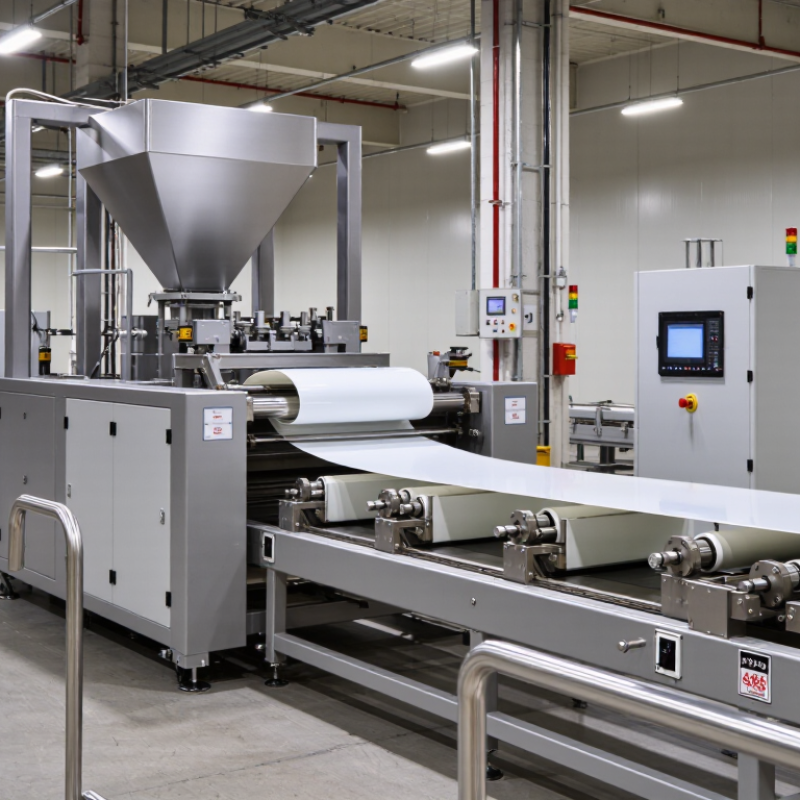
Before choosing an automated ABS sheet extrusion line, define the production target in measurable terms. Record annual demand, peak monthly orders, sheet width, thickness range, and acceptable tolerance. A line producing 500 kilograms per hour may be unsuitable if frequent color changes reduce uptime. Specify the required output after trimming, not only the extruder’s rated capacity. That gap matters.
ABS requires controlled drying, stable melt temperature, and consistent cooling. Set a moisture target for incoming pellets, then verify it with plant testing. Define surface quality, gloss, flatness, impact strength, and thickness variation. Automated gravimetric feeding, closed-loop thickness control, and digital alarms can support these goals. PlasticsEurope reported 400.3 million tonnes of global plastics production in 2022, showing the scale of competition for efficient processing. Yet high speed alone is not efficiency.
Energy and labor goals also need numbers. Measure kilograms per kilowatt-hour, changeover time, reject rate, and operator hours per shift. The International Energy Agency states that industry uses about 37% of global final energy, so energy monitoring deserves attention during line selection. Request trial data using your actual ABS grade, recycled content, and die width. A perfect forecast is unrealistic. Leave adjustment capacity for seasonal demand, new thicknesses, and unexpected scrap. A line that logs temperature trends, pressure changes, downtime causes, and maintenance intervals gives engineers evidence for future decisions.
| Production Goal | Recommended Target | Why It Matters for ABS Sheet Production | Line Specification to Evaluate | Verification Method |
|---|---|---|---|---|
| Product Thickness Range | 1.0–6.0 mm for general thermoforming applications | Thickness affects forming depth, stiffness, cycle time, material consumption, and end-use performance. | Die adjustment range, automatic thickness control, melt-pressure stability, and roll-gap adjustment resolution. | Run a full-width trial and record thickness at multiple points across the sheet and along the extrusion direction. |
| Usable Sheet Width | 1,000–2,000 mm, selected according to the finished-part layout | The correct width reduces edge trim, improves nesting efficiency, and supports stable downstream forming. | T-die width, effective calender-roll width, edge-trim system, and maximum usable product width. | Compare the planned part layout with the line’s effective width after edge trimming. |
| Output Capacity | Approximately 150–500 kg/h for medium-scale ABS sheet production | Capacity must match confirmed orders, operating hours, material yield, and planned production growth. | Extruder screw diameter, screw length-to-diameter ratio, motor power, feeder capacity, and melt-transfer capability. | Conduct a continuous production test using the intended ABS grade and measure output over a stable operating period. |
| Automation Level | Central PLC control with recipe storage, alarm management, and operator access levels | Automation improves repeatability, reduces manual adjustments, and helps operators identify process deviations quickly. | PLC and HMI functions, recipe management, trend displays, alarm history, remote diagnostics, and data export. | Test recipe loading, alarm response, user permissions, historical trends, and recovery after a controlled stop. |
| Thickness Uniformity | Typically within ±3% of the nominal thickness after process stabilization | Uniform thickness supports consistent thermoforming, predictable part weight, and better material utilization. | Automatic die-bolt control, thickness gauge compatibility, roll-temperature control, and closed-loop correction. | Use calibrated thickness measurement equipment and calculate average, minimum, maximum, and deviation values. |
| Surface Quality | Low-gel, low-streak, and low-scratch sheet suitable for the required visual grade | ABS sheets may be used for visible components, so surface defects can increase rejection and finishing costs. | Melt filtration, die-lip design, roll surface finish, clean-room handling requirements, and cooling control. | Inspect samples under controlled lighting and define objective limits for gels, lines, pits, and surface marks. |
| Material Flexibility | Support for virgin ABS, approved regrind, color concentrates, and selected modified grades | Material flexibility allows production to respond to different product requirements and controlled recycled-content targets. | Gravimetric dosing, mixing accuracy, material-drying provisions, filtration level, and compatible screw design. | Test each approved formulation for output stability, color consistency, surface quality, and mechanical requirements. |
| Thermal Process Control | Stable barrel, adapter, die, and calender-roll temperature control across the selected ABS grade | ABS is sensitive to excessive heat history and residence time, which can affect color, viscosity, and surface appearance. | Independent heating and cooling zones, temperature sensors, control accuracy, and melt-temperature monitoring. | Compare setpoints with actual readings during startup, steady production, grade changes, and controlled shutdown. |
| Changeover Time | 30–90 minutes for routine color or specification changes, depending on the formulation | Shorter changeovers increase available production time and reduce scrap during material purging. | Quick-clean die design, accessible melt path, purge procedures, recipe recall, and automatic line-speed coordination. | Measure time from the last conforming sheet of one order to the first conforming sheet of the next order. |
| Scrap and Yield | Target total process scrap below 5–8% after production is stabilized | Yield directly influences material cost, waste handling, and the economic value of automation. | Automatic edge trimming, trim recycling capability, startup scrap reduction, and real-time production reporting. | Track startup waste, edge trim, off-specification sheet, and rejected rolls separately for each production order. |
| Take-Off and Cutting Format | In-line stacking for cut sheets or automatic winding for roll-stock products | The take-off format should match storage, transport, thermoforming, and customer delivery requirements. | Haul-off synchronization, length encoder, flying saw or guillotine, stacker, winder, and automatic counting. | Confirm cut-length accuracy, stack alignment, roll tension, surface protection, and handling safety. |
| Energy Efficiency | Monitor specific energy consumption and establish a plant-specific baseline before purchase | Energy cost is influenced by extrusion load, heating demand, cooling systems, and operating speed. | High-efficiency drive, insulated heating zones, variable-speed pumps, cooling-water control, and energy metering. | Record electricity consumption per kilogram during a representative production trial at the intended operating rate. |
| Production Availability | Plan for at least 85–90% scheduled availability after commissioning and operator training | Availability determines whether the line can meet delivery schedules and recover the investment as planned. | Component reliability, preventive-maintenance access, spare-parts plan, diagnostic functions, and service response capability. | Review a downtime log by category, including mechanical faults, material issues, changeovers, and planned maintenance. |
| Safety and Compliance | Risk-assessed guarding, emergency stops, interlocks, hot-surface protection, and documented operating procedures | Extrusion lines combine high temperatures, rotating equipment, stored energy, and moving take-off systems. | Safety circuits, guarding, lockout provisions, access monitoring, operator training, and conformity documentation for the installation location. | Complete a documented safety inspection and verify emergency-stop response, guarding, interlocks, and maintenance access before acceptance. |
Record annual demand, peak monthly orders, sheet width, thickness range, and acceptable tolerance. Output after trimming matters. Rated capacity alone can mislead.
Define surface quality, gloss, flatness, impact strength, and thickness variation. Set measurable limits before requesting equipment. Vague targets create arguments later.
Moisture can cause bubbles, silver streaks, weak surfaces, and uneven appearance. Use controlled drying with clear temperature and residence-time settings. Verify pellet moisture through plant testing.
Match screw design, output range, filtration, die width, roll control, haul-off, and cutting systems. Thin decorative sheets may need different settings than thick thermoforming sheets. One setup rarely suits everything.
Test actual ABS grades, recycled content, sheet widths, thicknesses, and operating speeds. Record melt pressure, roll temperature, line speed, and sheet thickness. Include startup and speed changes.
Gravimetric feeding, closed-loop thickness control, digital alarms, and reliable sensors support stable output. Controls help only when measurements remain accurate. Operators need understandable displays.
Compare energy, scrap, labor, maintenance, software updates, downtime, and spare parts. Review five-year costs, not only the purchase invoice. Savings are estimates.
Request commissioning procedures, operator training, spare-parts availability, response times, and clear maintenance guidance. Define factory and site acceptance criteria before payment. Include output, thickness variation, and scrap limits.
Check support for extra extruders, wider dies, automatic thickness control, and future data integration. Reserve room for another downstream unit. Crowded layouts cause avoidable problems.
Do not trust one successful sample or a perfect laboratory trial. Dusty floors, rushed operators, and recycled content can change results. Some assumptions will fail. Document and correct them.
Choosing an Automated Abs Sheet Extrusion Line starts with clearly defining production goals, including target sheet dimensions, thickness range, material requirements, output volume, and quality standards. The line should be matched carefully with ABS characteristics and the intended sheet specifications, ensuring that extrusion, cooling, trimming, winding, and other components can work together reliably. Buyers should also evaluate automation levels, production capacity, temperature and thickness control, data monitoring, and the flexibility to adjust operating parameters for different products.
Energy efficiency, machine safety, convenient operator access, and straightforward maintenance are equally important for stable long-term operation. A practical design should support quick cleaning, component inspection, and efficient troubleshooting while protecting workers during production. Finally, compare suppliers according to technical support, installation and training services, spare-parts availability, total ownership cost, and the possibility of future upgrades. A well-selected Automated Abs Sheet Extrusion Line can improve productivity, maintain consistent sheet quality, reduce operational waste, and provide a scalable foundation for changing market demands.
