
Choosing the right Abs Profile Extrusion Line manufacturer involves more than comparing brochures, production speeds, or attractive factory photographs. A reliable line must handle ABS resin consistently, maintain stable melt pressure, and produce profiles with clean edges and accurate dimensions. Small deviations can appear quickly around a window frame, appliance trim, or technical housing. The details matter.
Dr. Tim A. Osswald, a respected polymer processing researcher, has said, “Polymer processing is a science, but it is also an art.” This observation fits ABS extrusion closely. Temperature control, screw design, die engineering, calibration, cooling, and haul-off settings must work together. Experienced manufacturers understand this interaction. They also know that a fast line is not automatically an efficient line.
This guide reviews the Top 10 ABS Profile Extrusion Line Manufacturers Worldwide through practical criteria, including engineering capability, customization, after-sales support, energy use, spare-part access, and documented production experience. It considers both established suppliers and technically focused companies. No ranking is perfect. Regional service quality can change, and public information is sometimes incomplete. That limitation deserves attention. Buyers should verify test runs, dimensional samples, warranty terms, and maintenance response before making a final decision. A trustworthy ABS Profile Extrusion Line should perform steadily on the factory floor, not only in a presentation. Look closely. Ask difficult questions. That is where better purchasing decisions begin.
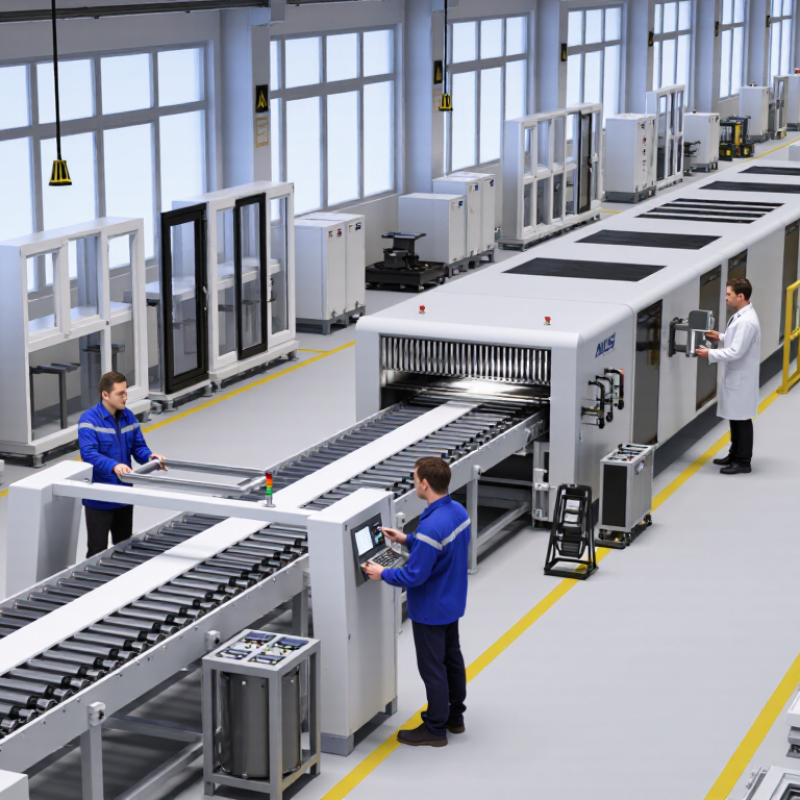
ABS profile extrusion lines are production systems that melt acrylonitrile butadiene styrene pellets and shape them into continuous profiles. A heated barrel, precision screw, die, cooling table, haul-off unit, and cutting system work together. The die determines the profile’s final geometry. Calibration keeps dimensions stable during cooling.
These lines produce edge trims, appliance rails, automotive interior parts, construction channels, furniture components, and protective covers. ABS offers useful impact resistance, surface quality, and dimensional stability. It also supports efficient machining after extrusion. In a factory, operators monitor melt temperature, screw speed, vacuum pressure, and cooling-water flow. Small changes can create warping, dull surfaces, or uneven wall thickness.
That matters.
When comparing the top ten global manufacturers, buyers should examine engineering records, line testing methods, spare-part access, and technical training. A reliable supplier should explain output limits with measured data, not attractive estimates. Energy consumption and changeover time deserve equal attention. Some lines run quickly but waste material during startup. Others sacrifice speed for tighter tolerances. Neither approach fits every application. In my experience, stable feeding often matters more than maximum screw speed. Still, operator skill is sometimes underestimated. Even a well-designed line can produce inconsistent profiles when maintenance routines are weak. Buyers should request sample profiles, inspection reports, and realistic trial results before approving a complete system.
It melts ABS pellets and forms them into continuous plastic profiles. A heated barrel, screw, die, cooling table, haul-off, and cutter work together.
They can produce edge trims, appliance rails, construction channels, and furniture components. They also make automotive interior parts and protective covers.
The die controls the profile’s shape and dimensions. Small design errors may cause uneven walls or poor fitting. That matters.
Operators monitor melt temperature, screw speed, vacuum pressure, and cooling-water flow. Small changes can create warping, dull surfaces, or unstable thickness.
Calibration helps maintain dimensions while the hot profile cools. A vacuum calibration table can support consistent sizing. Cooling must remain steady.
Compare engineering records, line testing, spare-part access, and operator training. Ask for measured output data instead of attractive estimates. Claims need evidence.
Request sample profiles, inspection reports, and realistic trial results. Compare stability after several continuous production hours. Factory references can reveal practical weaknesses.
No. Stable feeding may matter more than maximum screw speed. High speed can increase startup waste or reduce dimensional control. Faster is not always better.
Confirm screw material, spare-part availability, response times, and control-system language. Check energy use, changeover time, haul-off control, and cutting accuracy. Small details matter.
Even a well-designed line can produce inconsistent profiles with weak maintenance routines. Operators must follow cleaning, inspection, and adjustment procedures. Human factors are easy to underestimate.
This article provides a practical overview of the Abs Profile Extrusion Line, explaining its structure, operating principles, key functions, and industrial applications in areas such as construction, interior systems, furniture, transportation, and equipment manufacturing. It also examines the main factors used to evaluate global manufacturers, including extrusion accuracy, temperature control, production capacity, energy efficiency, material compatibility, automation, after-sales support, and overall reliability.
The comparison of the top 10 Abs Profile Extrusion Line manufacturers worldwide focuses on their technological strengths, equipment configurations, customization capabilities, and product differences without emphasizing any specific brand. The article concludes with a clear supplier selection framework, helping buyers assess technical requirements, product quality, maintenance services, delivery capability, operating costs, and long-term cooperation value before making an informed purchasing decision.
