
Why Choose a Plastic Board Extrusion Machine?

Time:2026-10-13 Author:Henry
0%

Choosing a Plastic Board Extrusion Machine is a production decision, not merely an equipment purchase. It affects board thickness, surface quality, energy use, labor demands, and material recovery. A stable machine should deliver even melt flow, accurate temperature control, and consistent cooling across every board. Small variations can appear as waviness, weak edges, or visible gloss differences.

Industry data explains why this choice matters. The OECD’s Global Plastics Outlook reported that global plastic waste reached 353 million tonnes in 2019, while only 9% was recycled. PlasticsEurope later reported global plastics production of approximately 400.3 million tonnes in 2022. These figures increase pressure on manufacturers to reduce scrap and process recycled polymers more reliably. A well-configured extrusion line can support that goal through precise feeding, filtration, and automatic thickness control. It is not a perfect solution. Recycled feedstock can still vary sharply.

Dr. James L. White, a respected authority in polymer processing, described extrusion as “a continuous process.” That simple observation remains highly practical. The machine must run steadily, not only perform well during a short demonstration. Buyers should examine screw design, output stability, die adjustment, cooling-roll control, maintenance access, and after-sales support. A faster line is not always better. Sometimes, controlled consistency matters more than maximum speed. Real factory experience often reveals this uncomfortable truth: the cheapest machine may become the most expensive choice after months of unstable production.
Why Choose a Plastic Board Extrusion Machine?

What Is a Plastic Board Extrusion Machine?

Why Choose a Plastic Board Extrusion Machine?

What Is a Plastic Board Extrusion Machine?

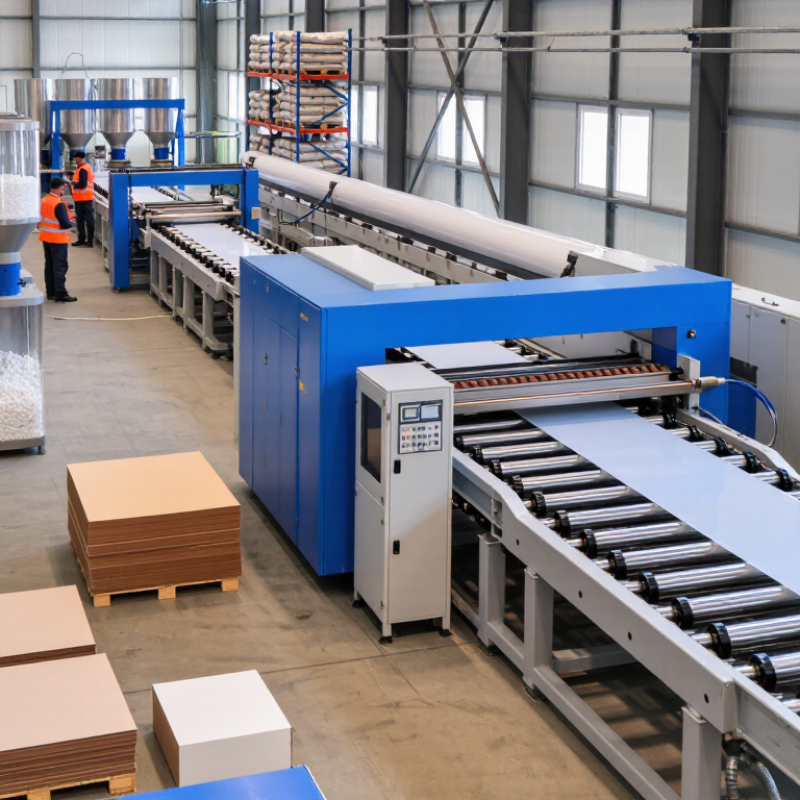
A plastic board extrusion machine is an industrial system that makes continuous plastic sheets. It heats plastic pellets until they become soft and evenly flowing. Inside the heated barrel, a rotating screw mixes and pushes the material forward. The softened plastic then passes through a flat die. This die shapes the melt into a wide, even board. Cooling rollers control the surface finish and final thickness. It is continuous production.

Production teams adjust temperature, screw speed, roller pressure, and line speed during operation. Sensors help monitor these settings, but they do not replace careful inspection. Different plastics require different heating profiles and cooling conditions. Excessive heat can cause discoloration, bubbles, or material degradation. Uneven cooling may create warping along the board edges. These details matter when stable dimensions are required.

A plastic board extrusion machine suits applications needing repeatable boards in large quantities. It can reduce cutting waste compared with producing sheets from larger blocks. The line may also include trimming, surface treatment, stacking, and thickness measurement equipment. However, extrusion is not automatically the best choice for every product. Small orders may not justify tooling and setup time. Trial runs can reveal unexpected shrinkage or surface marks. That practical feedback should guide final machine specifications, rather than relying only on catalog figures.

How Does the Plastic Board Extrusion Process Work?

Why Choose a Plastic Board Extrusion Machine?

A plastic board extrusion machine transforms polymer pellets into continuous, uniform sheets. It is a controlled sequence. Pellets enter the hopper, then move through a heated barrel by a rotating screw. Heat matters. The screw melts, mixes, and pressurizes the material before it reaches the flat die. The die spreads the melt into a board-shaped curtain. Cooling rollers then stabilize thickness, surface finish, and flatness. A haul-off unit pulls the board steadily, while a cutter produces the required length.

Material selection affects every stage. Recycled content may reduce resource demand, but it can also create moisture, color, or viscosity variations. The OECD’s Global Plastics Outlook reported that only 9% of plastic waste was recycled globally in 2019. This makes controlled extrusion increasingly important for consistent secondary-material processing. PlasticsEurope reported global plastics production of about 400 million tonnes in 2022. The figure is substantial, yet production efficiency alone cannot solve waste challenges. That part is easy to overlook.

Tips: Dry hygroscopic materials before feeding. Check melt temperature at several barrel zones, not only the display. Keep the die gap clean and record roller pressure. Small adjustments prevent visible ripples. Still, no setting works universally. Operators should test thickness across the board, inspect edges, and revise speed gradually. A practical mistake is changing temperature and line speed together; it becomes difficult to identify the real cause of defects. Reliable results come from measured trials, documented settings, and routine maintenance.

What Materials Can the Machine Process?

Why Choose a Plastic Board Extrusion Machine?

What Materials Can the Machine Process?

A plastic board extrusion machine can process many thermoplastics, but material selection controls the final board’s strength, finish, and stability. Common options include HDPE, LDPE, PP, rigid PVC, ABS, HIPS, PC, PMMA, and PETG. Each polymer needs a suitable melting range, screw design, and cooling method. PVC, for example, requires careful temperature control because overheating can damage the material and release harmful decomposition products.

Recycled feedstock is also possible. The OECD Global Plastics Outlook reports that global plastic production reached 460 million tonnes in 2019, while plastic waste reached 353 million tonnes. This pressure encourages manufacturers to use recycled pellets and controlled production scrap. However, recycled material is not automatically consistent. Moisture, labels, pigments, and mixed polymers can cause bubbles, weak edges, or uneven thickness. That assumption can fail.

Fillers and additives further expand the machine’s capabilities. Mineral-filled PP can improve stiffness, while UV stabilizers support outdoor applications. Wood-plastic compounds require suitable feeding and wear-resistant components. PET-based materials usually need thorough drying before extrusion. In practice, I would test a small batch first, then adjust screw speed, die temperature, and haul-off tension. A reliable process record matters more than a broad material list. Industry data shows the opportunity, but production discipline determines the result.

Why Choose a Plastic Board Extrusion Machine?

Typical melt-processing temperature ranges of common plastics used for board extrusion

Plastic board extrusion machines can process a wide range of thermoplastics, including PE, PP, PVC, ABS, PS, and PET, when the equipment is configured with suitable screw designs, heating zones, dies, and cooling systems. Actual temperatures vary by resin grade, additives, board thickness, and production requirements.

What Are the Main Benefits of Using This Machine?

A plastic board extrusion machine offers a practical way to produce consistent sheets for construction, packaging, furniture, and industrial applications. It melts plastic pellets, pushes the material through a shaped die, and forms a continuous board. This controlled process can reduce manual handling and improve thickness accuracy. It also supports steady production with less material waste.

The main benefit is repeatable quality. Operators can adjust temperature, pressure, screw speed, and cooling conditions for different materials. A stable cooling system helps prevent warping, while calibrated rollers create a smoother surface. In daily production, this consistency makes cutting and assembly easier. The machine can also reduce labor demands and support customized board sizes. Still, the process is not flawless. Poor calibration may cause uneven edges, bubbles, or weak areas. Small mistakes become visible quickly.

Tips: Keep the die clean and inspect the rollers regularly. Record temperature settings for each material. Allow proper cooling before stacking boards. Check thickness at several points, not only at the center. Experienced operators should review unusual noise, surface marks, or sudden output changes. Maintenance records may seem tedious, but they often reveal problems before costly downtime occurs.

How Should You Choose the Right Extrusion Machine?

Why Choose a Plastic Board Extrusion Machine?

Choosing the right extrusion machine starts with the board, not the machine catalog. Define the plastic type, target width, thickness, surface finish, and daily output. A narrow board line cannot replace a wide one without costly adjustments. Capacity matters. Do not guess.

Check the screw design and processing temperature range for your material. Stable heating, accurate sensors, and even cooling help prevent warping, bubbles, and uneven thickness. The die should allow practical adjustments during production. A calibration table with steady vacuum control can improve flatness, especially on thicker boards. Review the haul-off speed, cutting method, and stacking space as one connected system. I have seen equipment selected by maximum output alone, then operated far below its efficient range.

Energy use and maintenance also deserve careful attention. Ask how quickly operators can clean the screw, change the die, and replace wear parts. Inspect the control panel layout; confusing alarms can turn a small fault into hours of downtime. Request sample production with your actual resin and additives. Test thickness tolerance, edge quality, color consistency, and surface appearance. Test it first.

A larger machine is not always better. It may consume more energy and require more experienced operators. A smaller line may limit future orders, though. No selection is perfect. Leave room for realistic growth, but challenge every extra feature with production data. A detailed trial report is more reliable than a polished sales promise.

Why Choose a Plastic Board Extrusion Machine? - How Should You Choose the Right Extrusion Machine?

Extrusion Machine Configuration Typical Material Compatibility Typical Board Thickness Typical Production Capacity Typical Board Width Main Advantages Best-Suited Applications Key Selection Considerations
Single-Screw Extrusion Line PE, PP, PVC, PS, ABS and other thermoplastics, depending on screw design Approximately 1–25 mm Approximately 80–600 kg/h Approximately 600–2,500 mm Simple operation, lower initial investment, easy maintenance and suitable for stable single-material production General-purpose sheets, packaging boards, construction panels and protective boards Select the screw length-to-diameter ratio, screw geometry, heating zones and cooling capacity according to the polymer and required output
Twin-Screw Extrusion Line PVC, filled compounds, recycled materials and formulations requiring intensive mixing Approximately 1–20 mm Approximately 100–800 kg/h Approximately 600–2,500 mm Improved mixing, feeding and dispersion of additives, fillers and recycled feedstock Rigid PVC boards, mineral-filled panels, recycled-content boards and technical sheets Consider torque, screw configuration, residence time, venting and wear resistance when processing abrasive or heat-sensitive materials
Co-Extrusion Line Compatible combinations such as virgin polymer with recycled core material, or polymer layers with different functions Approximately 2–30 mm Approximately 150–1,000 kg/h Approximately 800–3,000 mm Combines different materials or formulations in one board, allowing surface quality and core cost to be optimized separately Decorative panels, weather-resistant boards, multilayer packaging sheets and recycled-core products Verify melt-temperature compatibility, layer-ratio control, feed-block design, die uniformity and the required number of extruders
Recycled-Material Extrusion Line Clean and adequately sorted recycled PE, PP, PS or other compatible thermoplastics Approximately 2–20 mm Approximately 100–700 kg/h Approximately 600–2,500 mm Supports material recovery, reduces dependence on virgin resin and can lower raw-material costs Transport boards, pallets, protection sheets, construction panels and non-food packaging applications Plan for sorting, washing, drying, metal removal, melt filtration and variation in moisture or contamination levels
High-Output Heavy-Duty Line PE, PP, PVC and other thermoplastics requiring continuous high-volume production Approximately 3–50 mm Approximately 400–1,500 kg/h Approximately 1,200–4,000 mm High throughput, stable continuous operation and better suitability for large boards Industrial construction panels, large-format sheets, infrastructure products and high-volume packaging boards Assess available electrical power, cooling-water flow, factory space, die strength, haul-off capacity and downstream cutting speed

Core Parameters for Choosing the Right Plastic Board Extrusion Machine

Evaluation Dimension Recommended Data to Confirm Why It Matters
Material and Formulation Polymer type, melt-flow behavior, filler content, recycled content, moisture and thermal sensitivity Determines screw design, barrel configuration, temperature profile, venting and filtration requirements
Required Output Target kilograms per hour, operating hours per day and annual production volume Prevents overinvestment and ensures that the extruder, die and downstream equipment are properly balanced
Board Dimensions Minimum and maximum thickness, usable width, length tolerance and flatness requirement Influences die width, roll-stack size, cooling capacity, haul-off force and cutting equipment
Surface and Appearance Gloss level, texture, color consistency, transparency, surface roughness and allowable defects May require polishing rolls, embossing rolls, melt filtration, screen changers or additional surface-treatment equipment
Energy and Utilities Installed motor power, expected specific energy use, cooling-water demand, compressed air and electrical supply Affects operating cost, plant infrastructure, heat removal and long-term production efficiency
Automation and Quality Control Automatic thickness control, temperature monitoring, gravimetric feeding, process data logging and alarm functions Improves repeatability, reduces scrap and helps maintain stable board thickness during continuous production
Maintenance and Serviceability Wear-part availability, access to heaters and sensors, screw removal method, cleaning time and technical support Shorter maintenance intervals and faster troubleshooting can improve equipment availability
Total Cost of Ownership Purchase price, energy use, labor, consumables, maintenance, downtime and expected service life The lowest initial price does not always provide the lowest cost per finished board

Note: The capacity, thickness and width figures are typical planning ranges for industrial plastic board extrusion lines. Actual performance depends on resin properties, formulation, screw and die design, board geometry, cooling conditions and required quality standards.

FAQS

How does a plastic board extrusion machine work?

Plastic pellets enter a hopper and move through a heated barrel. A rotating screw melts, mixes, and pressurizes the material. The melt passes through a flat die. Cooling rollers stabilize thickness and flatness. A haul-off pulls the board forward. A cutter creates set lengths.

What materials can the machine process?

The machine can process suitable polymer pellets and some recycled materials. Recycled content may contain moisture, color changes, or uneven viscosity. Dry moisture-sensitive materials before feeding. Material differences require careful testing.

What are the main production benefits?

Continuous extrusion can produce uniform boards with less manual handling. Operators can adjust temperature, pressure, screw speed, and cooling. Calibrated rollers support smoother surfaces and consistent thickness. Small errors still become visible quickly.

How can operators prevent bubbles, ripples, and warping?

Dry the material before feeding it into the hopper. Check melt temperature across several barrel zones. Keep the die gap clean and maintain steady roller pressure. Measure thickness across the board, including both edges.

What should be checked during routine maintenance?

Inspect the die, cooling rollers, sensors, haul-off, and cutter regularly. Record unusual noise, surface marks, and sudden output changes. Clean components before buildup affects the board surface. Maintenance records seem tedious. They can prevent downtime.

How should someone choose the right extrusion machine?

Start with the board requirements, not the machine catalog. Define material, width, thickness, surface finish, and daily output. Check screw design, heating accuracy, cooling performance, and die adjustment. Capacity should match real production. Do not guess.

Why is a production trial important before purchase?

Test the machine with the actual resin and additives. Review thickness tolerance, edge quality, color consistency, and surface appearance. A polished promise may hide practical limitations. Test it first.

Is a larger extrusion machine always better?

No. A larger machine may consume more energy and need more skilled operators. A smaller line may restrict future orders. Choose realistic growth, but challenge every feature with production data. No selection is perfect.

Conclusion

A Plastic Board Extrusion Machine is specialized equipment that converts plastic raw materials into continuous boards with controlled thickness, width, and surface quality. During the extrusion process, plastic pellets or recycled materials are heated and melted inside a barrel, mixed evenly by a rotating screw, and pushed through a shaped die. The newly formed board is then cooled, calibrated, trimmed, and cut or wound according to production requirements.

This machine can process materials such as polyethylene, polypropylene, PVC, ABS, and other suitable thermoplastics, depending on the design and operating conditions. Its main benefits include consistent output, efficient production, flexible board dimensions, material-saving performance, and the ability to support recycled or customized materials. When choosing the right equipment, users should consider the target material, board size, thickness range, production capacity, energy efficiency, automation level, maintenance requirements, and overall operating cost.

Henry

Henry

Henry is a dedicated marketing professional with a profound expertise in the company's offerings. With years of experience in the industry, he possesses an impressive understanding of the market dynamics and consumer behaviors that drive success. Henry is committed to sharing his insights through......