
Explore our premium machinery manufacturing systems and high-grade plastic film options designed for worldwide exports.
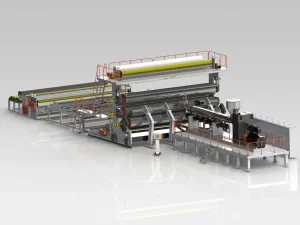
Advanced co-extrusion technology designed for high-density and linear low-density polyethylene waterproof sheets used globally in environmental barriers.
View Details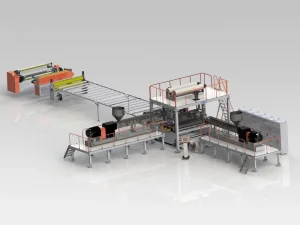
Specialized compounding extruders designed for durable thermoplastic polyolefin roofing membranes with exceptional weatherability.
View Details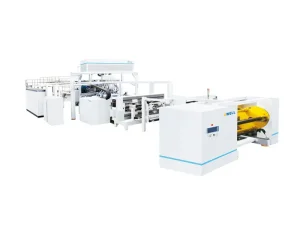
Polyimide cast film production lines offering extreme temperature resistance for flexible print circuits and electronics substrates.
View Details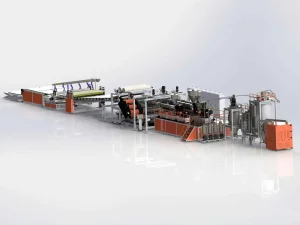
State-of-the-art production system designed for encapsulating architectural solar panels and long-lasting PVB interlayers.
View Details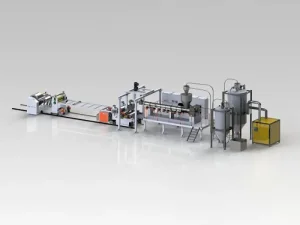
Three-layer co-extrusion technology for superior packaging barriers and crystalline PET sheet production, optimizing scrap usage.
View Details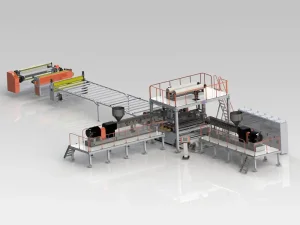
Tailored lines for producing soft, high-elasticity sheets used in automotive interiors, seals, and specialized construction applications.
View Details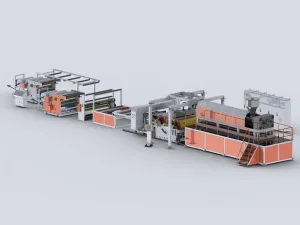
Eco-friendly synthetic leather composite line utilizing non-toxic thermoplastic materials for high-wear automotive upholstery.
View Details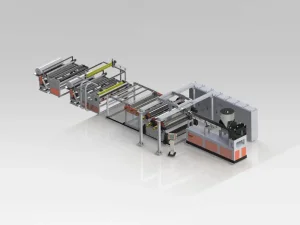
Industry-standard extrusion systems delivering absolute optical transparency, perfect moisture control, and precise layer calibration.
View DetailsAnalyzing global commercial and industrial trends driving the demand for specialized polyvinyl butyral films.
The global automotive landscape is undergoing its most significant structural shift since the invention of the assembly line. Electric Vehicles (EVs) have moved from a niche market segment to the absolute core of automotive research and development. This transition is not merely a change in the drivetrain; it has systematically altered the structural design parameters of the entire vehicle. Among these components, automotive glazing (windshields, panoramic sunroofs, side windows, and rear backlites) has emerged as a key engineering focus.
Traditional internal combustion engine (ICE) vehicles relied on engine acoustics to mask exterior noise. In contrast, EVs run silently, making road noises, wind turbulence, and high-frequency tire vibrations far more noticeable inside the cabin. Furthermore, the massive power draw of cabin heating and cooling directly impacts the battery pack's range, prompting manufacturers to demand smart thermal management solutions. This is where high-performance Polyvinyl Butyral (PVB) interlayer films become essential.
Standard windshields struggle with middle-to-high frequency wind shear. Modern EV PVB employs multi-layer co-extrusion technology, integrating a soft elastomeric damping core between rigid PVB outer layers to isolate up to 10dB of road cabin noise.
To maximize EV driving range, infrared (IR) absorbing nanoparticles are suspended within the PVB matrix. By blocking up to 99% of ultraviolet radiation and lowering solar heat gain, the cabin air conditioning load is substantially reduced.
Electric and autonomous vehicles depend heavily on Head-Up Displays (HUDs). Standard uniform-thickness PVB creates overlapping "ghosting" images. Our precision wedge PVB provides cross-sectional wedge angle control to align reflections perfectly.
How precise structural extrusion prevents visual distortion and supports smart instrumentation in luxury EVs.
Laminated safety glass consists of two panes of glass bonded by a plastic interlayer, typically Polyvinyl Butyral (PVB). When a driver views a virtual image projected on the windshield by a HUD unit, light reflects from both the inner glass-to-air interface and the outer glass-to-air interface. Due to the natural curvature and thickness of the windshield, these two reflections reach the driver's eyes at slightly different angles, creating a distracting double image (ghosting).
To eliminate this phenomenon, manufacturers must produce wedge-shaped PVB interlayer films. By creating a precise, tapered thickness profile across the vertical plane of the windshield, the outer glass surface reflection is refraction-aligned to merge with the inner surface reflection. This requires highly sophisticated extrusion control:
"For modern Level 3 autonomous vehicles and AR-HUD (Augmented Reality Head-Up Displays), the projection area is three times larger than traditional HUDs. This demands absolute uniformity in wedge angle profile across a much wider active glass zone."
| Property | Target Range |
| Moisture Content | 0.35% - 0.55% |
| Wedge Angle Tolerance | ±0.02 mrad |
| Pummel Adhesion Rating | 3 to 7 |
| Visible Light Transmittance | ≥ 75% |
| UV Attenuation | > 99.8% |
| Acoustic Loss Factor | ≥ 0.30 (at 20°C) |
How China's integrated chemical bases and automated manufacturing corridors ensure global component security.
Global automotive OEMs are heavily focused on securing their supply chains. The production of premium PVB interlayer films requires a vertically integrated supply chain, starting with the synthesis of raw Vinyl Acetate Monomer (VAM), conversion to Polyvinyl Alcohol (PVA) resin, compounding with high-grade plasticizers (such as 3G8), and ending with precision extrusion. China has established the most integrated chemical manufacturing hubs globally, offering raw material security, manufacturing capacity, and cost efficiency.
This localized supply chain integration protects our operations from sudden shipping blockades or raw material shortages. With direct pipeline access to critical reagents, high-efficiency electricity grids, and continuous automated runs, we provide a stable, scalable supply of PVB interlayer films to the global market.
Ensuring high performance under extreme environmental conditions and adhering to automotive safety regulations.
Automotive glass interlayers must withstand extreme weather conditions. In cold regions like Norway or Northern Canada, PVB interlayers must remain ductile to absorb impact energy and prevent structural failures. Conversely, in hot desert areas like Arizona or the Middle East, the film must resist solar degradation, edge delamination, and bubble formation under continuous UV exposure.
Our PVB films undergo rigorous environmental chamber testing, including high-humidity thermal cycles (85°C at 85% RH for 1500 hours) and intense radiation exposure (equivalent to 5 years of Florida sun), ensuring optical clarity and structural integrity over the vehicle's lifespan.
To be integrated into global OEM supply chains, PVB interlayer materials must meet strict international regulatory standards. Our products comply with:
How we are preparing for the future of connected, shared, and green mobility.
Modern vehicles require continuous wireless data links. Standard metallized solar protection layers in windshields can block electromagnetic signals. We are developing non-conductive, high-performance infrared-absorbing PVB matrices that block heat while maintaining high RF transmittance for 5G and satellite communications.
Automotive OEMs are working to reduce their carbon footprint across the supply chain. Our technological roadmap includes the integration of bio-based plasticizers derived from agricultural waste rather than petrochemical inputs. We are also refining closed-loop recycling processes to recover PVB film from post-industrial and end-of-life vehicle glazing.
Future vehicle models will feature smart glazing that switches opacity at the touch of a button. We are optimizing our PVB formulations to laminate and protect sensitive electrochromic, Polymer Dispersed Liquid Crystal (PDLC), and Suspended Particle Device (SPD) films, protecting them from mechanical stress and moisture intrusion.
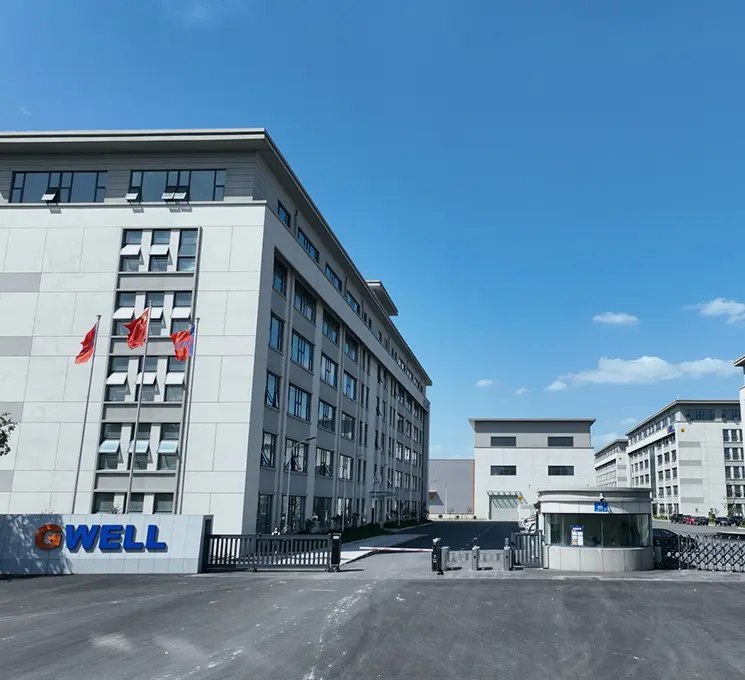
China Gwell Machinery is a high-tech enterprise dedicated to the manufacture of plastic extrusion lines for Film, Sheet, and Profile. Relying on the powerful technology, machinery resources, and innovative spirit of our group, GWELL commits to the development of high-tech products for the international market. "Expertise creates customers' values" has always been the company's operating philosophy.
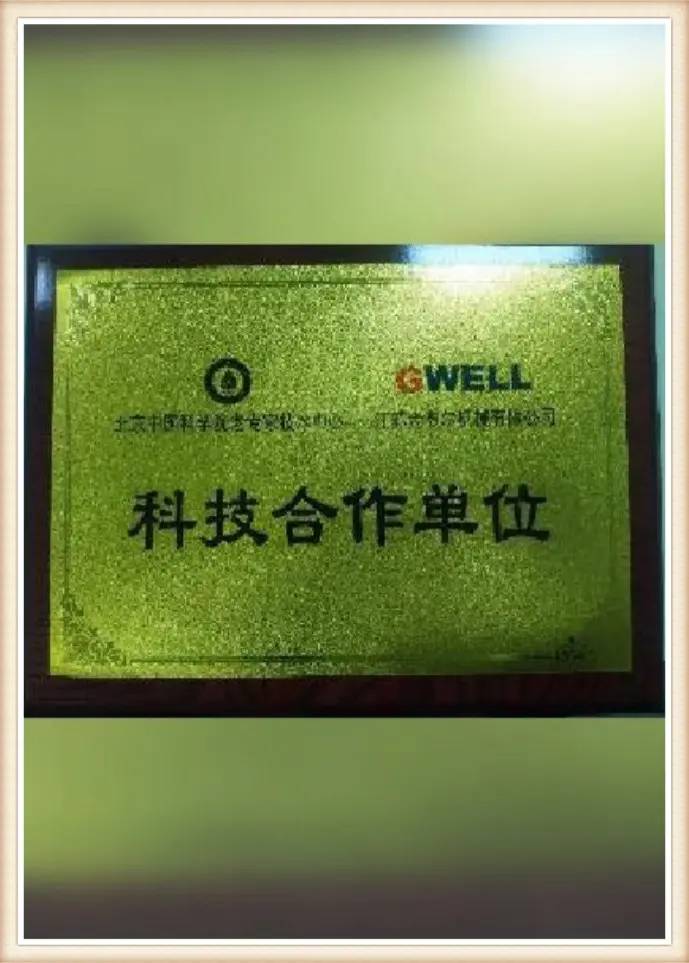
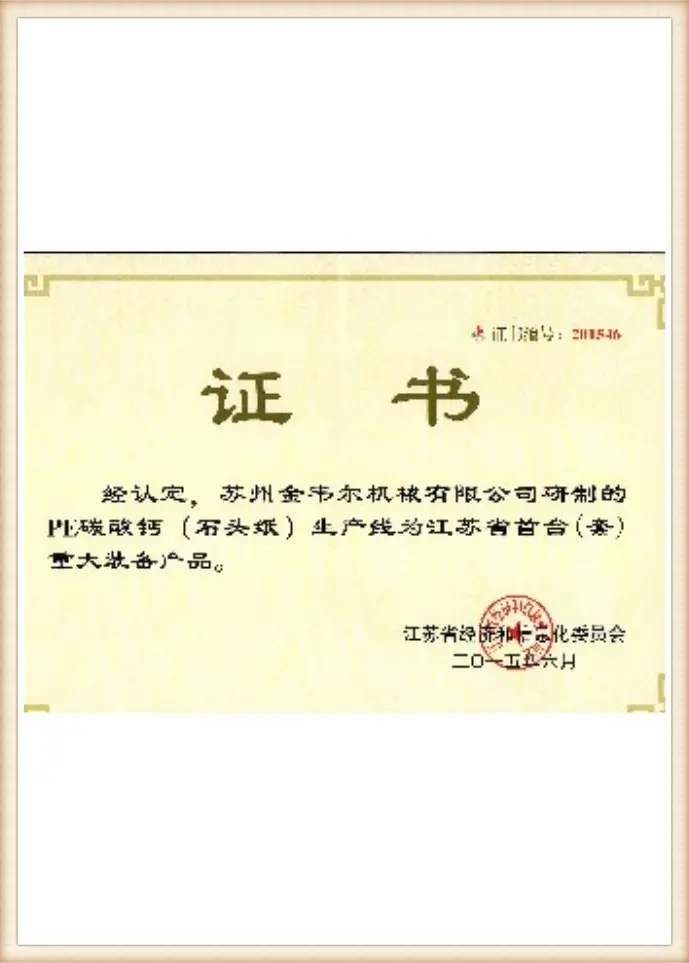
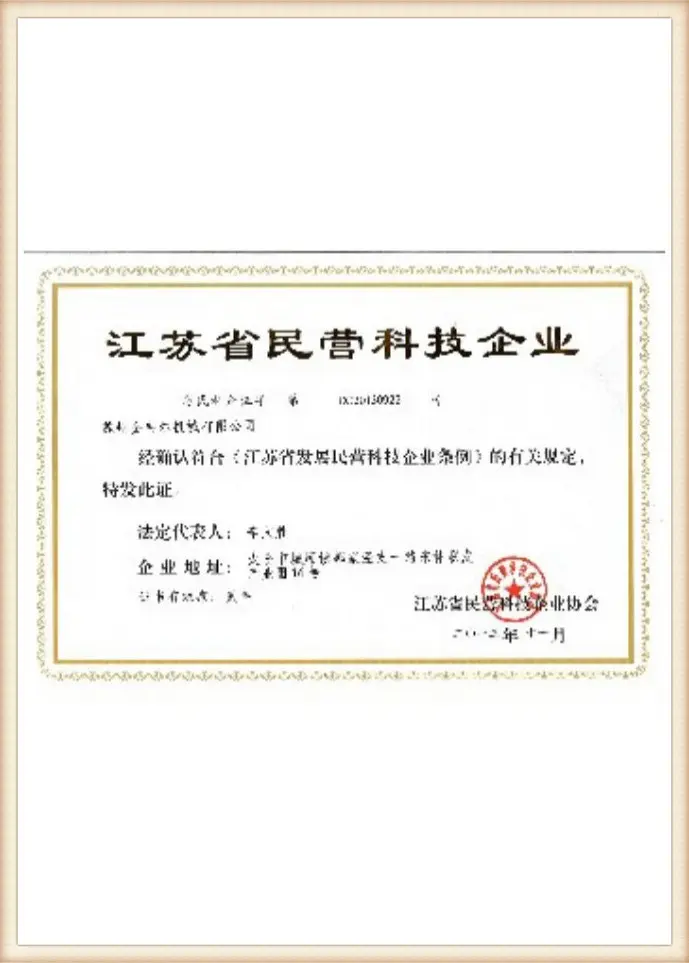
Our research and development capabilities, combined with our precision machining facilities, have been widely recognized by leading automotive and architectural component manufacturers worldwide. We partner with universities and research institutes to continually advance the state of the art in polymer processing machinery.
Ensuring compliance with international quality management systems and industrial standards.

Read about our newest installations, technological announcements, and global exhibitions.
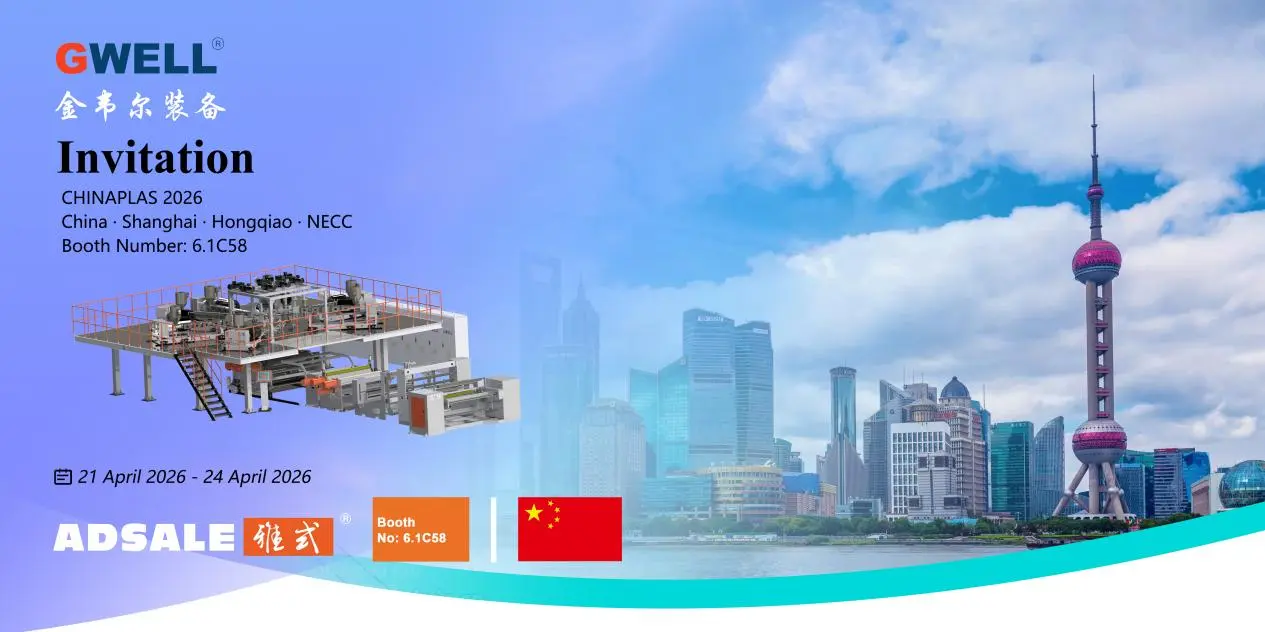
Gwell introduces its latest multi-layer casting and co-extrusion technology at the upcoming international plastic and chemical exhibition, highlighting advancements in energy-efficient systems.
View More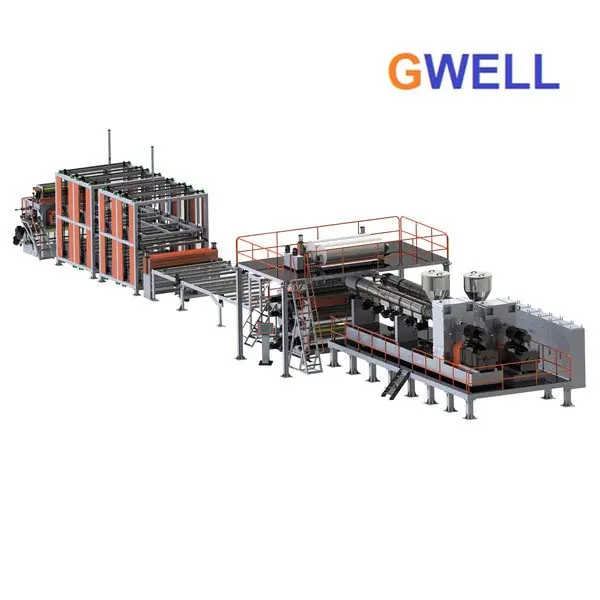
Ensuring vehicle interior recyclability: Gwell successfully commissions a specialized POE synthetic leather extrusion system for a leading automotive OEM.
View More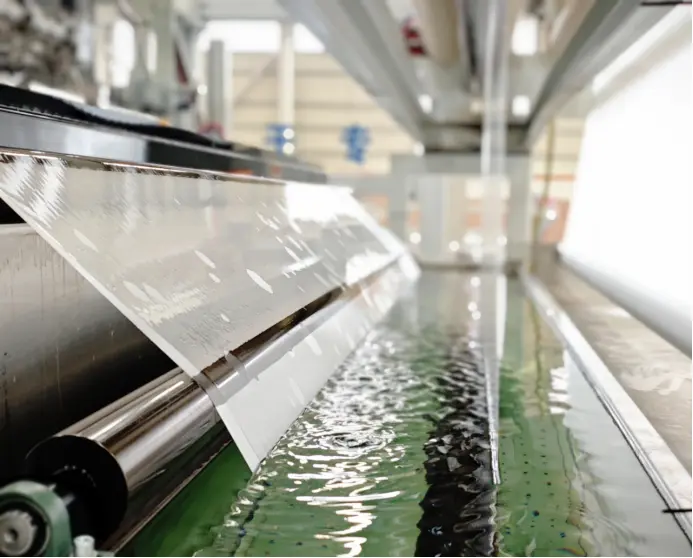
With high precision, efficiency, and compatibility, Gwell's PVB wedge-shaped film production line addresses the high optical tolerances required by automotive HUD systems.
View MoreAnswering key questions on material properties, wedge control, and quality tolerances.
Collaborating with top raw material suppliers, equipment manufacturers, and research institutions worldwide.

Explore our additional polymer extrusion systems and high-durability film manufacturing lines.
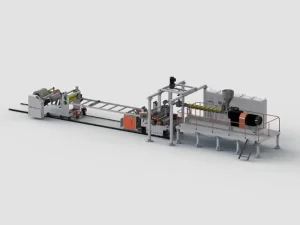
High-precision extrusion lines designed for compostable Polylactic Acid (PLA) sheets, reducing plastic footprint in food service packaging.
View Details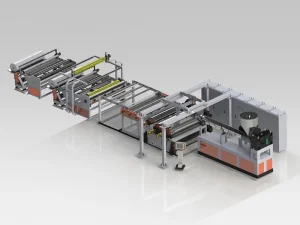
Specialized line configured with precise cross-sectional tapering controls to produce high-tolerance HUD interlayer films.
View Details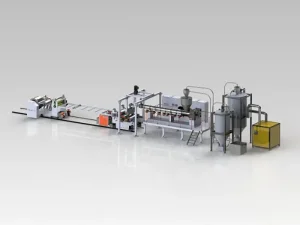
Dedicated co-extrusion technology designed for food-contact safe APET and CPET packaging sheets, ensuring zero contamination.
View Details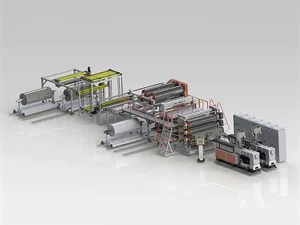
Engineered for high-purity thermoplastic polyurethane films used in automotive paint protection (PPF) and self-healing wraps.
View Details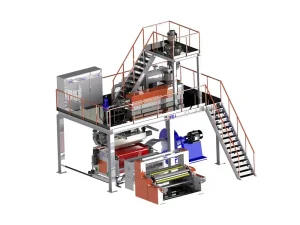
Specialized high-speed polymer fiber attenuation lines for manufacturing medical-grade filtration media and air purifiers.
View Details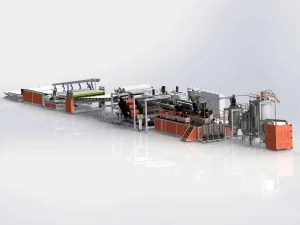
High-efficiency extrusion systems designed for GPPS sheets used in modern LED backlit display panels and light fixtures.
View Details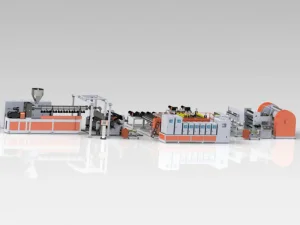
Advanced line for polyphenylene sulfide (PPS) separator membranes used in hydrogen production through alkaline water electrolysis.
View Details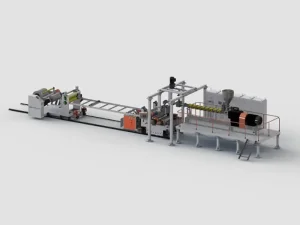
High-throughput line designed for thermoformed and blister polypropylene sheets, featuring fast gauge control and high output rates.
View DetailsGwell's R&D capability and precision machining systems have been widely recognized by leading automotive and architectural component manufacturers worldwide. Request a quotation or technical specification review today.
Submit Technical Inquiry