
Explore our high-performance industrial lines engineered for precision thermoforming, packaging, and advanced film production.
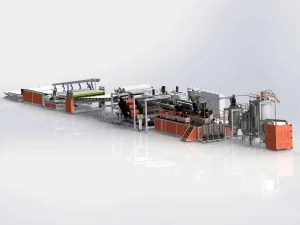
High-precision optical diffuser plate production lines designed for maximum light transmission and uniform dispersion in display systems.
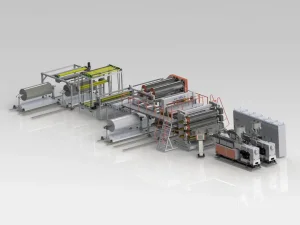
Engineered for thermoplastic polyurethane coating processes, offering superior adhesion properties for medical and automotive industries.
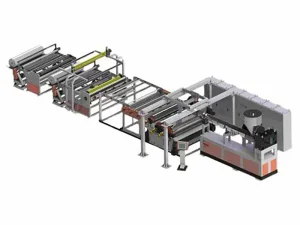
Premier solar encapsulation film manufacturing solution, providing optimal transparency and long-term durability against UV degradation.
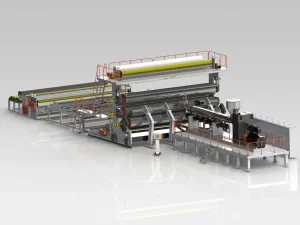
Heavy-duty waterproofing sheet extrusion lines for environmental protection, municipal construction, and landfill lining applications.
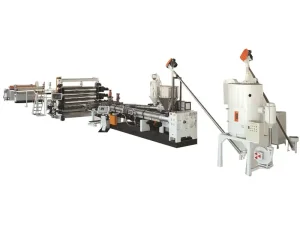
Dual-purpose co-extrusion technology designed to manufacture high-impact structural panels for luggage, automotive, and interior paneling.
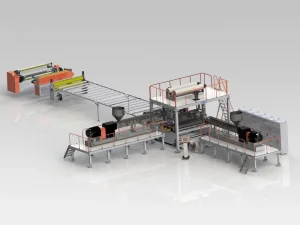
Next-generation ecological building materials production systems, emphasizing outstanding thermal weldability and weathering profiles.
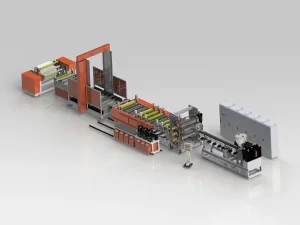
High-speed machinery for producing high-tensile stretch wrap packaging, featuring automatic tension control and film thickness consistency.
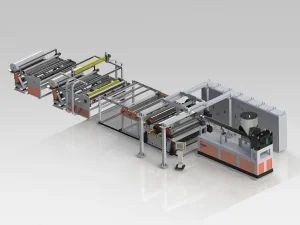
State-of-the-art optical-grade PVB interlayer production for HUD automotive windscreens, delivering extreme clarity and sound absorption.
In the modern polymer processing sector, the designation "Pet Line" represents the technological peak of PET (Polyethylene Terephthalate), PETG (Polyethylene Terephthalate Glycol-modified), and rPET (Recycled PET) extrusion systems. As global regulatory bodies push for stricter environmental compliance and packaging materials demand high-efficiency barrier properties, plastic extrusion manufacturers have moved beyond basic design paradigms. The primary focus of key industrial players is now focused on solving the structural degradation of polymers during melt processes, optimizing energy output, and integrating multi-layer barrier systems.
This whitepaper explores the technological parameters that define leading manufacturers in this category. Our analysis centers on custom sheet systems, specialized cast films, and high-tensile stretch film architectures. For enterprise procurement managers, selecting an extrusion partner involves evaluating thermal degradation solutions, vacuum degassing capabilities, and structural integration architectures.
SEO Insight & Information Gain: Unlike standard packaging lines, industrial PET extrusion machinery requires integrated processing configurations. This includes co-rotating twin-screw setups equipped with multi-venting high-vacuum units. These systems process flakes without pre-drying, avoiding the Intrinsic Viscosity (IV) drops common in single-screw lines.
The major processing challenge for PET is its hydrolytic sensitivity. If melted in the presence of moisture, water molecules split the ester bonds, resulting in lower molecular weight and decreased physical toughness. Manufacturers address this challenge using two main processing approaches:
Key performance metrics for standard multi-layer PET Sheet production lines:
Analyzing key market drivers, regional regulatory demands, and production requirements for modern plastics processing.
The global demand for PET and PETG extrusion machinery is driven by shifts in the packaging, automotive, construction, and electronics sectors. Key market dynamics include:
With FDA and EFSA regulations pushing for higher recycled content in food packaging, extrusion lines must be capable of processing rPET flakes. Multi-layer co-extrusion technology allows manufacturers to place food-grade virgin PET on external surfaces (A layers) while using recycled material in the core (B layer).
Rising energy costs have made energy consumption a key factor in equipment evaluation. Modern extrusion systems utilize infrared heating elements, induction barrel warmers, and high-efficiency water-ring vacuum pumps to optimize energy usage and lower per-ton production costs.
Thermoforming sheets and optical films require smooth, defect-free surfaces. Advanced calender stacks use hydraulic roll positioning, rapid roll-tempering channels, and cross-axis alignment mechanisms to achieve thickness tolerances within ±1% across the entire width of the sheet.
| Feature Parameter | Single-Screw (Pre-drying required) | Co-Rotating Twin-Screw (Non-drying degassing) | Planetary Roller Screw (Specialized) |
|---|---|---|---|
| Pre-drying Cost | High (requires dedicated thermal energy) | Eliminated (Direct intake of wet material) | Eliminated |
| IV (Intrinsic Viscosity) Drop | 0.03 - 0.05 dl/g | 0.01 - 0.02 dl/g | 0.02 - 0.03 dl/g |
| Screw Configuration Flexibility | Fixed / Low adjustment range | Modular segment block construction | Interchangeable planetary spindles |
| Energy Consumption per Ton | 350 - 450 kWh/t | 260 - 320 kWh/t | 290 - 340 kWh/t |
| Screw Lifecycle Cost | Low original outlay | Medium (Requires modular block replacements) | High replacement complexity |
Specialized processing systems designed for solar film, packaging boards, structural sheets, and advanced cast film applications.
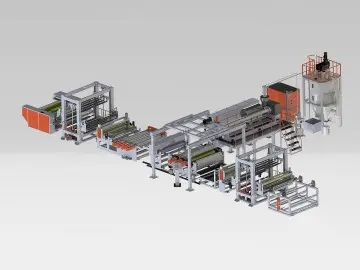
Designed for co-extruding weatherable protective layers, GWELL's ASA cast lines deliver precise thickness control and uniform cooling profile.
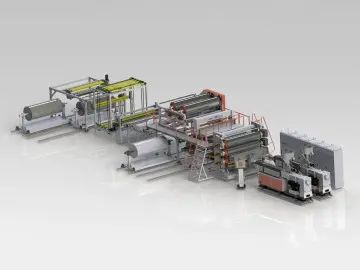
Optimized for high-adhesion TPU film applications, supporting precise coating thickness control and online lamination processes.
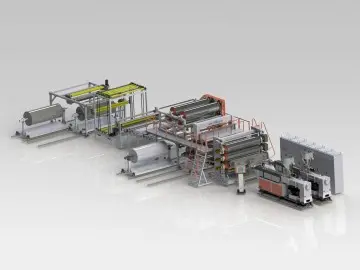
Highly versatile processing lines suitable for standard thermoplastic polyurethane films, ensuring consistent elastic memory and clarity.
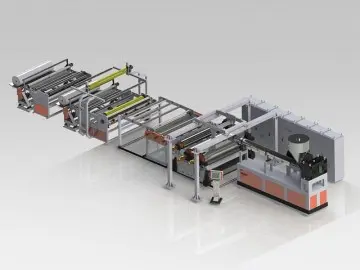
Specialized solar backplane membrane production setup engineered to handle high-temperature corrosive melt flows safely.
A significant advancement in laminated glass safety interlayer production, maintaining stable thickness gradients for automotive HUD systems.
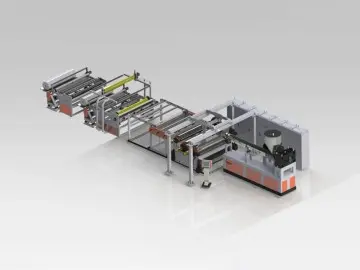
Integrates automatic raw material dosing and robust winding technology to prevent contamination and wrinkles in critical safety interlayers.
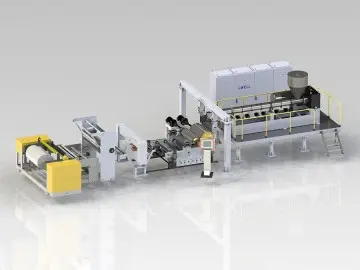
A highly specialized system designed for chemical packaging applications, with precise temperature control to prevent polymer gelation.
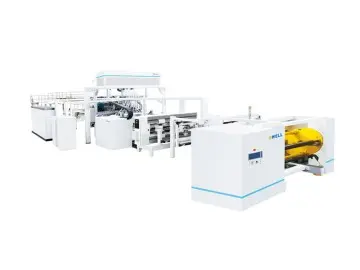
Engineered for high-performance organic polyimide film processing, providing extreme thermal stability and dimensional control.
China Gwell Machinery Co., Ltd. is a high-tech enterprise specializing in the design and manufacture of plastic extrusion production lines for film, sheet, and profile applications. Guided by the core operating philosophy, "Expertise creates customers' values," Gwell focuses on high-precision engineering and equipment reliability.
Operating across multiple industrial bases, Gwell integrates advanced design processes with robust assembly lines. Our primary R&D efforts focus on reducing energy consumption, improving thickness control, and simplifying processing configurations for complex co-extruded structures. Gwell's engineering teams collaborate with universities and materials research institutes to bring advanced technological developments from the lab to commercial production.
The company's machinery operates in major industrial centers worldwide. Through global logistics channels and dedicated field installation teams, Gwell provides complete project services from initial layout design and equipment manufacturing to final onsite commissioning and operator training.
Gwell supports international production requirements through integrated manufacturing capacity:
Reliable service models and international compliance standards for industrial installations.

Partnerships with materials science universities to develop advanced screw configurations and venting designs.

Dedicated support from initial melt trials and factory integration to downstream configuration.

Three major production bases providing an annual manufacturing capacity of over 1000 lines.

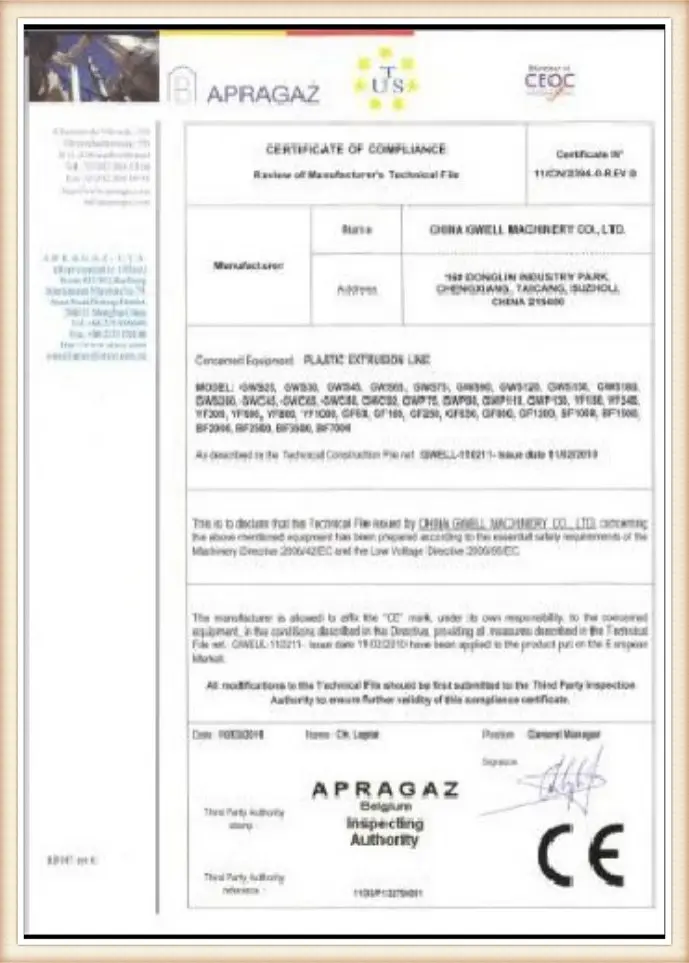
Equipment exported globally, complying with CE, UL, and regional safety codes.

Over 100 dedicated technical engineers managing custom designs and field commissioning.
Stay informed with technical developments and innovations in extrusion design, material formulation, and trade updates.
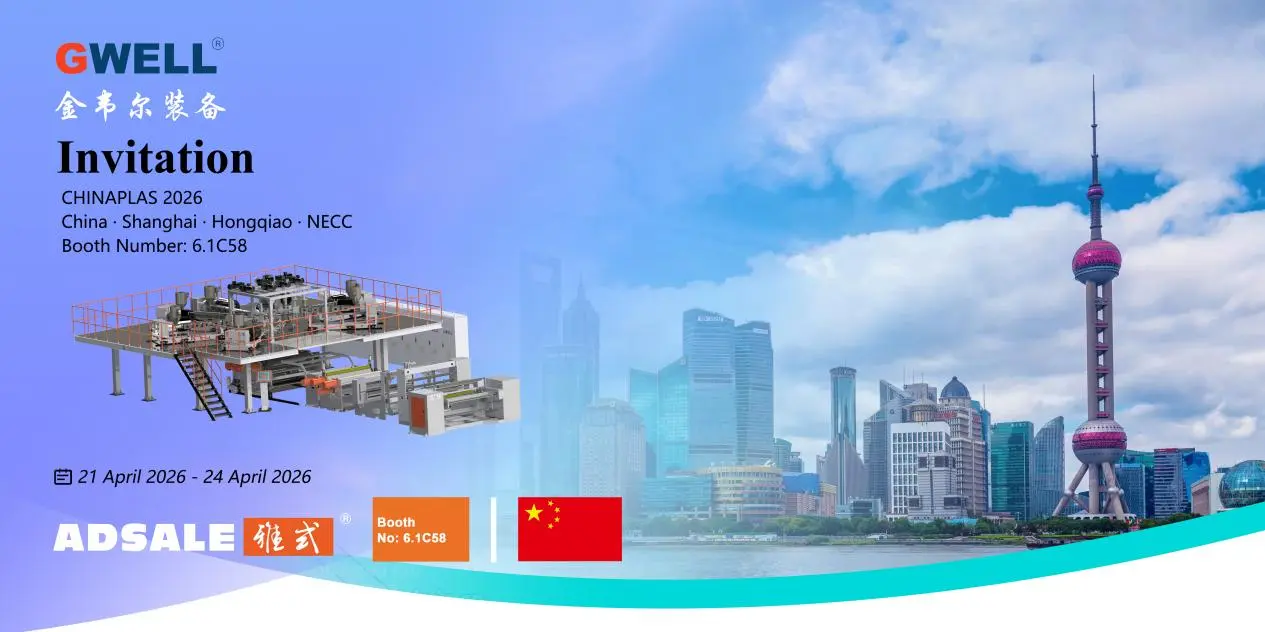
Gwell introduces new energy-efficient sheet lines at the upcoming international plastics show, emphasizing multi-layer rPET processes.
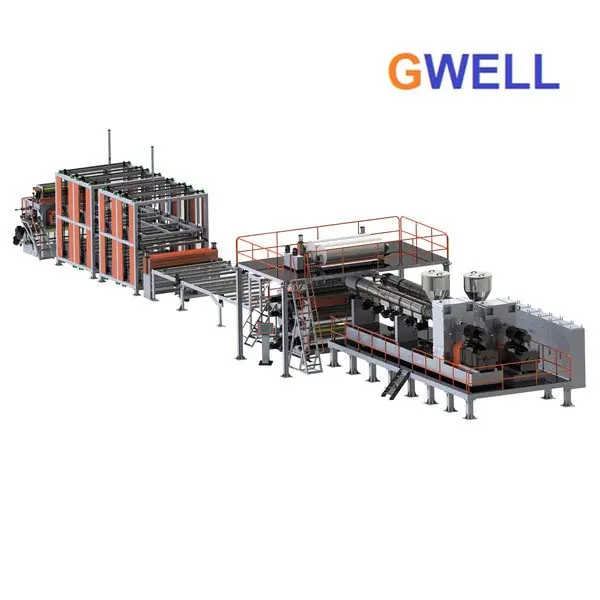
New extrusion designs for eco-friendly POE synthetic leather, replacing traditional PVC structures in automotive interiors.
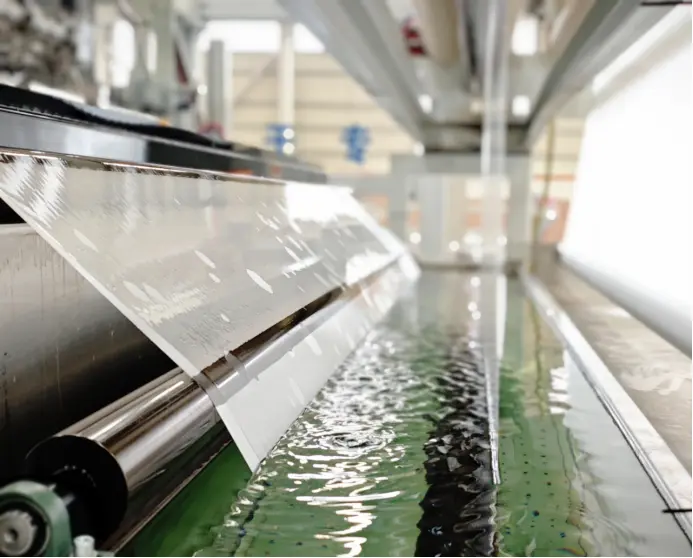
Updates on Gwell's PVB wedge-shaped interlayer line, designed for high-precision automotive HUD windscreen applications.
Addressing the technical, operational, and financial questions commonly raised by procurement managers and design engineers.
Co-rotating twin-screw extruders use multi-stage venting zones operating under deep vacuum (< 10 mbar). As the polymer melts, moisture is extracted immediately, preventing hydrolysis. Additionally, the twin-screw design provides efficient distributive mixing at lower shear stress, minimizing thermal degradation and preserving the polymer chain length (limiting IV drop to less than 0.02 dl/g).
PET is a semi-crystalline polymer requiring precise temperature profiles to manage crystallization, whereas PETG is an amorphous copolyester that does not crystallize. PETG features a wider thermoforming window but is more sensitive to shear heating. Consequently, processing PETG requires modifying the screw configuration to reduce shear energy and adjusting calender temperatures to prevent sticking on the cooling rolls.
An ABA feedblock distributes the melt into three layers. The outer 'A' layers (typically 10-20% each of the total thickness) are made of virgin resin to ensure surface properties like clarity and sealability. The core 'B' layer (60-80% of thickness) can utilize lower-cost materials, such as recycled rPET flakes or factory regrind, significantly reducing raw material costs while keeping the product compliant with food safety regulations.
Consistent thickness profiles require regular calibration of the automatic T-die and routine maintenance of the calender roll hydraulics. Oil tempering channels should be cleaned every six months to prevent lime build-up, which can cause thermal variations. The thickness gauge sensors should also be calibrated weekly against a physical standard sheet.
Explore our industrial systems designed for high-density sheet processing, barrier films, and eco-friendly packaging sheets.
Precision-engineered wedge film extrusion systems designed for automotive HUD applications, ensuring stable wedge angle distribution.
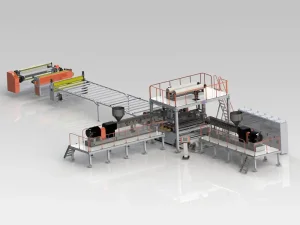
Co-extrusion solutions for producing high-durability thermoplastic sheets used in automotive floor mats and industrial packaging.
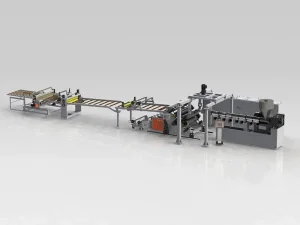
Specialized high-temperature engineering plastic lines designed for fluoropolymer and performance polymer board production.
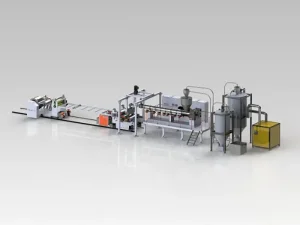
FDA-compliant sheet extrusion systems utilizing advanced multi-venting technology to handle up to 100% recycled bottle flakes.
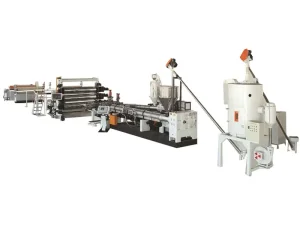
Designed for manufacturing refrigerator inner liners, ensuring high thermoforming stretch capacity and chemical resistance.
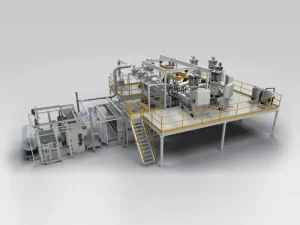
High-speed cast film machinery featuring advanced cooling rolls and automated winder tension controls for flexible packaging.
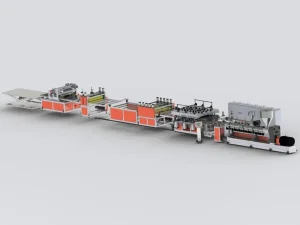
Structural packaging systems designed to produce lightweight, high-rigidity corrugated boards for sign boards and boxes.
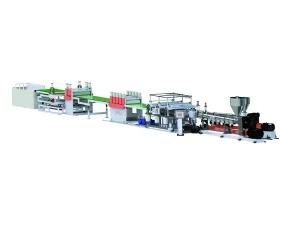
Heavy-duty sheet machinery designed to manufacture reusable concrete formwork panels with long service lifecycles.
Connect with Gwell's engineering team to design custom sheet, board, or film production lines tailored to your operational requirements.
Request Technical Specifications