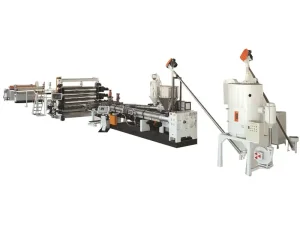
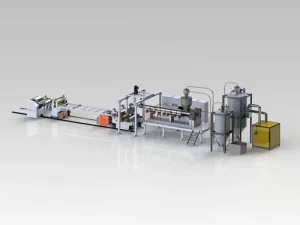
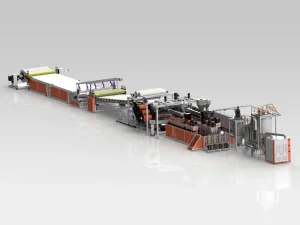
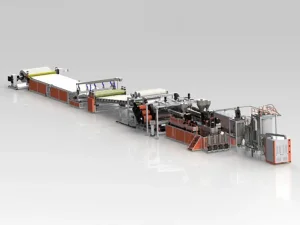
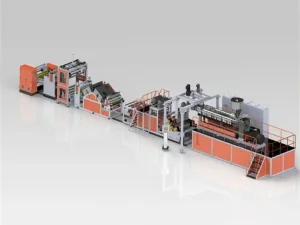
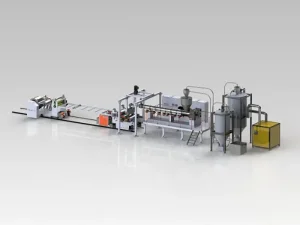
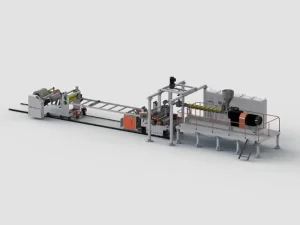
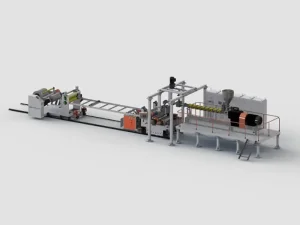
China PCTG Sheet Extrusion Line Manufacturers, Products
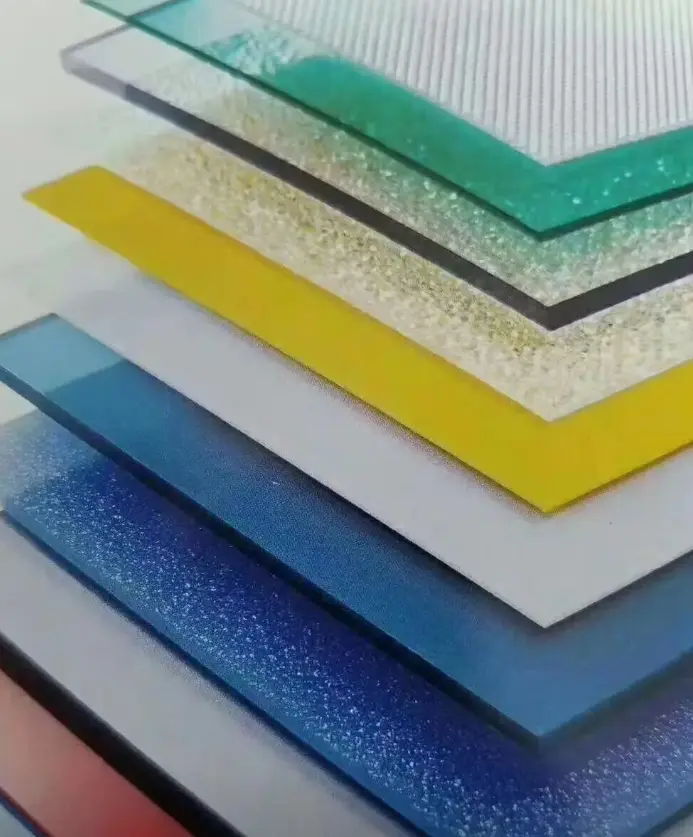
PCT/PCTG sheet is a high-performance transparent copolyester material that combines the rigidity of polyethylene terephthalate (PET) and the flexibility of 1,4-cyclohexanedimethanol (CHDM). It features high transparency, impact resistance, and chemical corrosion resistance, and is widely used in food packaging, medical equipment, consumer electronics, and other fields.
PCT/PCTG sheet is a high-performance transparent copolyester material that combines the rigidity of polyethylene terephthalate (PET) and the flexibility of 1,4-cyclohexanedimethanol (CHDM). It features high transparency, impact resistance, and chemical corrosion resistance, and is widely used in food packaging, medical equipment, consumer electronics, and other fields.
PCT (Polybutylene terephthalate cyclohexane dimethanol ester) features ultra-high heat resistance and excellent dimensional stability as its core advantages; PCTG (Polybutylene terephthalate cyclohexane dimethanol ethylene glycol ester), an improved version of PCT, combines high transparency, impact resistance, and chemical resistance, while also being easier to process and having better toughness.
I. Food Contact Field: Safety, Heat Resistance, and Easy Cleaning
Both PCT and PCTG sheets comply with food contact safety standards such as FDA (U.S. Food and Drug Administration) and EU No. 10/2011. They are resistant to acids and alkalis and do not easily absorb oil stains, making them preferred materials for food contact scenarios.
PCT sheets: Focus on "high-temperature scenarios", such as microwave-safe tableware (trays, separators), coffee pot inner linings, and baby food heating bowls - they can withstand temperatures of 120-150°C without deforming or releasing harmful substances after repeated heating.
PCTG sheets: Focus on "room temperature / medium temperature scenarios + transparency", such as transparent food packaging boxes (for fruits, cooked foods, baked goods), disposable lunch boxes (replacing traditional PP/PS, with better toughness and less prone to breakage), and baby bottle shells (high transparency for observing milk volume, impact-resistant and shatterproof).
II. Medical and Health Field: Biocompatibility, Sterilization Resistance, and High Cleanliness
The medical field has extremely high requirements for materials in terms of "biological safety, sterilization resistance, and dimensional stability". PCT and PCTG sheets, being non-toxic and not releasing harmful substances, and resistant to various sterilization methods (high-temperature steam, ethylene oxide, ultraviolet), are widely used:
PCT sheets: For high-temperature sterilization medical devices, such as surgical instrument trays, dental tool disinfection boxes, and blood dialysis equipment components - they can withstand 134°C high-pressure steam sterilization and remain stable after repeated sterilization.
PCTG sheets: For room temperature / medium temperature medical consumables, such as transparent reagent tubes (for biochemical testing), vaccine packaging trays (protecting vaccine bottles, high transparency for easy observation), and medical mask frames (good toughness, fits the face, and can be disinfected and reused).
III. Consumer Electronics Field: Heat Resistance, Scratch Resistance, and Lightweight
Consumer electronic devices (such as mobile phones, laptops, home appliances) have high requirements for materials in terms of "heat resistance, impact resistance, and appearance texture". PCT and PCTG sheets can replace traditional metals or glass, achieving a balance between lightweight and functionality:
PCT sheets: For "high-temperature working components", such as laptop heat sink module shells, home appliance control panels (rice cookers, ovens) - they can withstand local high temperatures (80-120°C) during device operation and have good insulation.
PCTG sheets: For "appearance parts + anti-drop requirements", such as mobile phone cases (high transparency, close to glass texture, impact-resistant and not easy to break), smartwatch straps (good flexibility, resistant to sweat corrosion), and earphone shells (lightweight, can be dyed in various colors).
IV. Home and Building Materials Field: Durability, Aesthetics, and Environmental Friendliness
In home and building materials, PCT and PCTG sheets, with their advantages of "aging resistance, easy processing, and recyclability", replace traditional PVC, acrylic, and other materials, and are applied to decorative and functional components:
PCT sheets: For "high-temperature home components", such as kitchen countertop water barriers (oil-resistant, heat-resistant, can directly contact hot pots), bathroom anti-slip treads (resistant to water corrosion, do not deform after high-temperature showers).
PCTG sheets: For "transparent / decorative components", such as bathroom partitions (high transparency, impact-resistant, lighter and safer than glass, no sharp fragments when broken), furniture panels (such as transparent desk partitions, transparent wardrobe drawer doors, easy to clean and scratch-resistant), and indoor decorative films (can be printed with patterns and attached to walls or furniture surfaces, resistant to aging and fading).
V. Packaging and Logistics Field: Impact Resistance, Weather Resistance, and Customizability
The packaging field has high requirements for materials in terms of "impact resistance, weather resistance (high and low temperatures), and printability". PCTG sheets (due to their better toughness) are more widely used in this scenario, while PCT sheets focus on high-temperature transportation packaging.
PCTG sheet: such as express delivery cushioning packaging (replacing foam, transparent for observing the contents, recyclable), cosmetic packaging (transparent mask box, skin care product display box, high transparency highlighting product texture), toy packaging (impact resistant, protecting toys from damage during transportation and meeting children's safety standards).
PCT sheet: such as high-temperature transportation trays for industrial parts (such as automotive parts, electronic components, in high-temperature storage or transportation environments, the tray does not deform, protecting the precision of parts).
VI. Optical and Special Fields: High Transparency, Low Dispersion
Due to its "high light transmittance (close to 90%, comparable to acrylic), low yellowing, and low optical dispersion", PCTG sheet can be used in scenarios with optical performance requirements:
- Transparent display stands (jewelry and watch display cabinets in shopping malls, high transparency without blocking the product);
- Optical lens protective covers (such as dust covers for camera lenses and sensors, impact resistant and scratch resistant);
- Customized lampshades (high transparency, uniform light transmission, and heat resistant without deformation).
TPO & TPE Sheet Overview
TPO (Thermoplastic Olefin) Sheet
Overview: Thermoplastic Olefin (TPO) sheets are a type of thermoplastic material that combines the durability and processability of polyolefins with the flexibility and weatherability of elastomers. They are often produced through a blending process that integrates polypropylene with rubbery copolymers, resulting in a material that exhibits both rigid and flexible characteristics.
Key Properties:
Durability: TPO sheets are known for their high durability and resistance to abrasion, making them suitable for applications that require robust materials.
Weatherability: They exhibit excellent resistance to UV rays, weathering, and chemicals, ensuring long-term performance in outdoor environments.
Flexibility: Despite their rigidity, TPO sheets offer a degree of flexibility, allowing them to be molded and formed into various shapes and sizes.
Processability: Easy to fabricate using methods such as injection molding, extrusion, and thermoforming, making them cost-effective to produce and customize.
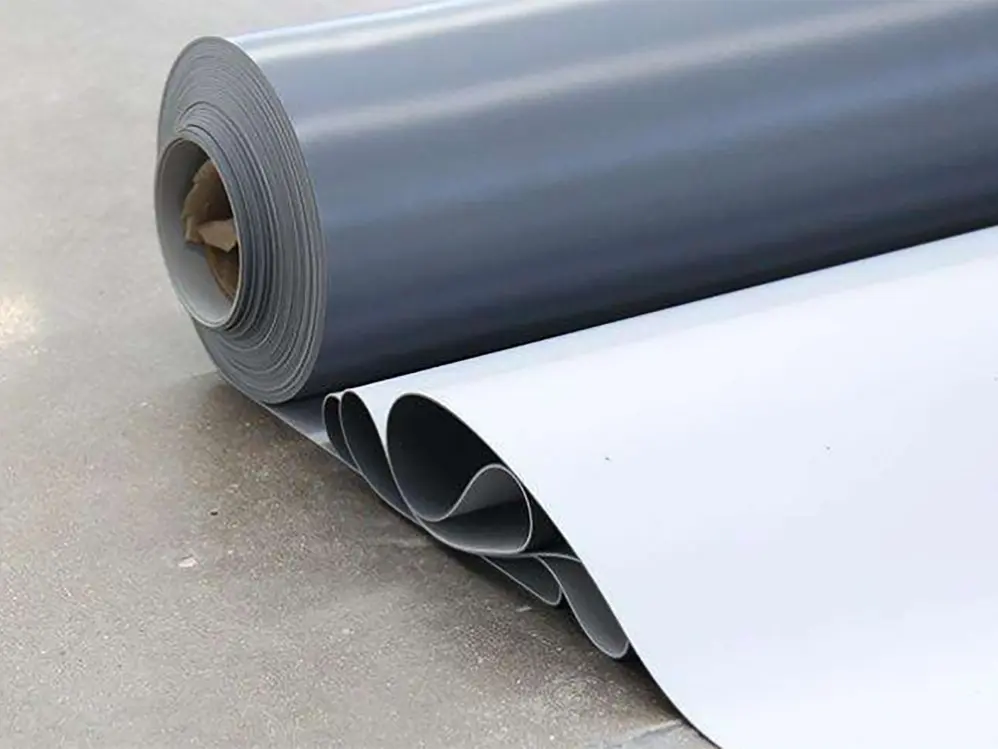
Applications: TPO sheets are commonly used in automotive interior and exterior trim, roofing membranes, outdoor furniture, signage, and various building and construction applications.
TPE (Thermoplastic Elastomer) Sheet
Overview: Thermoplastic Elastomers (TPEs) are a class of materials that combine the elasticity of traditional rubbers with the processability and recyclability of thermoplastics. Unlike thermoset elastomers, TPEs can be repeatedly heated, shaped, and cooled without losing their physical properties.
Key Properties:
Elasticity: TPE sheets offer excellent elastic recovery and flexibility, mimicking the behavior of rubber but with the added advantage of being thermoplastic.
Durability: They are resistant to tearing, abrasion, and many chemicals, providing long-lasting performance in demanding environments.
Temperature Resistance: Many TPEs can withstand a wide range of temperatures, making them suitable for applications that experience extreme thermal conditions.
Processability and Recyclability: Easy to process using standard thermoplastic techniques and can be recycled and reused, reducing waste and environmental impact.
Applications: TPE sheets are widely used in automotive parts, consumer goods, medical devices, footwear, sealing and gasketing, and various industrial applications where a combination of flexibility, durability, and processability is required.
Frequently Asked Questions (FAQ)
What are the primary differences between PCT and PCTG sheets?
PCT features ultra-high heat resistance (withstanding 120-150°C) and excellent dimensional stability, making it ideal for high-temperature scenarios like microwave tableware and sterilization trays. PCTG is an improved version of PCT, offering higher transparency, superior toughness, and better impact resistance, which makes it easier to process at room or medium temperatures.
Are PCT and PCTG sheets safe for food-contact applications?
Yes, both PCT and PCTG sheets fully comply with global food safety standards, including the FDA (U.S. Food and Drug Administration) and EU No. 10/2011 regulations. They resist acids, alkalis, and oils, ensuring safety and ease of cleaning.
How do medical-grade PCT and PCTG sheets perform under sterilization?
PCT sheets are highly resistant to high-pressure steam sterilization (up to 134°C) without deformation, making them suitable for surgical instrument trays. PCTG sheets are resistant to other standard sterilization methods like ethylene oxide and ultraviolet rays, ideal for medical consumables and vaccine trays.
What makes TPO sheets suitable for outdoor and automotive use?
TPO (Thermoplastic Olefin) sheets combine the durability of polyolefins with the weatherability of elastomers. They exhibit outstanding resistance to UV rays, chemicals, and abrasion, which guarantees long-term durability in automotive exterior trims and roofing membranes.
Can TPE sheets be recycled?
Yes. Unlike traditional thermoset rubbers, TPE (Thermoplastic Elastomer) sheets can be repeatedly melted, reshaped, and cooled without degrading their physical properties. This characteristic makes them fully recyclable and eco-friendly.
In which applications are TPE sheets preferred over TPO?
TPE sheets are preferred in applications requiring high elasticity, flexible recovery, and soft-touch textures, such as footwear, medical tubing, sealing/gaskets, and consumer goods. TPO sheets, by contrast, are chosen for structural components requiring higher rigidity and extreme weather resistance.