
Discover our leading industrial film and sheet production equipment designed for extreme precision, stability, and high performance.
Understanding the manufacturing fundamentals, technical barriers, and market evolution of Polymethyl Methacrylate extrusion lines.
Polymethyl Methacrylate (PMMA), commonly referred to as acrylic glass, stands as a critical polymer in the modern industrial landscape. Favored for its exceptional optical clarity, UV resilience, and weatherability, PMMA has surpassed many traditional polymers in high-value engineering domains. The manufacturing of PMMA sheets relies heavily on sophisticated extrusion lines. Choosing the right PMMA sheet line company requires deep consideration of engineering precision, automation integration, thermal control stability, and material formulation handling.
Currently, the global demand for extruded PMMA sheets is experiencing rapid growth, driven by key sectors such as architectural glazing, sound barriers, automotive instrumentation, commercial signage, and advanced optoelectronic displays. Unlike standard commodity polymer extrusion, optical-grade PMMA requires highly controlled processing parameters. Thermal degradation, gel formation, and mechanical contamination represent critical barriers that only premier manufacturers can address. Gwell Machinery, as an industry pioneer, leverages decades of R&D to provide turnkey engineering solutions that minimize wastage, improve energy efficiency, and guarantee optical purity down to the micron level.
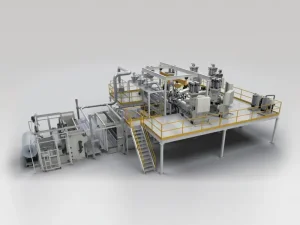
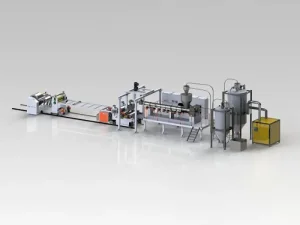
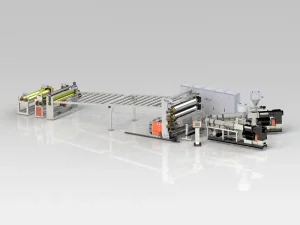
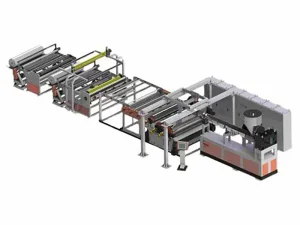
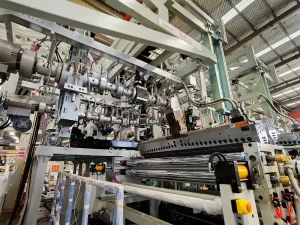
Minimal shear screw geometries and advanced vacuum venting systems prevent thermal stress, discoloration, and bubbling in premium acrylic glass sheets.
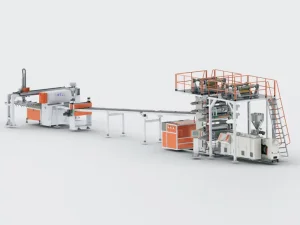
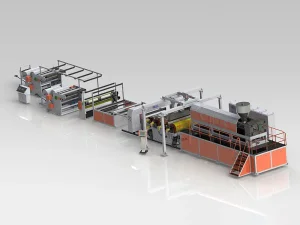
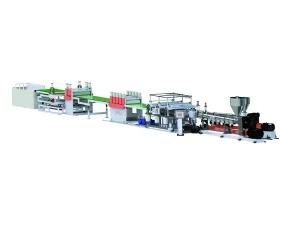
Multi-layer capabilities allowing integration of PMMA with PC or ABS. Ideal for manufacturing complex components with enhanced impact resistance and gloss.
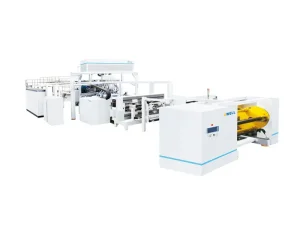
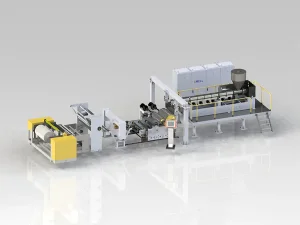
Precise closed-loop oil temperature control in the three-roll calender guarantees accurate surface replication and absolute flatness across the width.
How mechanical precision, material behavior engineering, and digital control align to achieve optical perfection.
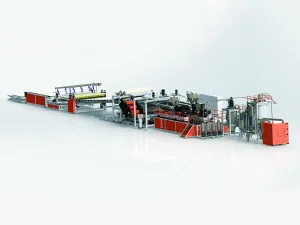
To achieve market-leading results, a PMMA extrusion system must integrate several high-performance modules. The foundation of this system lies in the design of the extruder screw. PMMA is a shear-sensitive polymer with high viscosity. Standard screw designs risk overheating the core melt, leading to micro-gels and reduced optical clarity. The Gwell PMMA extrusion system utilizes a proprietary barrier screw design with a length-to-diameter (L/D) ratio optimized between 33:1 and 35:1. This guarantees optimal homogenic melting at lower thermal profiles, avoiding degradation of the acrylic molecules.
Another critical component is the multi-stage vacuum degassing system. PMMA is highly hygroscopic, meaning it rapidly absorbs ambient moisture. If processed without thorough drying and degassing, moisture turns into steam pockets within the barrel, causing silver streaks and micro-bubbles in the finished sheet. Gwell implements a high-efficiency multi-vent degassing setup under deep vacuum conditions, extracting moisture and volatile organic compounds (VOCs) directly from the melt stream, eliminating the necessity for overly long pre-drying cycles.
Directly downstream, the melt pump plays a vital role. By isolating the T-die from the pressure pulsations of the extruder, it ensures constant volumetric flow. This enables the line to produce sheets with thickness tolerances within ±1%. The subsequent three-roll calender, featuring mirror-polished rolls with internal spiral water or oil tempering channels, establishes the absolute surface finish. Any deviation in roll surface roughness (Ra) will replicate on the acrylic sheet, which is why Gwell rolls are finished to Ra < 0.01 μm.
Explore Gwell's engineering capabilities across different extrusion categories and target applications.
How PMMA sheets serve critical roles across different geographies and end-markets.
The application profile of PMMA sheets varies by region. In highly developed markets such as Western Europe and North America, strict building codes and environmental regulations have driven the demand for high-performance acoustic insulation barriers along highways and railways. These acoustic panels require thick PMMA sheets (15mm to 25mm) that offer not only sound dampening but also impact resistance, weather durability, and architectural aesthetics. Extrusion systems for these sheets must support high throughput rates and slow, controlled cooling to prevent internal stress patterns that could lead to crack propagation.
In contrast, the Asian market—particularly Eastern Asia—is characterized by its position as a global hub for optoelectronics and consumer electronics. Here, the primary demand centers on thin, optical-grade PC/PMMA compound sheets used in manufacturing light guide plates (LGP) for flat-panel TVs, laptop screens, and automotive instrument displays. The focus for these extrusion systems is on absolute precision, dust-free cleanroom integration, and co-extrusion technology. A typical PC/PMMA co-extrusion setup integrates the structural strength and thermal stability of Polycarbonate with the high scratch resistance and optical transmission of Acrylic.
For emerging markets, commercial signage, high-quality sanitary ware (acrylic bathtubs, spa shells), and modern greenhouse glazing are driving the adoption of co-extruded ABS/PMMA sheets. These sheets combine the low-cost impact resistance of ABS with the high-gloss, UV-stable surface finish of PMMA. Extrusion machinery for this segment must handle dissimilar polymers with different shrinkage values, requiring highly specialized feedblock designs and multi-manifold dies to ensure precise layer distribution and prevent delamination under mechanical stress.
Production Bases Globally
Total Manufacturing Footprint
High-Tech Industrial Experts
Lines Annual Production Capacity
Anticipating the future of PMMA extrusion: automation, sustainability, and high throughput.
As the polymer processing industry moves toward intelligent manufacturing, the PMMA extrusion line of tomorrow will rely heavily on digital systems. The integration of closed-loop feedback systems between the thickness-measuring scanners and the automatic T-die thermal bolts allows for real-time adjustments during production. If the thickness sensor detects a deviation as small as 2 microns in a specific zone, it signals the corresponding thermal bolt to adjust its heating element, modifying the local gap of the die lips to restore nominal thickness within seconds. This level of automation minimizes startup waste, maintains quality across long production runs, and reduces dependency on manual intervention.
Sustainability is another key factor shaping the technological roadmap. The extrusion industry faces pressure to incorporate post-industrial and post-consumer PMMA regrind without compromising optical quality. Processing recycled PMMA (rPMMA) introduces challenges such as contamination and inconsistent viscosity. Modern extrusion lines address this by incorporating advanced melt filtration systems, such as double-piston continuous screen changers, and optimization of the screw flight geometries to improve the shear mixing of recycled and virgin materials. Additionally, vacuum degassing systems are being upgraded to remove volatile impurities commonly found in recycled feedstock, facilitating the transition to circular economy targets in high-end applications.
China Gwell Machinery Co., Ltd. is a high-tech enterprise dedicating to the manufacture of plastic extrusion lines for Film, Sheet and Profile.
Relying on the powerful technology and equipment of our group and our innovative spirit, GWELL commits to the development of high-tech products and the international market. “Expertise creates customers’ values” has always been our core operating philosophy.
With three modern production bases, Gwell combines advanced fabrication technology, high-precision machining, and structural R&D partnerships with leading technical universities to produce robust machinery capable of competing on the global stage.
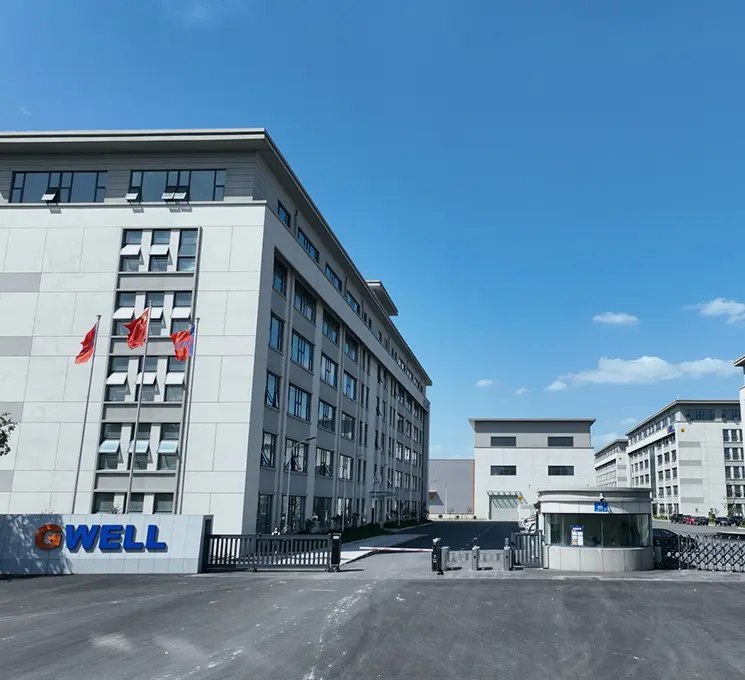
Why industrial manufacturers select Gwell as their long-term extrusion equipment supplier.

Collaborating with leading research institutes and key universities to engineer high-tech machinery.

Providing comprehensive, end-to-end consulting, installation, training, and lifetime technical support.

Three manufacturing bases with an annual output capacity exceeding 1,000 high-precision extrusion lines.

Our advanced extrusion lines operate reliably in dozens of countries and regions across the globe.
Expert engineering responses to the most critical technical questions regarding PMMA extrusion.
A1: Silver streaks are typically caused by volatile components or residual moisture inside the polymer matrix. PMMA absorbs ambient moisture easily due to its polar nature. To resolve this, we configure multi-vent vacuum degassing zones inside the extruder barrel alongside drying hoppers. Ensuring the polymer melt undergoes deep vacuum extraction (down to -0.095 MPa) before reaching the die removes these volatiles, eliminating structural and cosmetic defects.
A2: Extruder screws naturally generate pressure pulsations as they rotate and pump plastic pellets forward. While minor fluctuations are acceptable for low-end profiles, optical PMMA sheets require precise thickness uniformity. The melt pump operates as a volumetric metering device, decoupling the extrusion die from the pressure variations of the screw. It maintains constant pressure and output, ensuring the sheet thickness remains consistent within tight parameters.
A3: Thin PMMA sheets require rapid, even heat dissipation, which is typically managed using a vertical three-roll calender configuration with high clamping pressure to replicate roll finishes. Thick PMMA sheets, on the other hand, require a longer cooling cycle under pressure to prevent shrinkage, warp, and internal void formulation. An oblique or horizontal calender stack allows the thick sheet to be supported over a longer arc, avoiding gravitational sagging and stress buildup.
A4: Yes. PMMA is commonly co-extruded with ABS or PC. ABS/PMMA sheets combine the impact resistance and cost advantages of ABS with the high surface gloss and UV resistance of PMMA, making them suitable for sanitary ware and automotive components. PC/PMMA sheets combine the transparency and shatterproof qualities of polycarbonate with the scratch-resistant qualities of acrylic, which is highly valued in the consumer electronics and display markets.
A5: The critical areas are the calendar rolls and the screw. The calendar rolls must be polished regularly to maintain their mirror finish (Ra < 0.01 μm). The extruder screw and barrel must be purged correctly to avoid degradation of residual polymer during shut downs. Hardened PMMA carbonizes over time, which can lead to black spots appearing in subsequent production runs.
Advanced manufacturing systems designed for packaging, solar, construction, and specialized industrial sectors.
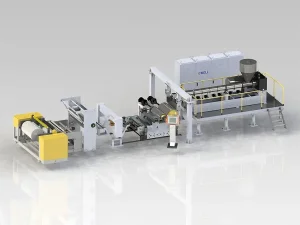
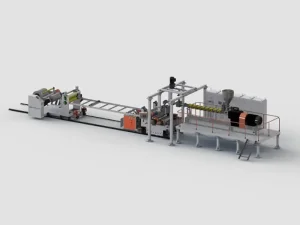
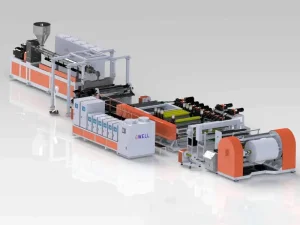
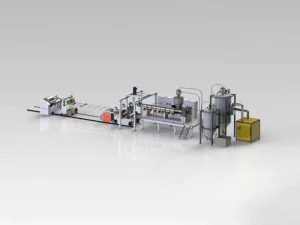
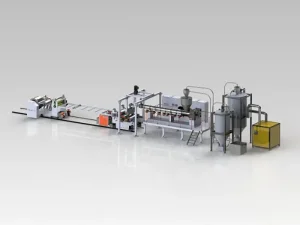
Stay informed with updates regarding Gwell's technology rollouts and industry events.
Gwell Machinery is set to exhibit its newest multi-layer co-extrusion technology at upcoming industry exhibitions, highlighting energy-saving designs and high-throughput capabilities.
Our engineering team has finalized development on a specialized POE synthetic leather production line, expanding the possibilities for sustainable automotive interior components.
The PVB wedge film line delivers high precision and high compatibility for automotive windshield applications, securing key contracts with global auto glass suppliers.
Tested, certified, and trusted by global enterprises for high-end manufacturing deployments.
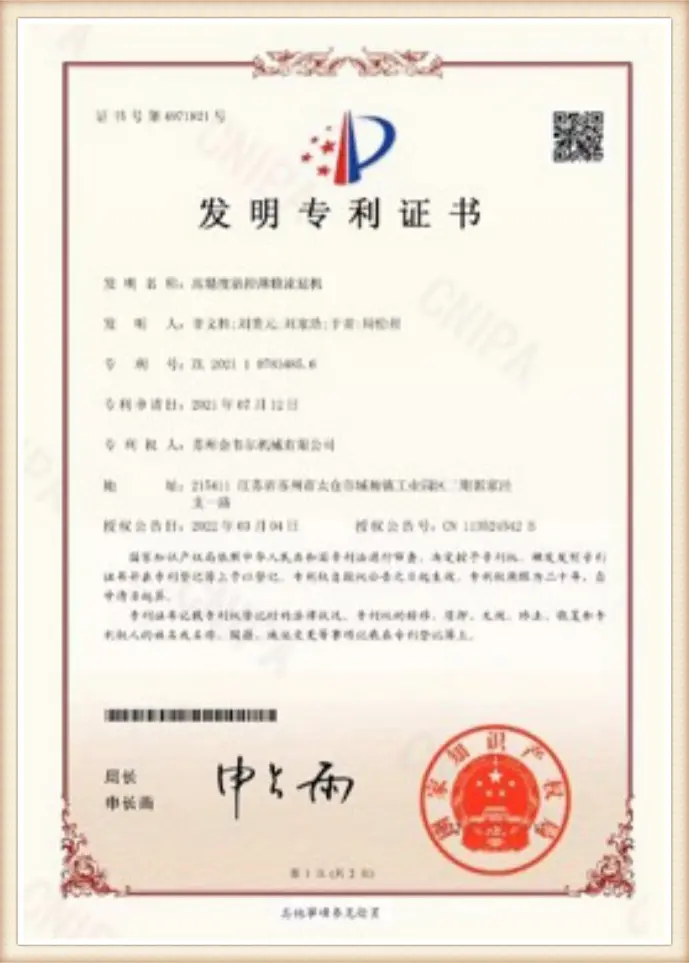
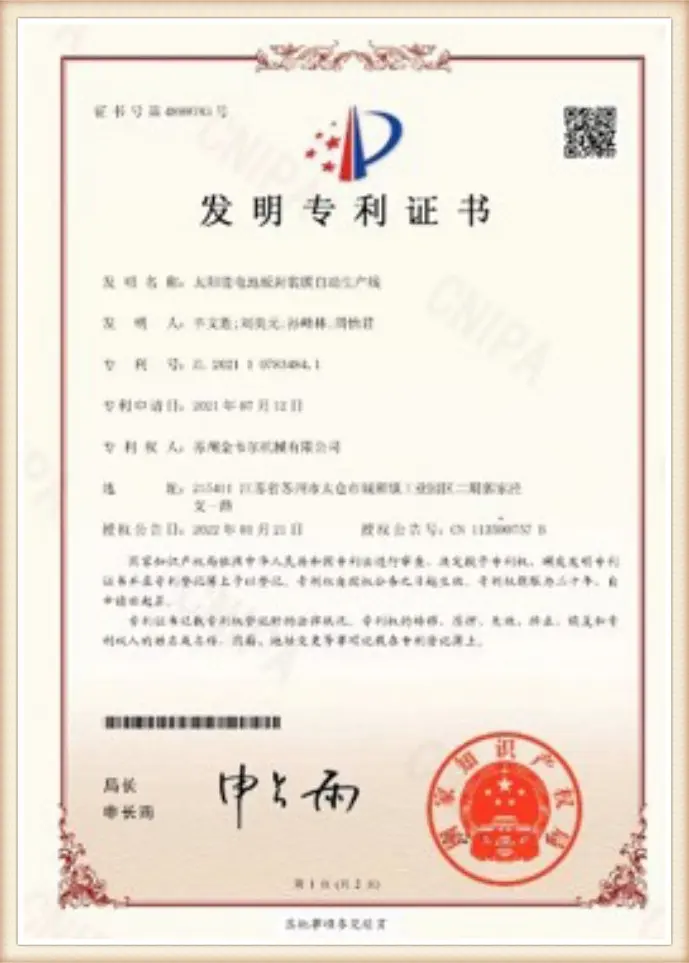
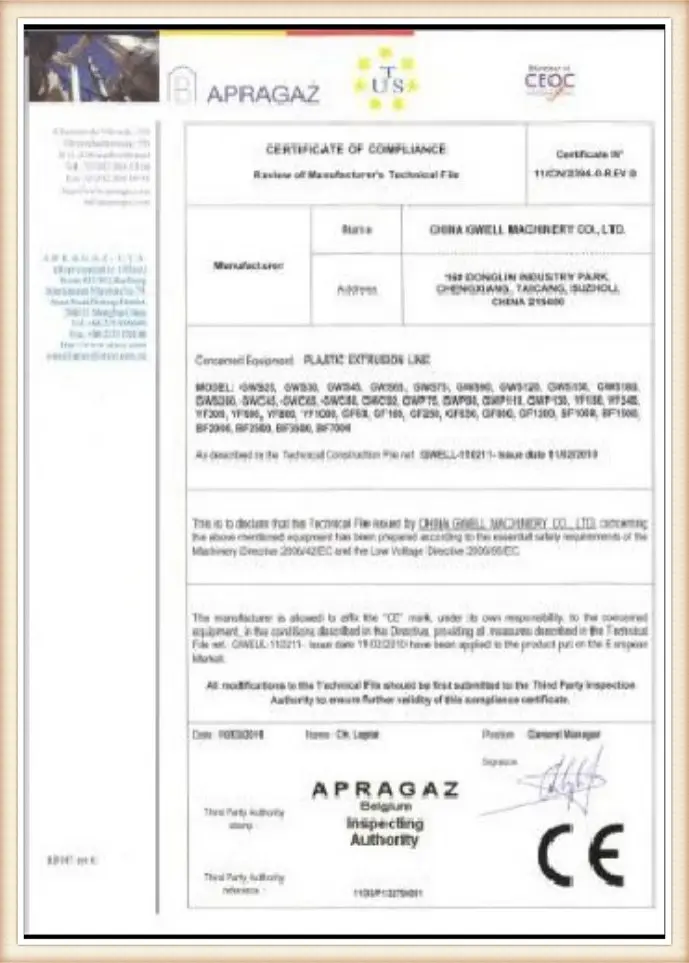
We collaborate with industrial giants and key materials research centers to push the limits of polymer extrusion.




Whether you require a custom configuration for PMMA co-extrusion or a turnkey solar film setup, Gwell's engineering capabilities and precision machining are recognized worldwide.
Send Technical Inquiry