
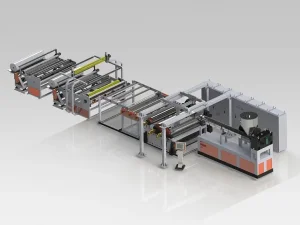
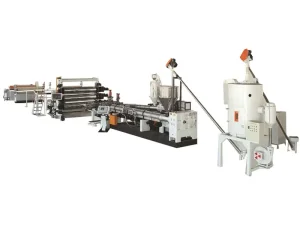
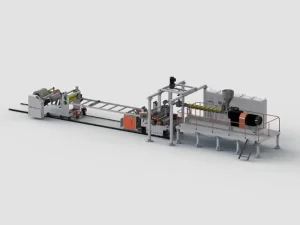
Precision engineered systems showcasing our core competencies in plastics processing machinery.
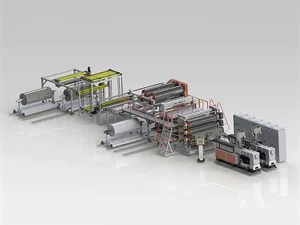
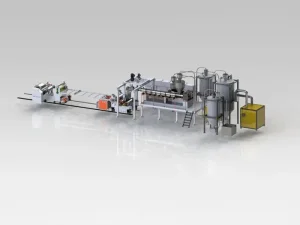
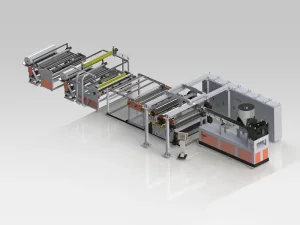
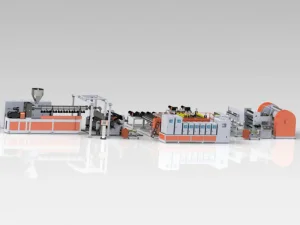
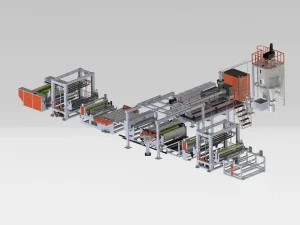
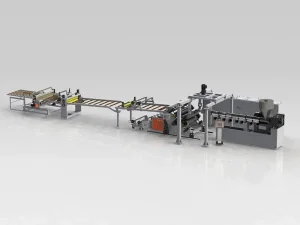
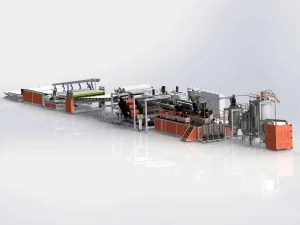
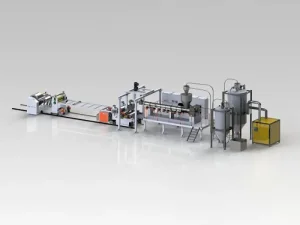
An analytical overview of Polymethyl Methacrylate (PMMA) manufacturing processes, material science advancements, and international standards.
In the contemporary advanced materials industry, Polymethyl Methacrylate (PMMA) holds a critical position due to its superior optical clarity, outstanding weather resistance, and high structural rigidity. Commonly known as acrylic or organic glass, PMMA has emerged as a premium alternative to traditional silica-based glass across commercial, industrial, and construction sectors. Driving the expansion of this versatile material is the technological maturation of the PMMA sheet making machine. Traditional monomer casting—historically used for manufacturing acrylic panels—is increasingly giving way to continuous mechanical extrusion processes due to the latter's rapid cycle times, high dimensional precision, and optimal material yield.
Modern industrial requirements demand that a PMMA sheet extrusion line operate with extreme precision. The machinery must be capable of processing virgin resins or blends while preserving the polymer’s high light transmission rate of 92%. Because PMMA is highly hygroscopic, direct moisture management during extrusion is crucial. The industry has shifted significantly toward integrated, vacuum-vented twin-screw extruders that extract moisture and volatile compounds directly from the melt stream, eliminating the traditional, energy-intensive pre-drying process. This transition represents a major milestone in operational efficiency and energy reduction for sheet manufacturing plants worldwide.
Modern extrusion lines employ dynamic die lip adjustments and closed-loop scanner feedbacks. This allows manufacturers to control thickness tolerances to within ±0.02 mm on high-speed continuous runs, a fundamental specification for light-guiding plates (LGP) utilized in automotive cockpits and optoelectronic displays.
The international demand for PMMA sheets spans multiple high-growth segments:
Harnessing automated manufacturing ecosystems to guarantee production speed, component quality, and global delivery reliability.
China Gwell Machinery Co., Ltd. represents the forefront of high-tech manufacturing in the plastic extrusion machinery sector. In an era where global supply chain volatility poses a significant challenge to capital equipment buyers, Gwell leverages a robust domestic ecosystem to deliver highly reliable, customized machinery. Operating across three major production bases, China Gwell has built a highly integrated manufacturing flow:
By establishing close partnerships with leading research institutes and domestic academic institutions, Gwell incorporates real-time industrial IoT platforms, automated screw milling machines, and digitalized quality control sensors. This level of technical integration reduces lead times for complex multi-layer co-extrusion setups, ensuring that global clients receive machines that match European design standards at optimized price-to-performance ratios.
Procurement leads in multinational corporations look for distinct mechanical capabilities when choosing a PMMA/PC/GPPS board extrusion line. Sourcing industrial equipment requires evaluating variables beyond basic output rates (kg/h):
PMMA is highly sensitive to shearing forces and elevated temperatures. Sourcing engineers prioritize extrusion screws specifically engineered with low-shear geometries to prevent polymer chain scission, yellowing, and optical defects.
The three-roll calender system serves as the foundation of surface finish quality. Dynamic oil-heating cooling loops within chromium-plated mirror rollers are required to avoid surface stress lines and uneven internal shrinkage.
Automated double-sided PE protective film lamination, high-speed inline longitudinal and cross-cutting saws, and computerized robotic stacking systems are crucial components for factories optimizing labor costs.
Our engineers customize extrusion machinery projects to client requirements, focusing on:
Explore our expanded machinery portfolio across cast film, board, sheet, and solar encapsulation categories.
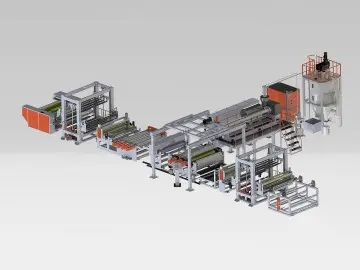
Engineered for high-weatherability architectural siding applications with advanced co-extrusion technology.
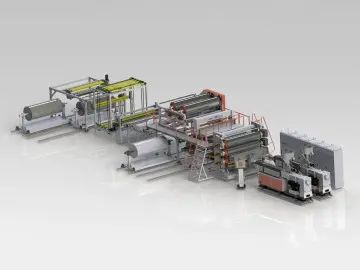
Features precision melt-pump controls and online thickness measurement gauges.
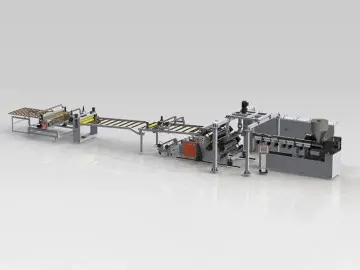
Engineered to process high-temperature engineering plastics with high chemical resistance.
Why international polymer processors select Gwell extrusion equipment.
We collaborate with domestic research institutes and top-tier universities to integrate the latest polymer processing methodologies into our machinery designs.
From layout design and screw configuration to on-site commissioning and process optimization training, we provide comprehensive customer support.
Our three major manufacturing bases yield a combined annual production capacity of more than 1,000 highly configured extrusion lines.
Providing detailed insights to key technical and operational questions in PMMA extrusion.
Monomer casting involves polymerization of methyl methacrylate (MMA) monomer inside glass molds under temperature-controlled liquid baths, resulting in high molecular weight, lower mechanical stress, but significant thickness variation. Continuous sheet extrusion involves melting PMMA pellets and pushing them through a flat T-die and a three-roll calendar stack. Extrusion offers much faster cycle times, precise thickness control, and continuous production efficiency suitable for optical film substrates, though it typically produces sheets with lower molecular weights.
PMMA is highly hygroscopic and absorbs up to 2% moisture by weight. Without adequate moisture removal, water flashes into steam in the barrel, creating bubbles, voids, and silver streaks in the final sheet. Modern Gwell machinery utilizes multi-stage high-vacuum venting extruders. This configuration removes moisture directly from the molten polymer, eliminating the need for 4–6 hours of energy-intensive pre-drying in hopper systems, reducing overhead and maintaining high energy efficiency.
Our optical-grade lines utilize specialized chrome-plated mirror calender rolls with internal spiral-flow heat distribution channels. Roll surfaces are polished to a roughness parameter Ra < 0.005 μm. Additionally, we run the calenders on variable-frequency servo motors, ensuring smooth rotation to avoid speed variations that create visible surface lines on the sheet.
By leveraging highly efficient, direct-vented twin-screw systems, high-efficiency ceramic heaters, and variable-frequency AC/servo motors, our systems reduce overall energy consumption by 20% to 30% compared to traditional single-screw lines with standard drying systems, lowering the carbon footprint per ton of processed material.
We provide multi-manifold co-extrusion blocks that allow A/B, A/B/A, and A/B/C layups. This is frequently used for PMMA/ABS co-extrusion (used in sanitary ware and automotive body parts) or adding specialized UV-blocking, anti-glare, or anti-static top coats directly to PMMA and polycarbonate substrates.
Maintaining compliance with international standards through rigorous quality checks.
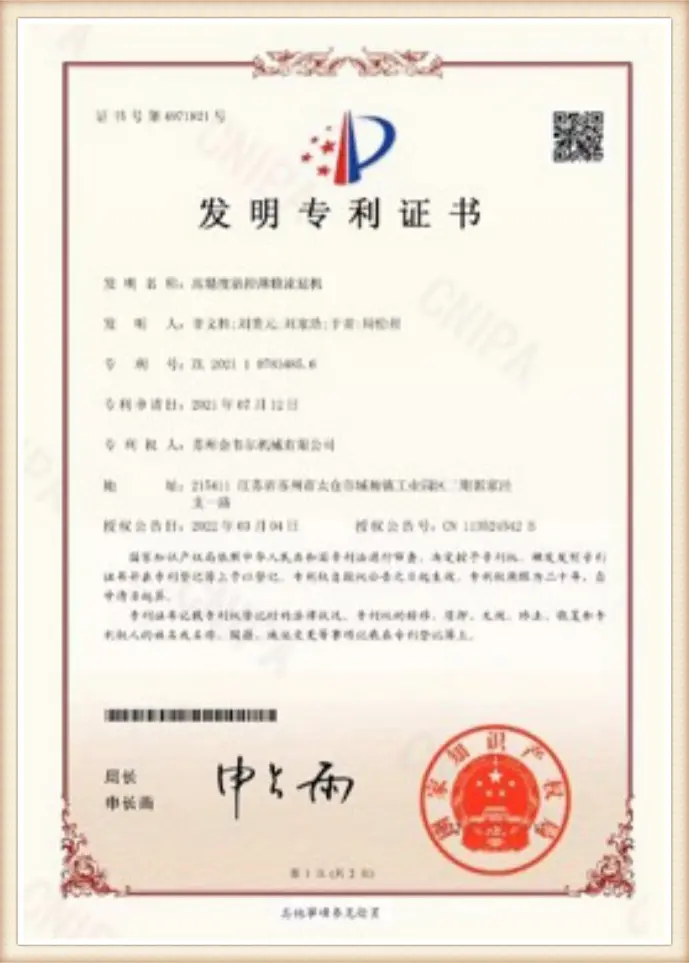
Expanding specialized manufacturing capabilities across polymer materials.
Stay updated with research findings and technical milestones from Gwell.
Discover the mechanical advancements in POE leather sheets designed for automotive interiors.
Published: Feb 11, 2026Addressing thickness distribution challenges in automotive laminated safety glass interlayer production.
Published: Jun 25, 2025Advancements in co-extrusion die designs to improve transparency in multi-layer decorative films.
Published: Mar 26, 2025GWELL's R&D capabilities and precision machining are widely recognized in the industry. Connect with our polymer processing specialists to design your custom configuration today.
Send Technical Inquiry Now