1 / 1

The primary raw material is calcium carbonate, often sourced from natural stone. Polymeric binding agents, such as polyethylene or polypropylene, are added to provide cohesion and flexibility. These materials are mixed in precise proportions to ensure consistent quality.
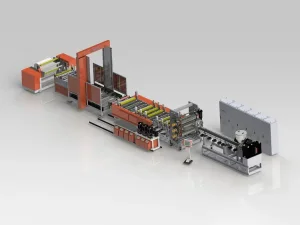
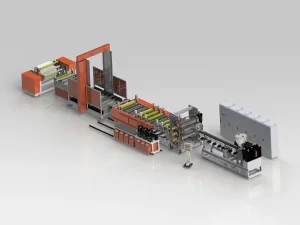
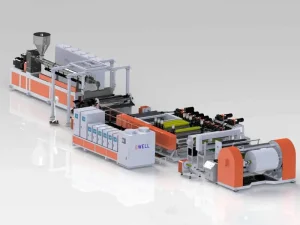
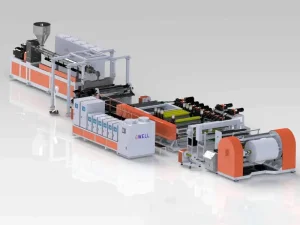
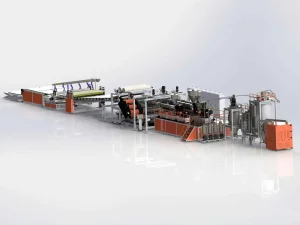
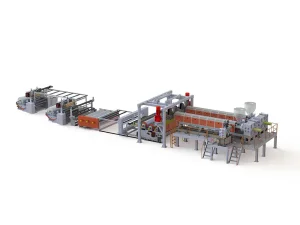
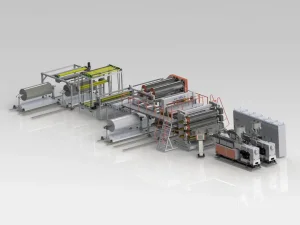
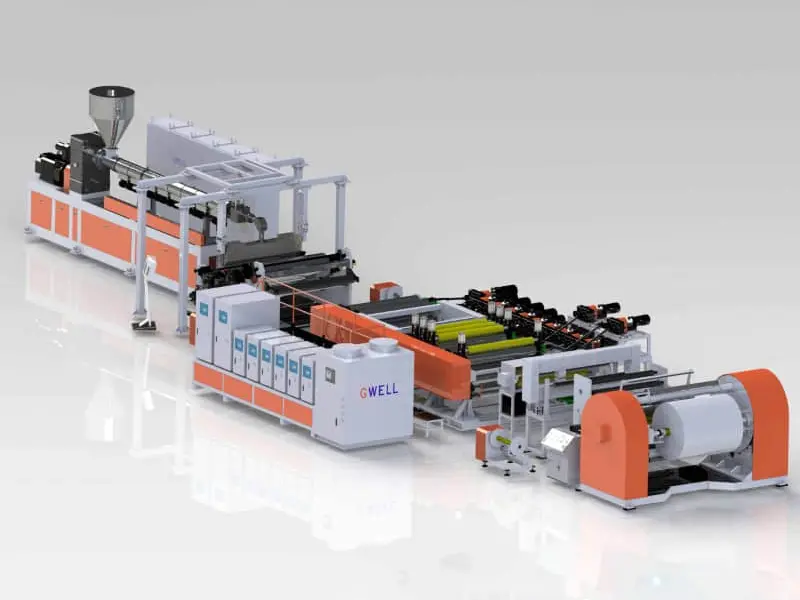
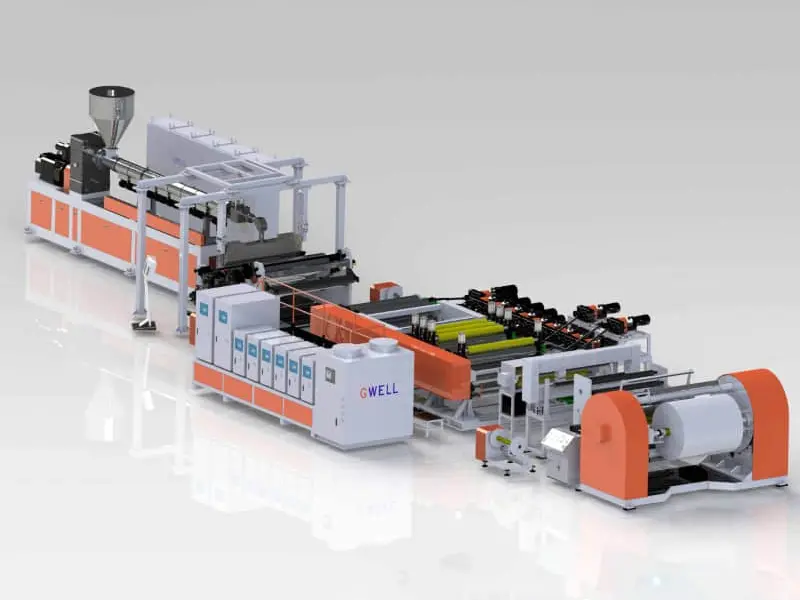
The blended mixture is fed into an extruder, applying heat and pressure to melt and shape the material through a die into a continuous sheet. This process aligns molecules to enhance strength and durability.
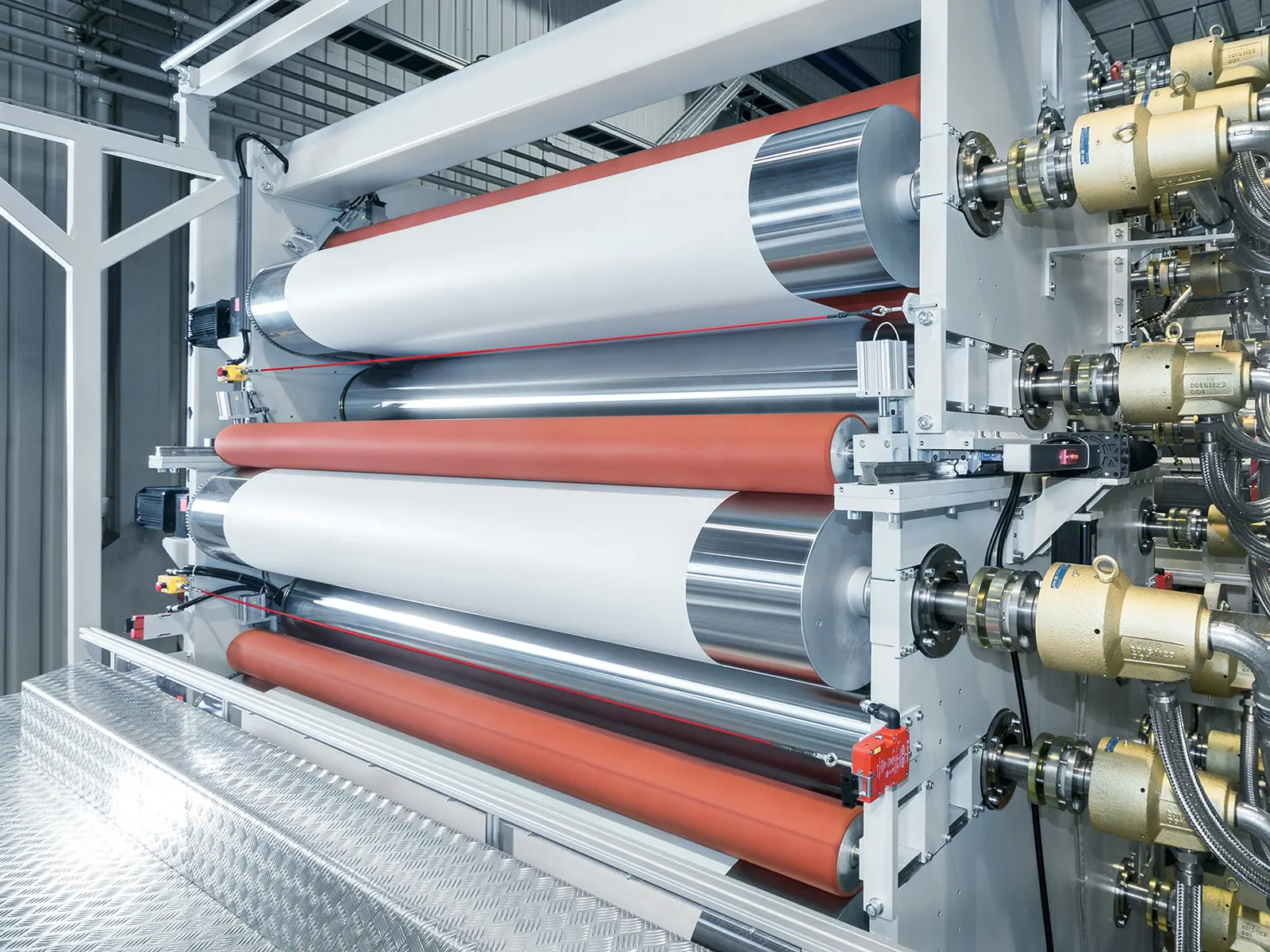
The extruded sheet passes through a calibration roll system for uniform thickness and smoothness. Cooling rolls or water baths quickly reduce temperature to solidify and set the shape.
The cooled sheet is trimmed to the desired width and length. Finishing processes, such as embossing or coating, can be applied to enhance appearance or functionality.
The final product is wound onto rolls for easy handling and storage. Packaging materials are selected to protect the stone paper from damage during transport.
Made from abundant, renewable resources, reducing reliance on trees. Fully recyclable and biodegradable, contributing to a reduced environmental footprint.
Calcium carbonate mixed with polymer binders creates a tear-resistant, waterproof, and oil-resistant material ideal for challenging environments.
Can be printed, written on, and laminated. Suitable for a wide range of uses, serving as an excellent alternative to traditional paper.
Offers a cost-effective production method. With rising consumer demand for sustainable products, stone paper presents significant market potential.
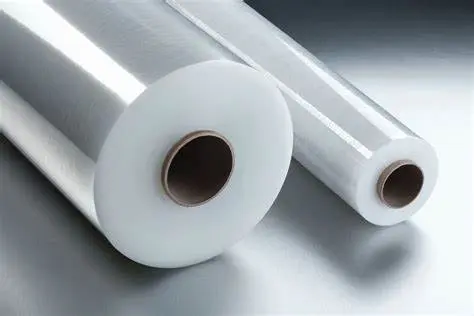
Stone paper, also known as eco-synthetic paper or stone-based synthetic paper, represents a groundbreaking innovation in the field of paper manufacturing. This unique material combines the aesthetics and versatility of traditional paper with the durability and environmental benefits of synthetic materials, making it an ideal choice for a wide range of applications.
Stone paper is primarily composed of calcium carbonate, derived from natural stones such as limestone, marble, or even industrial by-products like coal gangue and tailings. These stones are crushed and finely ground into a powder, which serves as the primary raw material.
The manufacturing process involves mixing the calcium carbonate powder with a small percentage of polymeric binders and additives. This blend is then subjected to an extrusion process, where heat and pressure are used to shape the material into a continuous sheet. The extruded sheet is subsequently calibrated, cooled, and finished to achieve the desired texture, thickness, and appearance.
Produced using abundant resources, reducing tree harvesting. Fully recyclable and biodegradable under specific conditions, resulting in lower carbon emissions.
Tear-resistant, waterproof, and oil-resistant. Perfect for outdoor signage or packaging exposed to moisture and grease.
Excellent printability and writability. Can be laminated, offering a unique texture and premium feel for creative and promotional campaigns.
High durability reduces the frequency of replacements in rugged applications, leading to long-term savings for enterprises.
Ideal for durable, waterproof, and eco-friendly packaging materials.
Tear-resistant properties make it perfect for industrial, retail, and outdoor tags.
Used widely in notebooks, greeting cards, and eco-friendly diaries.
Unique texture and robust build enhance promotional brochures, maps, and flyers.
Withstands harsh weather, moisture, and wind, making it suitable for long-term outdoor displays.
Stone paper represents a significant advancement in the field of paper manufacturing, combining the benefits of traditional paper with the durability and environmental sustainability of synthetic materials. Its wide range of applications and growing consumer demand for sustainable products make it a promising material for the future. As awareness of environmental issues continues to increase, stone paper is poised to play a crucial role in reducing waste, conserving natural resources, and promoting a more sustainable world.
Q1: What is stone paper made of?
Stone paper is primarily composed of calcium carbonate, which is sourced from natural stones like limestone or marble, combined with a small percentage of polymeric binding agents (such as polyethylene or polypropylene) and additives.
Q2: How does the manufacturing process of stone paper work?
The calcium carbonate powder is mixed with polymeric binders. The mixture is then fed into an extruder where heat and pressure melt it, shaping it into a continuous sheet through a die. The sheet is then calibrated for thickness, cooled, and finished.
Q3: Is stone paper waterproof and tear-resistant?
Yes, the combination of calcium carbonate and polymer binders gives stone paper natural waterproof, oil-resistant, and highly durable, tear-resistant properties, making it superior to traditional paper in harsh environments.
Q4: Why is stone paper considered environmentally friendly?
The production of stone paper does not require cutting down trees or using large amounts of water. It utilizes abundant natural stones and is recyclable and biodegradable under specific environmental conditions.
Q5: What are the main applications of stone paper?
Stone paper is widely used in packaging, waterproof labels and tags, writing notebooks, greeting cards, maps, outdoor signage, and creative advertising materials.
Q6: Can you write and print on stone paper like traditional paper?
Yes, stone paper can be written on, printed using standard printing methods, and laminated, offering a smooth texture and excellent print quality for various promotional and creative designs.