1 / 1

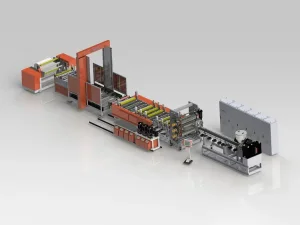
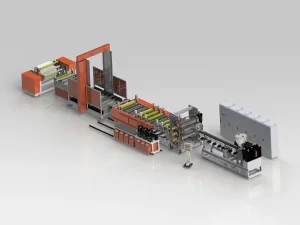
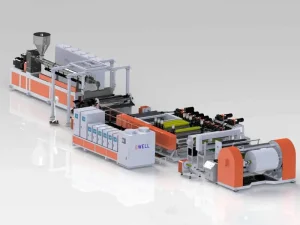
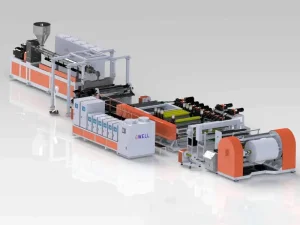
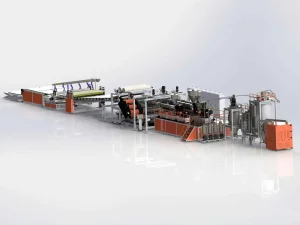
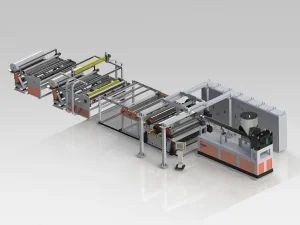
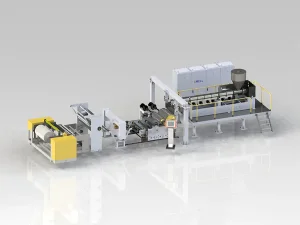
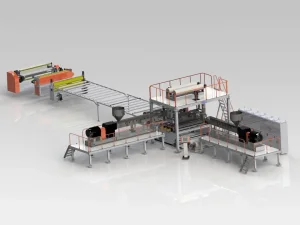
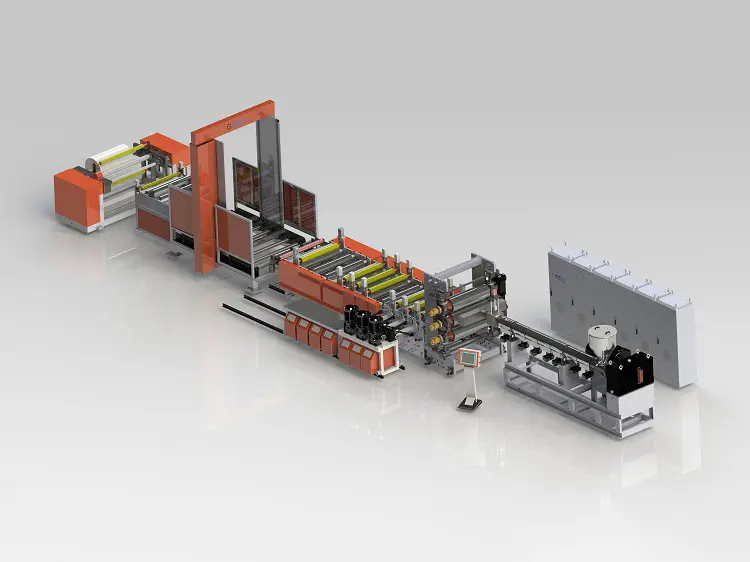
The heart of the line, the extruder melts and homogenizes the plastic resin under controlled temperature and pressure conditions. It consists of a screw mechanism that pushes the resin forward, mixing and melting it as it progresses.
The molten plastic is extruded through a precision-machined flat die, which shapes the molten material into a uniform sheet. The die's design ensures even distribution of the plastic, critical for achieving consistent film properties.
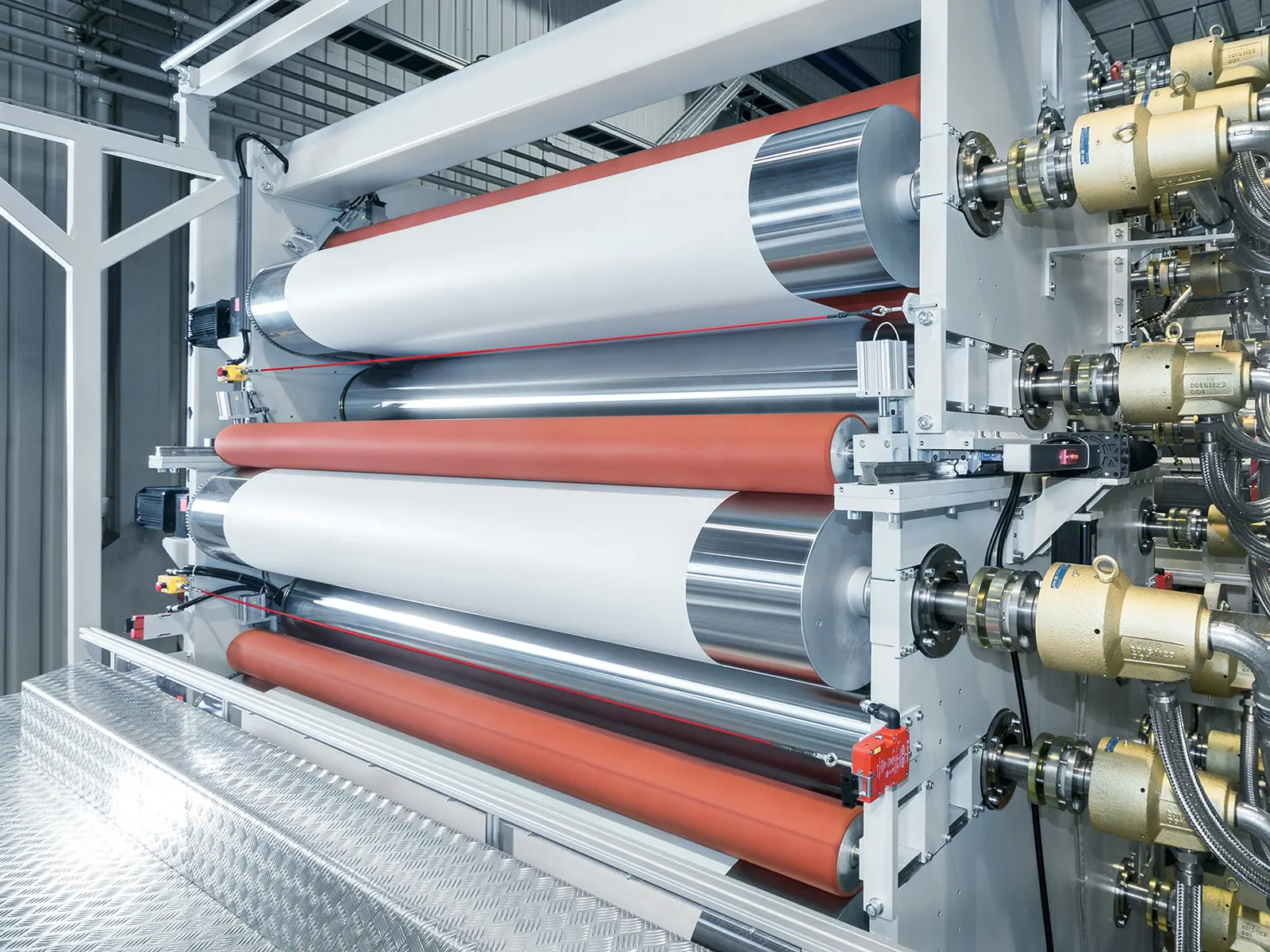
Immediately after exiting the die, the molten sheet is rapidly cooled on a series of chilled rolls to solidify it into a semi-rigid film. This rapid cooling prevents premature stretching and maintains the film's dimensional stability.
The film then enters the stretching unit, where it is rapidly elongated in the machine direction. This stretching can be achieved through various methods, such as roll-to-roll stretching or tenter frame stretching, depending on the specific line configuration.
After stretching, the film is often heat-set to stabilize its orientation and improve its dimensional stability. This step involves heating the film to a temperature below its melting point and holding it at that temperature for a specified time.
Finally, the oriented film is wound onto a roll for storage and transportation. The winder ensures that the film is evenly wound, preventing wrinkles and other defects.
The oriented film exhibits higher tensile strength and tear resistance compared to non-oriented films.
The aligned polymer chains result in clearer and more transparent films.
The oriented structure makes the film less susceptible to shrinkage and distortion.
The film's enhanced properties allow for thinner gauges, reducing material usage and costs.
MDO lengthwise stretch films are widely used in packaging, labeling, agricultural mulching, and various industrial applications due to their combination of strength, clarity, and dimensional stability.