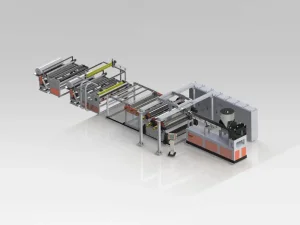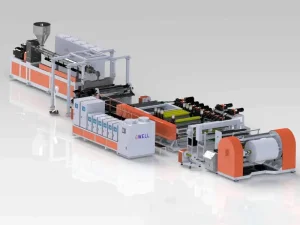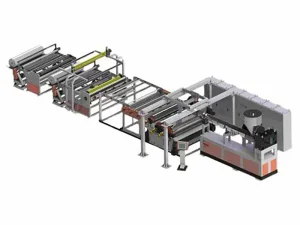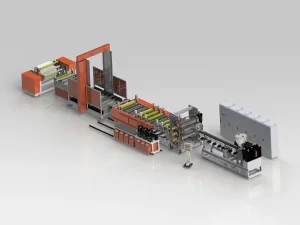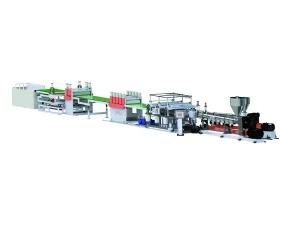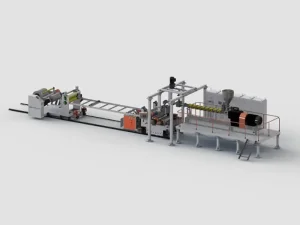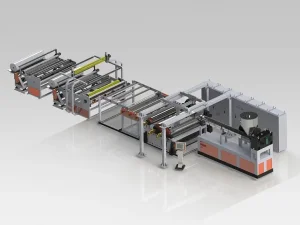
Explore our range of heavy-duty industrial machinery engineered for high mechanical properties and reliable performance.
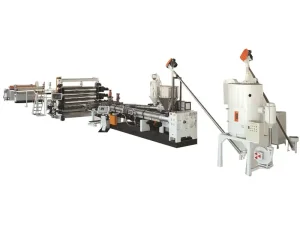
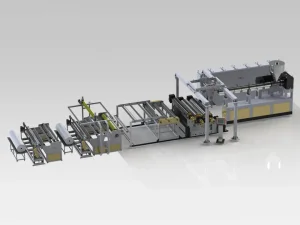
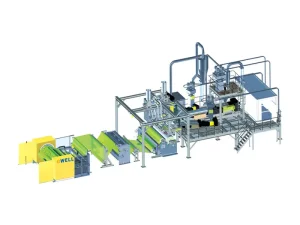
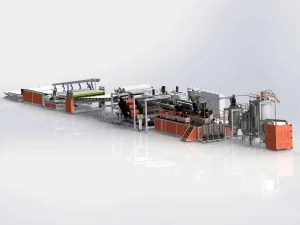
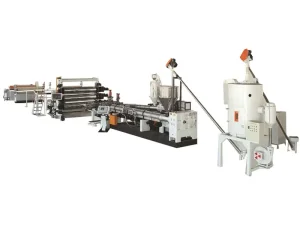
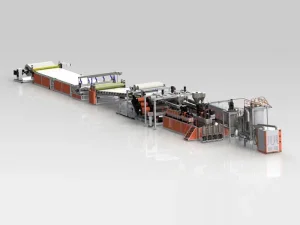
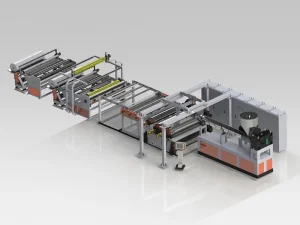
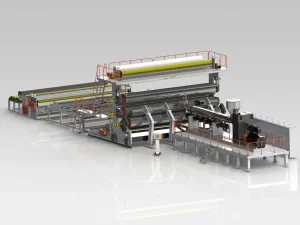
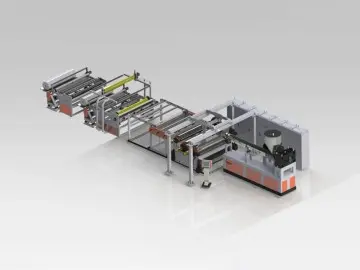
Polyvinyl Butyral (PVB) is the global benchmark for safety interlayers used in laminated architectural and automotive safety glass. Achieving optical clarity, consistent mechanical performance, and precision acoustic dampening requires manufacturing technology optimized for the rheological characteristics of PVB. As a leading manufacturer of custom PVB film extrusion lines, GWELL Machinery designs complex, turn-key solutions tailored to the needs of modern factories.
Traditional extrusion systems often struggle with the raw processing characteristics of plasticized PVB. The material's high melt viscosity, sensitivity to thermal degradation, and hygroscopic nature require advanced co-rotating twin-screw extruders or specialized single-screw setups equipped with multi-stage vacuum degassing. GWELL systems ensure uniform mixing of PVB resin and plasticizers (typically 3GO), delivering thermal stability and precise melt pressure control at the extrusion die.
Our technology utilizes precision calendering or water-quenching processes to form specified surface roughness profiles. This controlled texturing is crucial to ensure rapid, bubble-free de-airing during the glass laminating step.
Adapting to evolving compliance, efficiency, and carbon footprint reduction goals across international industrial supply chains.
Automotive glass manufacturers require PVB films with precise wedge angles to support Head-Up Displays (HUD). Precision thickness variation control across the film width is necessary to eliminate visual double-imaging.
Multilayer co-extrusion technology yields PVB film with distinct core and skin layers. The core absorbs sound vibrations, lowering cabin noise levels in vehicles and structural glass installations.
Procurement teams prioritize extrusion lines capable of incorporating post-industrial PVB scrap. Our lines utilize specialized filtration and degassing systems to maintain optical clarity in recycled blends.
GWELL provides high-output extrusion machinery configured to process advanced engineering polymers for specialized industrial uses.
Engineered for films requiring precise thickness control and optical properties. Applications include PVDF solar backsheets, TPU laminates, PVA water-soluble films, and specialized optical grades.
Designed to process high-viscosity resins into heavy-gauge sheeting for chemical containment, structural building panels, and deep-drawn thermoforming components.
As renewable energy installations expand worldwide, the demand for reliable solar panel encapsulation materials grows. We build lines optimized for the unique requirements of the solar industry.
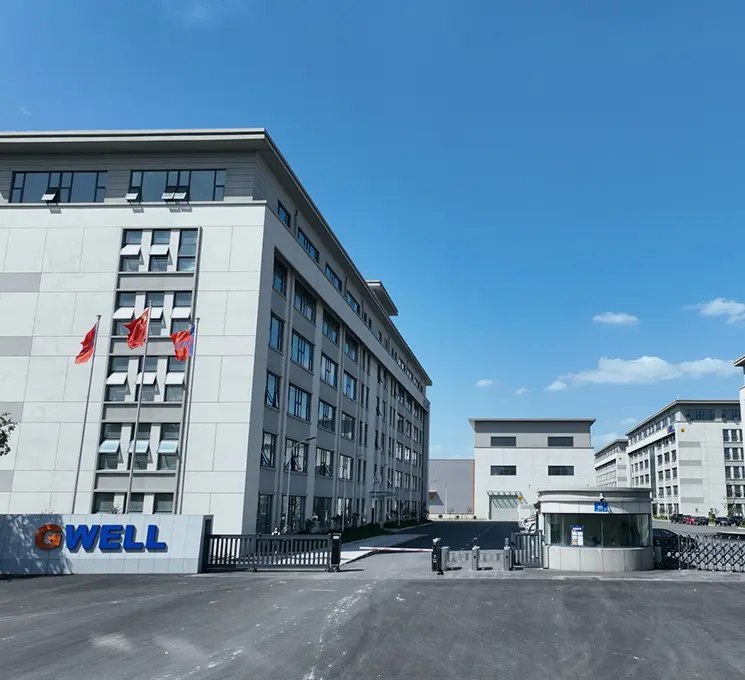
China Gwell Machinery is a high-tech enterprise specializing in the design and manufacture of plastic extrusion lines for Film, Sheet, and Profiles. Relying on advanced engineering platforms and our research-driven development spirit, Gwell delivers high-performance machinery built to serve international markets.
Our company philosophy is simple: "Expertise creates customer value." By aligning our custom mechanical designs with the specific material science requirements of our clients, Gwell helps factories achieve high production efficiency, minimize material waste, and maintain stable long-term operation.
Providing industrial infrastructure to support advanced materials production worldwide.
We partner with leading chemical institutes and universities to develop screw geometries optimized for processing next-generation high-barrier polymers.
We handle everything from initial raw material handling layout to final high-speed winding systems, ensuring smooth integration across the factory floor.
Our three production bases are equipped with large-scale CNC machining centers to maintain tight mechanical tolerances across all extrusion frames.
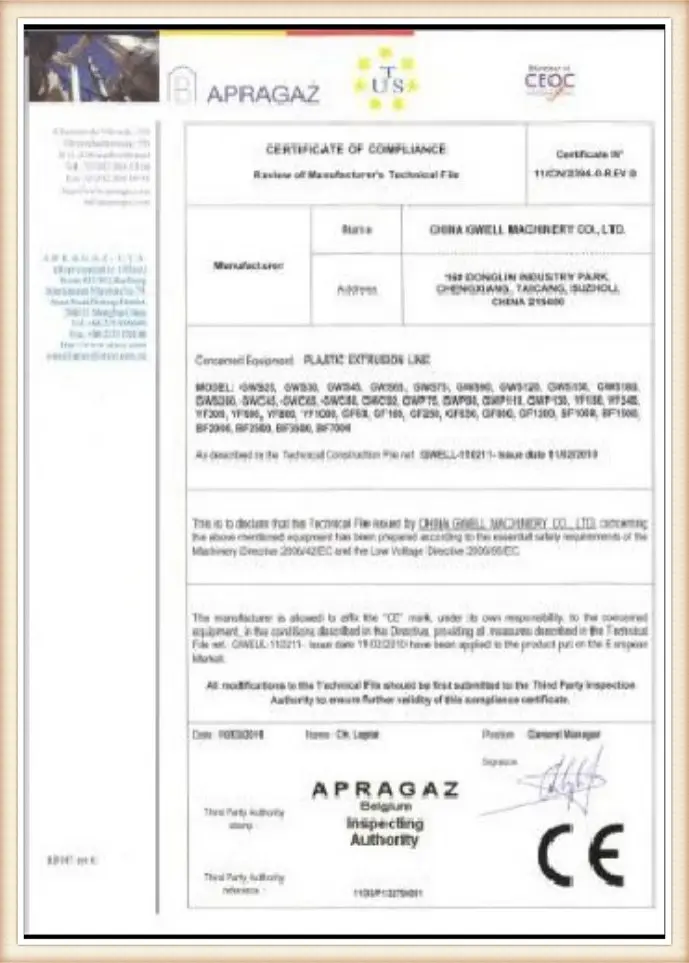
All Gwell lines are built to comply with international mechanical safety and power standards.
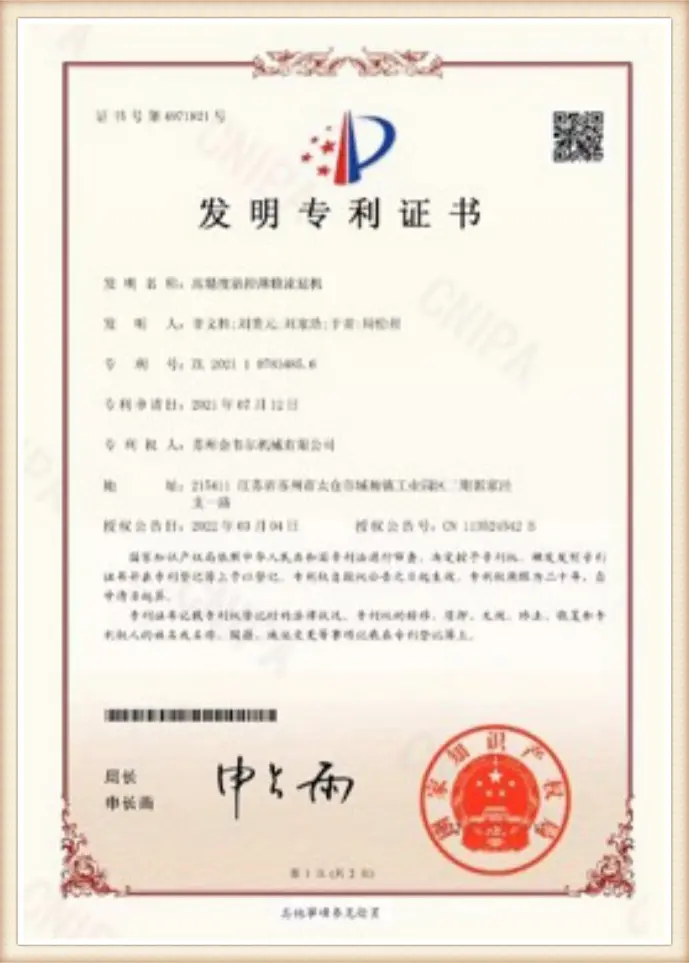
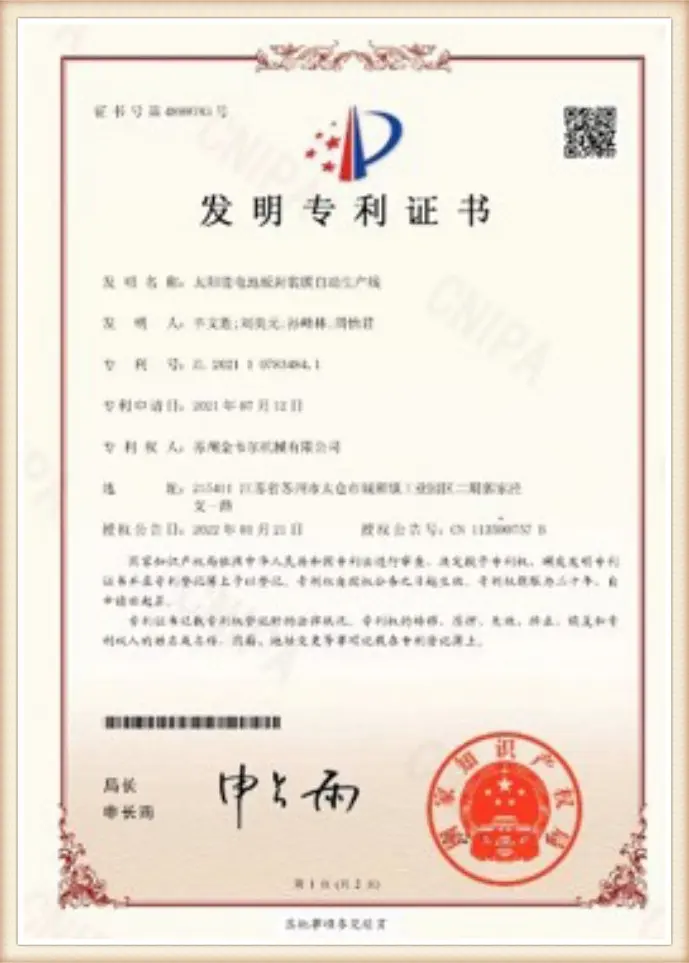
Stay informed about our latest extrusion technology developments and upcoming global exhibitions.
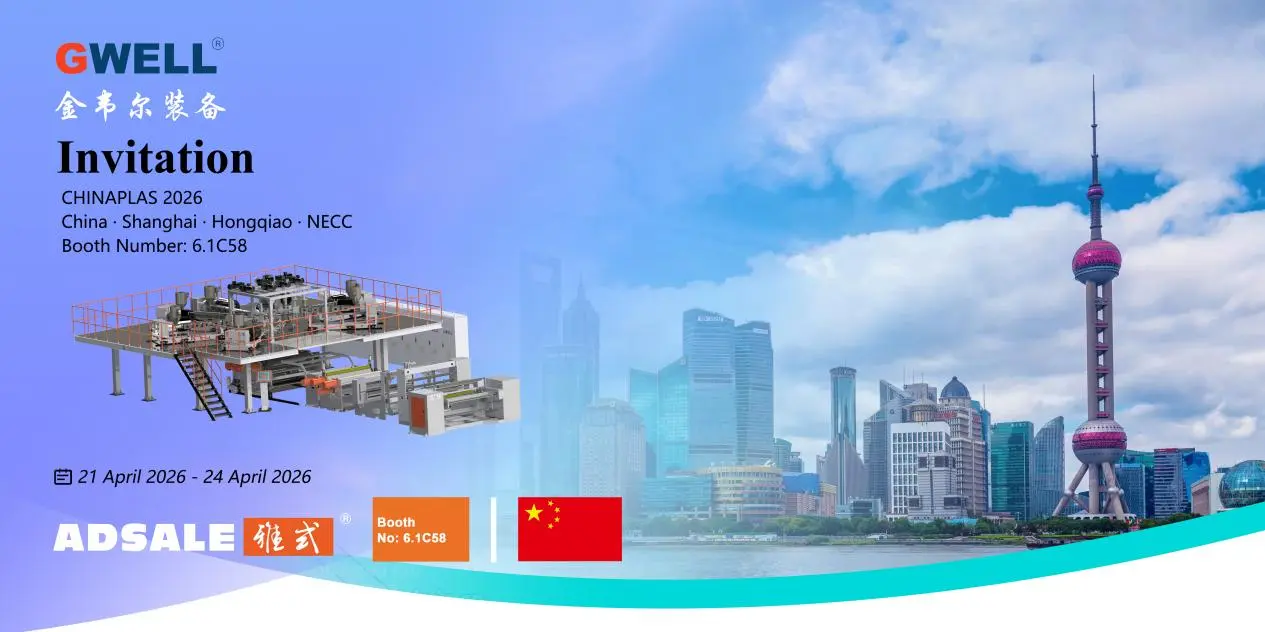
Gwell plans to present its latest high-output cast film and sheet extrusion machinery at upcoming global plastics technology conferences.
Read Case Study →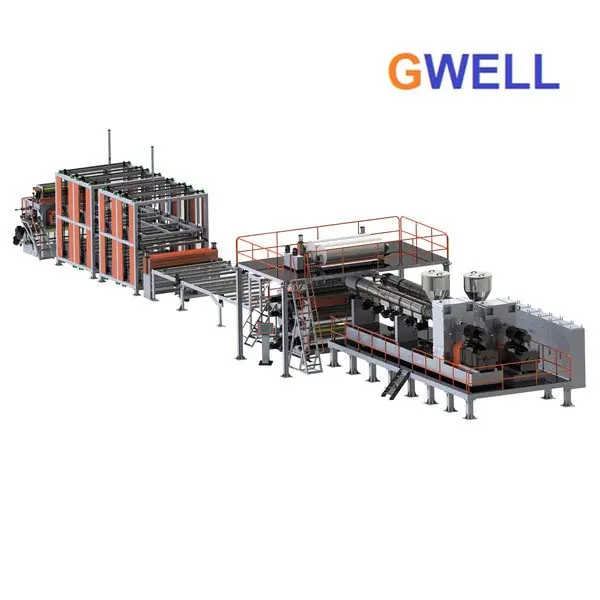
We have commercialized a new extrusion process designed to manufacture sustainable POE synthetic leather for high-durability automotive interiors.
Read Case Study →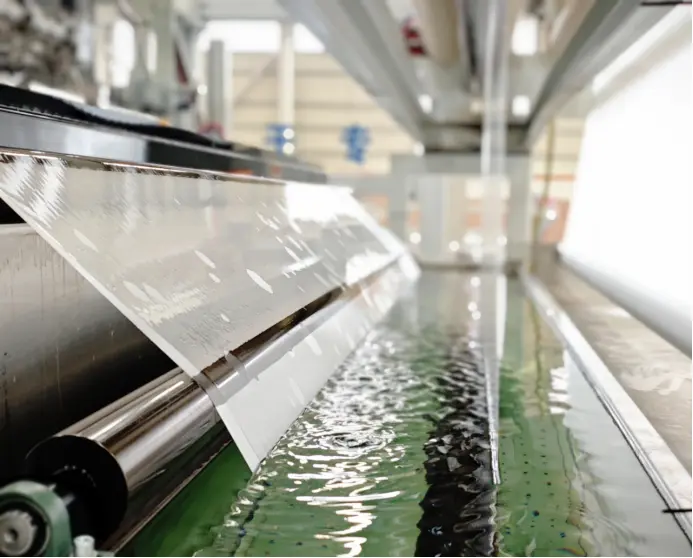
Our updated PVB wedge-shaped film production line features improved precision, higher extrusion efficiency, and broader resin formulation compatibility.
Read Case Study →Common questions regarding PVB extrusion, line configurations, and system operations.
We integrate automatic flat extrusion dies with online beta or X-ray thickness scanners. These systems adjust thermal bolt parameters dynamically to maintain target film thickness profiles.
Our lines support both water-bath quenching for high-speed crystallization and embossing roller calendering systems. The calendering design creates the specific surface roughness required to prevent air pocket formation during glass lamination.
Yes. By incorporating custom wear-resistant twin-screw barrels and dual-chamber melt filtration units, our extrusion systems are designed to process recycled PVB flakes without compromising film clarity.
System layout depends on width (ranging from 1200mm to 3600mm) and target output. Gwell engineering teams provide custom factory floor designs, including electrical distribution panels, chilled water infrastructure, and raw material mezzanine setups.
Contact GWELL's engineering division to discuss your line configuration, output requirements, and plant space constraints.
Browse Gwell's specialized extrusion lines for automotive, green energy, and construction applications.