1 / 1

High toughness of the material is the hot spot of research and development at present. The common bipolar plates used in commercial flow battery stacks are carbon composites, usually made of conductive fillers (graphite, carbon black, carbon fiber, carbon nanotubes, etc.) and thermoplastic resins (polyethylene, polypropylene, polyvinylidene fluoride, etc.), which feature good corrosion resistance and liquid resistance.
Graphite is a commonly used conductive filler for composite bipolar plates. When the graphite content is high, the electrical conductivity of the bipolar plate is improved, but the air tightness and mechanical strength are decreased. However, when the resin content is high, the air tightness and mechanical strength of the board increase, but the electrical conductivity decreases. Therefore, the content of graphite and resin needs to be precisely controlled. In addition, the type, size, and shape of the graphite filler also have significant effects on the electrical and mechanical properties of the bipolar plate.
A bipolar plate, also called a collector plate, is one of the most critical parts of a fuel cell. It serves multiple functions and must possess specific properties:
The function of the bipolar plate (also known as the spacer) is to provide gas flow paths to prevent hydrogen and oxygen in the gas chamber of the battery from cascading, and to establish current paths between the cathode and anode connected in series. Under the premise of maintaining a certain mechanical strength and good gas barrier, the thickness of the bipolar plate should be as thin as possible to reduce the resistance to current and heat conduction.
Bipolar plate materials can be roughly divided into 3 categories:
(1) Carbonaceous materials. Carbonaceous materials include graphite, moulded carbon materials and expanded (flexible) graphite. Conventional bipolar plates are made of dense graphite, which is mechanically processed to make gas flow channels. Graphite bipolar plates are chemically stable and have low contact resistance with MEA.
(2) Metal materials. Metal materials such as aluminium, nickel, titanium and stainless steel can be used to make bipolar plates. Metal bipolar plates are easy to process, can be manufactured in bulk, offer low cost, thin thickness, and high volume specific power and specific energy of the battery.
(3) Composite materials. If the contact resistance between the bipolar plate and the MEA is large, the ohmic resistance produces much polarisation loss and the operating efficiency decreases. Among the various bipolar plate materials in common use, graphite material has the lowest contact resistance, whereas stainless steel and titanium have non-conductive oxide films formed on their surfaces which increase contact resistance.
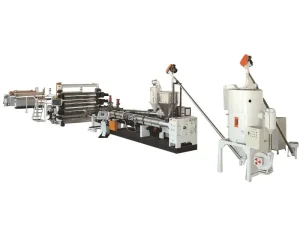
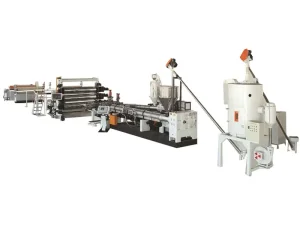
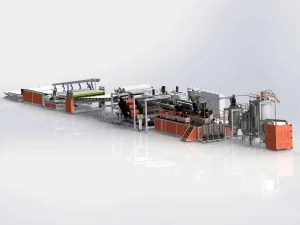
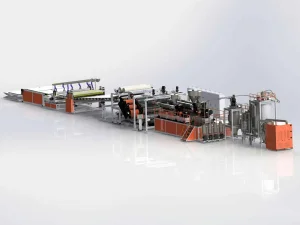
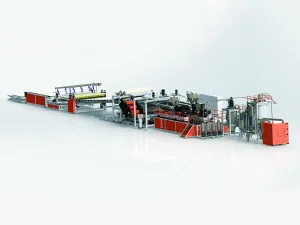
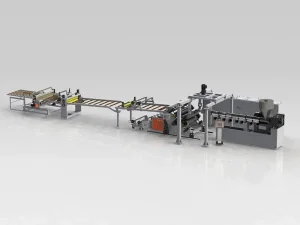
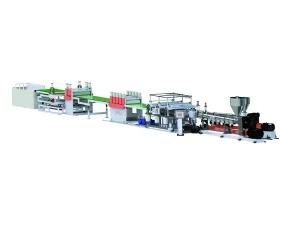
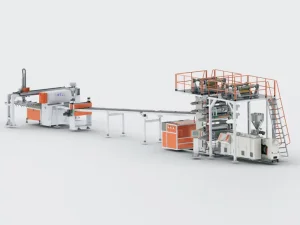
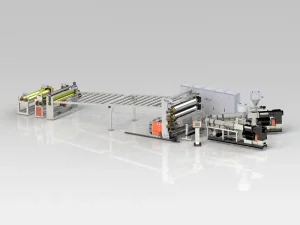
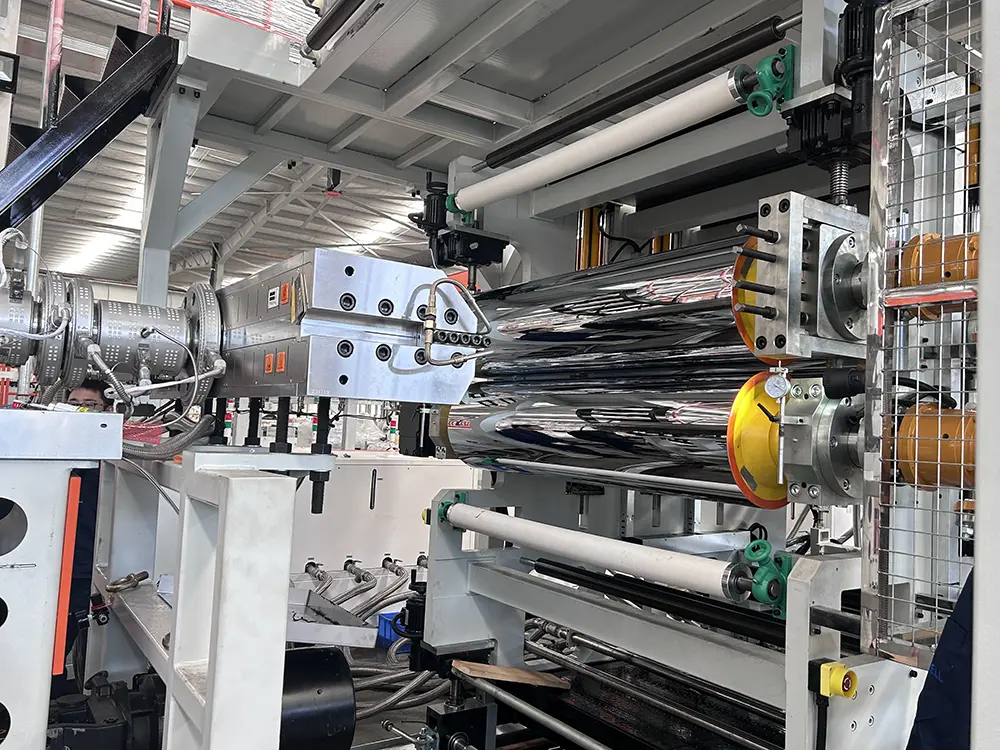
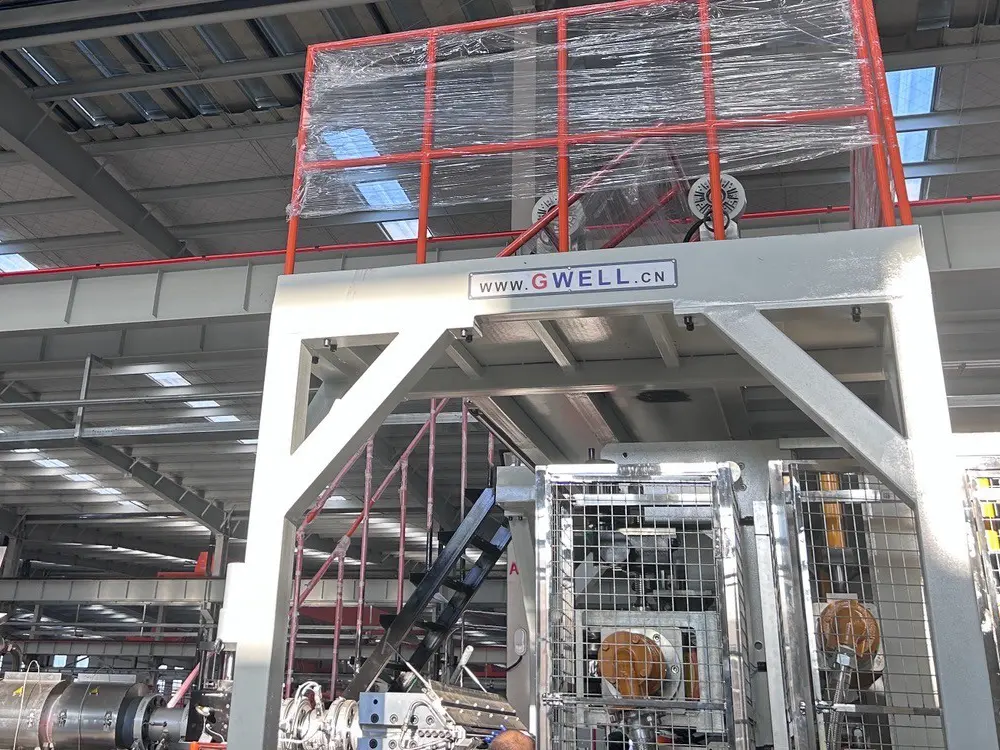
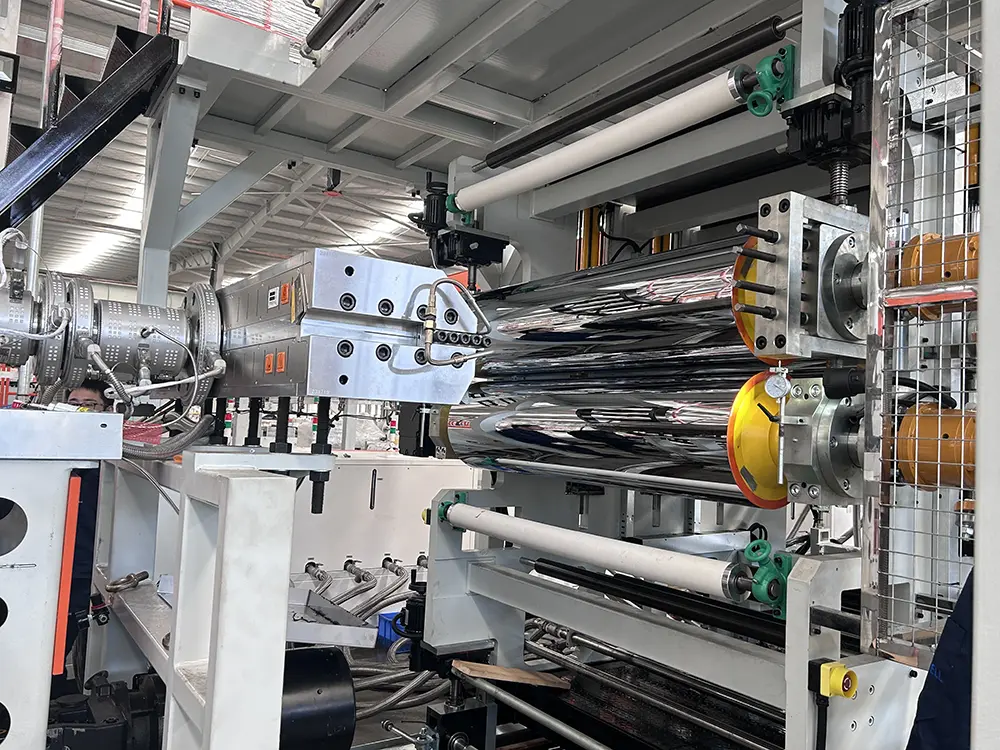
After continuous exploration and development of bipolar plate production equipment, the equipment produced bipolar plate quality, high carbon powder content, high conductivity, the equipment itself is stable, high degree of automation.
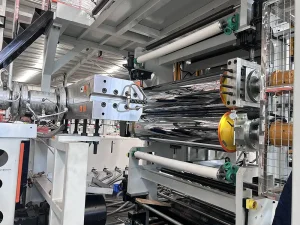
The manufacturing workflow consists of mixing plastic particles, carbon powder, and related additives evenly in a mixer. A feeder then conveys the mixed raw materials to the extruder. The extruder melts and extrudes the material through a mold to form the bipolar plate. Subsequently, a three-roller calender is used for cooling and shaping. An oven then tempers the plate to obtain optimal thickness uniformity. Finally, other auxiliary systems handle trimming, de-static treatment, and winding the plates into rolls.
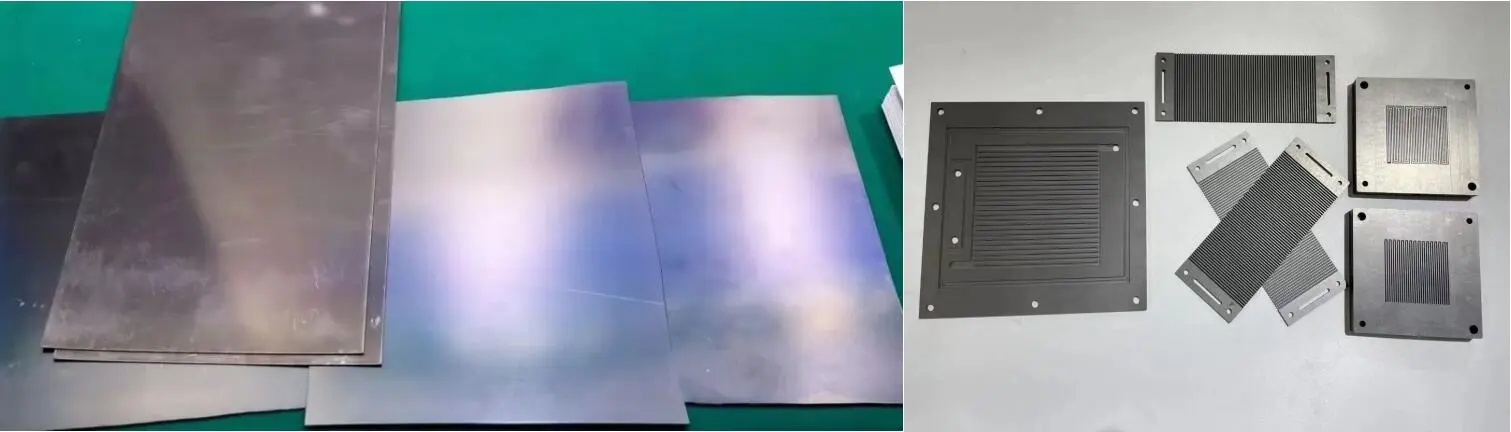
In recent years, these products have been used by customers all over the country and exported to the United States, Germany, Japan, Russia, Spain, Turkey, Iran, South Korea, Indonesia, India, South America, and other countries and regions.