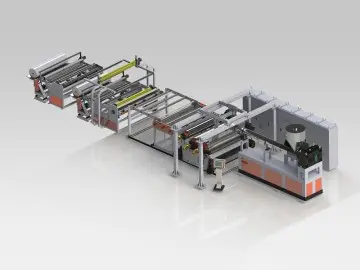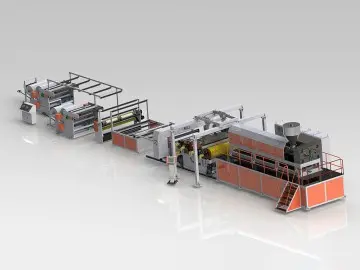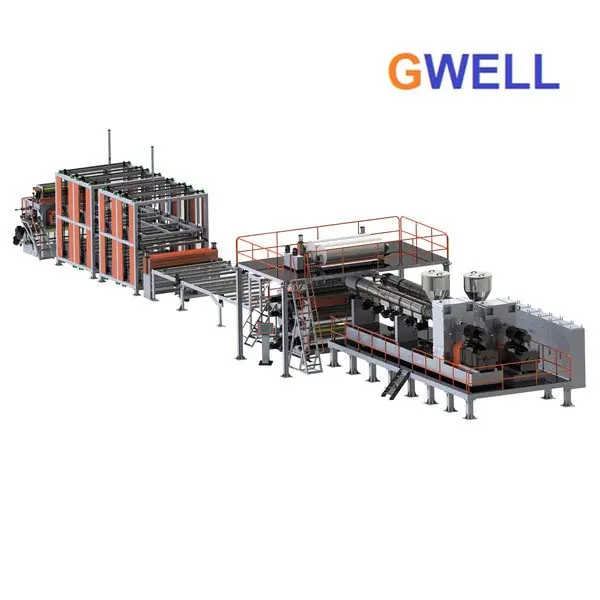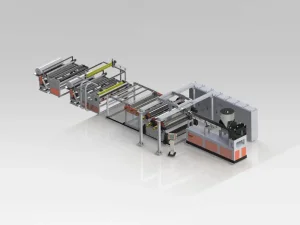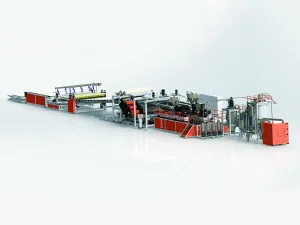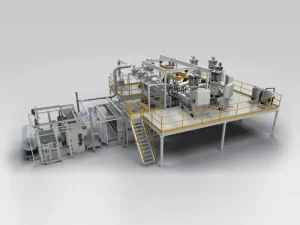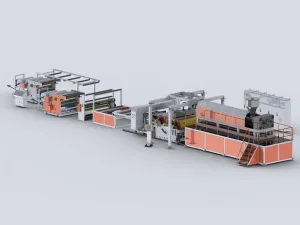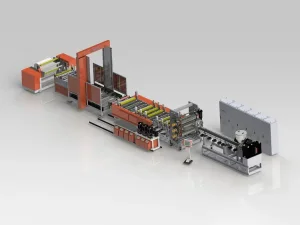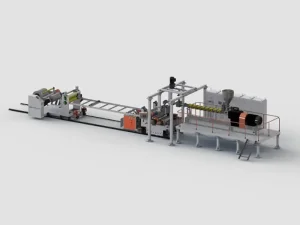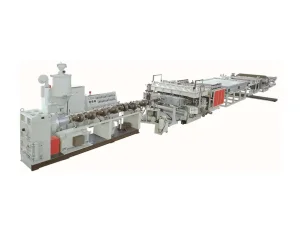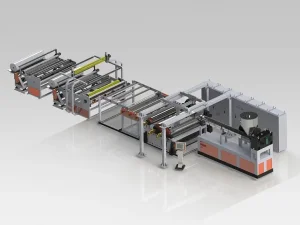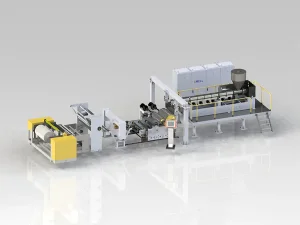
Best Multilayer GPPS Sheet Extrusion Lines: Top Factories & Engineering Products

Deciphering the Paradigm Shift in High-Performance Co-Extrusion Engineering, Global Procurement Trends, and Industry 4.0 Smart Manufacturing Integration.

Whitepaper: Industrial Dynamics of GPPS Multilayer Co-Extrusion

An in-depth analysis of polymer processing, global supply chain optimization, and technological trajectories for high-performance GPPS systems.

1. Technological Evolution: Multi-Layer Co-Extrusion Dynamics of GPPS

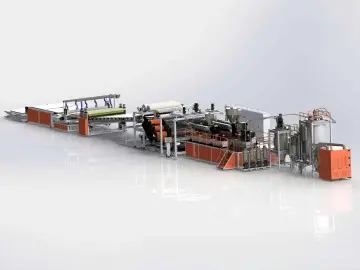
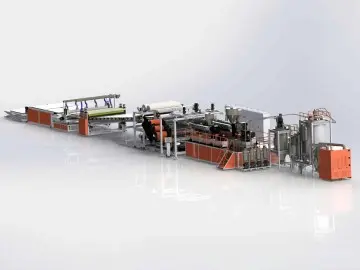
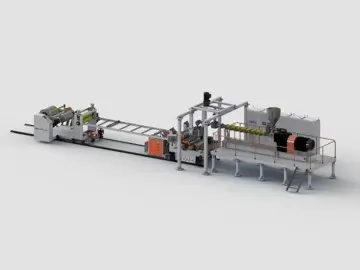
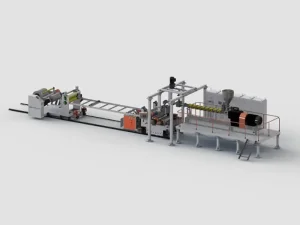
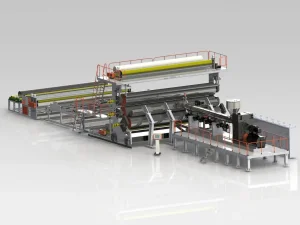
General Purpose Polystyrene (GPPS) is celebrated for its outstanding glass-like transparency, structural rigidity, and ease of processing. However, as packaging and optical applications become more demanding, single-layer GPPS sheets are frequently limited by brittleness and a lack of barrier properties. The integration of multilayer co-extrusion technology has redefined these limits. By layering GPPS with impact-modified polymers (such as HIPS) or barrier layers, manufacturers can create structural sheet materials that optimize cost, mechanical stability, and appearance.

In modern multilayer systems, co-extrusion feedblocks divide the polymer melt streams, distributing them with extreme precision into A/B/A, A/B/C/B/A, or specialized asymmetrical configurations. Maintaining balanced melt rheology is essential; variations in viscosity or temperature between co-extruded layers can lead to interfacial instability and uneven thickness. Advanced systems minimize these issues using computer-controlled die lips and feedblock geometry, which dynamically adjust raw material flow to prevent internal shearing.

Key Technical Highlight: Co-Extrusion Feedblock Rheology

Achieving pristine optical clarity and high thickness tolerance requires managing the shear rate inside the T-die. Our custom GPPS extrusion machines use a coat-hanger layout designed for the rheological behavior of general-purpose polystyrene. This layout ensures uniform residence time across the entire die width, preventing degradation and eliminating optical distortions like gel spots or fish-eyes.

2. Global Procurement Trends: Operational Efficiency and Sustainable Yields

Global purchasing criteria are shifting from initial capital expenditure (CAPEX) to overall operational efficiency (OPEX) and sustainability. When evaluating high-throughput extrusion equipment, procurement managers focus closely on three key metrics:

  • Specific Energy Consumption (SEC): Extrusion lines consume significant energy. High-efficiency systems address this with water-cooled AC motors, infrared ceramic heaters, and optimized screw designs, which can lower energy consumption by 15% to 25%.
  • Scrap Rate Reduction: Advanced thickness control systems with closed-loop beta-ray or X-ray sensors dynamically adjust the die bolt profile, keeping sheet variation within ±1% and drastically reducing start-up scrap.
  • Post-Consumer Recycle (PCR) Integration: The circular economy demands machinery that can process high volumes of recycled material without sacrificing the mechanical integrity of the final sheet.
25%
Energy Reduction
±1%
Thickness Tolerance
80%
Recycle Layer Input
<2hr
Quick Die Changeover

3. China Industry 4.0: Supply Chain Resilience & Manufacturing Efficiency

Chinese manufacturing has evolved far beyond basic cost advantages. Today, it stands at the forefront of Smart Factory Integration (Industry 4.0), defined by highly integrated supply chains, automated production lines, and rapid prototyping capabilities. The Yangtze and Pearl River Deltas host extensive supply chains for high-precision components—ranging from specialty bimetallic barrels to advanced PLC control systems.

Gwell Machinery leverages this robust environment to engineer high-capacity extrusion lines that balance build quality with cost efficiency. Our production facilities use smart CNC machining centers to ensure the precision alignment of every extruder component. This precise alignment reduces vibration and wear, extending the operating life of the equipment and minimizing downtime for our global customers.

4. Global vs. Local: Specialized Applications & Scenarios

Depending on the target market, multilayer GPPS and allied sheets must meet distinct performance criteria:

💡
Optical Diffusers & Displays
Used widely in TV backlights and LED fixtures. These sheets require precise light diffusion, high light transmission, and minimal optical anisotropy. Our GPPS Diffuser plate lines are designed specifically to meet these demanding optical standards.
📦
Eco-friendly Blister Packaging
For thermoformed packaging, GPPS is co-extruded with HIPS to balance rigidity with fracture toughness. Integrated inline silicone coating systems ensure smooth release during high-speed thermoforming.
🏗️
Construction & Glazing
For partition walls and interior glazing, GPPS sheets are treated with co-extruded UV-blocking layers. This protection preserves clarity and prevents yellowing or cracking under sunlight.

Industrial Production Line Classifications

Our complete machinery lineup is organized by end-use application, providing high-speed manufacturing solutions for cast film, board, sheet, and solar encapsulation materials.
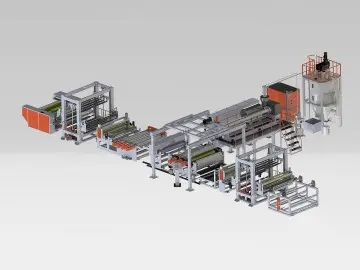
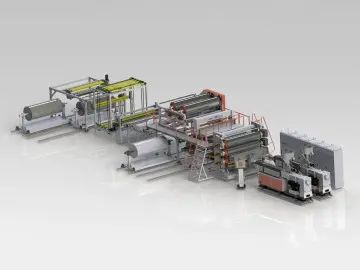
Cast Film Extrusion Line

Board Extrusion Line

Sheet Extrusion Line

Solar Extrusion Line

ASA Cast Film Line

ASA Cast Film Extrusion Line

High-weatherability outer cap-stock film extrusion system for co-extruded construction profiles.

TPU Laminating Film Line

TPU Laminating Film Line

Engineered for hot-melt lamination, fabric coating, and heavy-duty protective applications.

PC Board Line

PC Transparent Board Line

Designed for optical clarity, serving architectural glazing and high-impact security applications.

GPPS Diffuser Plate Machine

GPPS Diffuser Plate Machine

Specialized co-extrusion system engineered to produce light-diffusing plates for LED backlights.

PCTG Sheet Extrusion Line

PCTG Sheet Extrusion Line

High-durability copolyester extrusion designed for impact-resistant medical and food-grade packaging.

PLA Degradable Sheet Line

PLA Degradable Sheet Line

Eco-friendly compostable sheet extrusion system supporting circular green packaging initiatives.

SGP Solar Film Extrusion

SGP Solar Film Extrusion Line

Specifically designed for high-strength PV solar module encapsulation and architectural laminated safety glass.

EVA POE Solar Film Line

EVA POE Solar Film Line

Advanced co-extrusion technology designed for manufacturing high-quality solar encapsulation film.

About Gwell Machinery

CHINA GWELL MACHINERY CO., LTD.

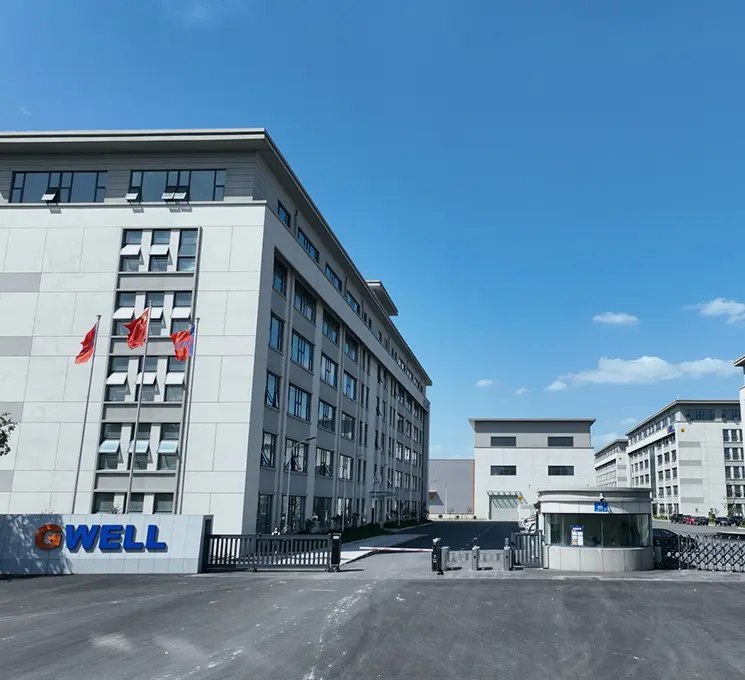
China GWELL Machinery is a high-tech enterprise dedicating to the manufacture of plastic extrusion lines for Film, Sheet and Profile. Relying on the powerful technology and equipment of group and innovative spirit , GWELL commits to the development of high-tech products and international market. “Expertise creates customers’ values” has always been the company’s operating philosophy.
3
Production Bases
866k
m² Area
500
Employees
1000+
Annual Lines
Gwell Production Base

Key Structural Advantages

Why international plastic manufacturers rely on Gwell as their long-term extrusion machinery partner.

⚙️
Modern Tech
Developed with universities and research institutes.
🛠️
End-to-End Service
Comprehensive commissioning and remote diagnostic support.
🏭
Strong Capacity
Three bases with over 1,000 advanced extrusion lines yearly.
🌐
Global Market
Exported to Europe, North America, and Southeast Asia.
👥
Expert Team
Over 500 dedicated employees, including 100+ design engineers.

Certified Production Excellence

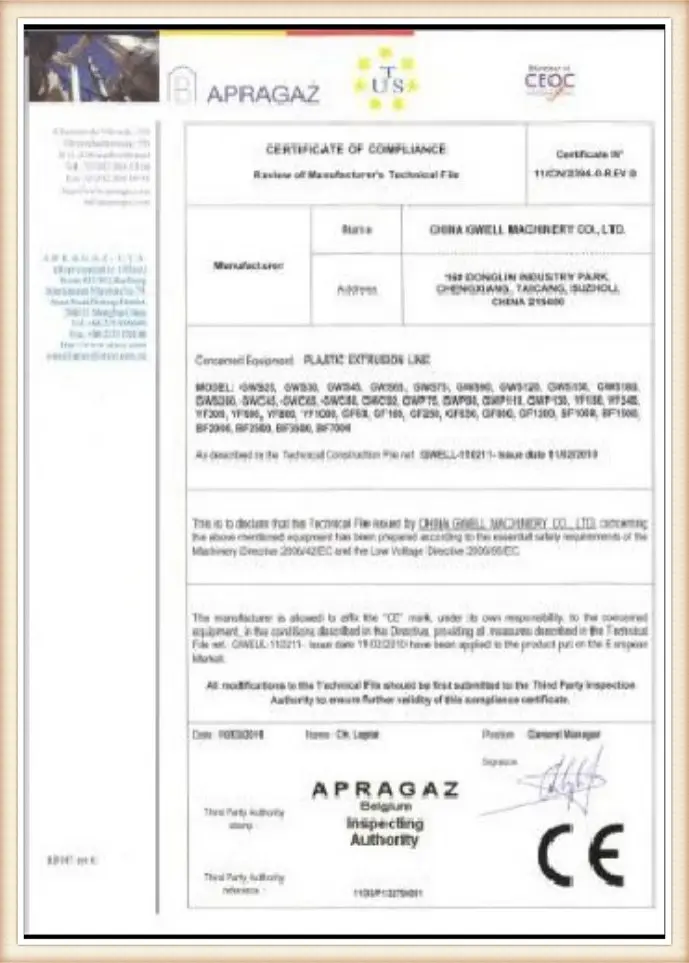
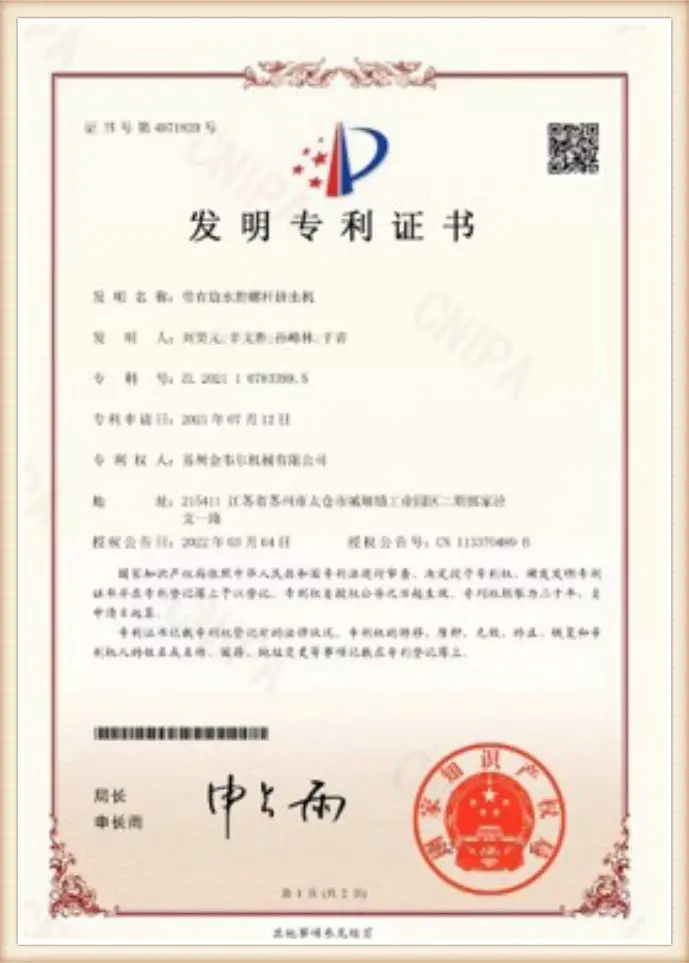
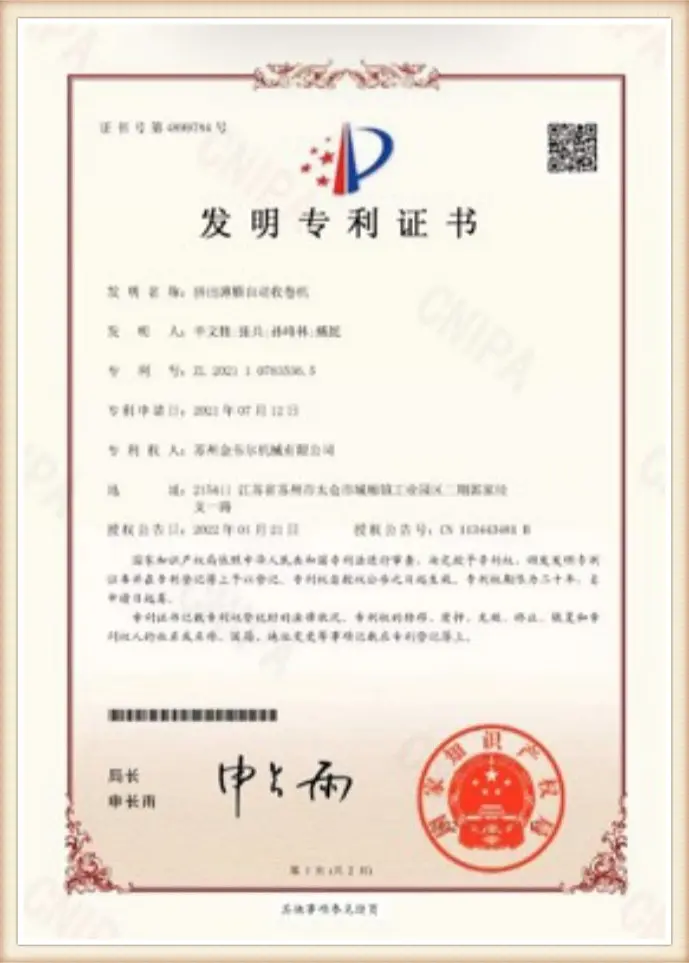
Gwell extrusion equipment complies with international quality, safety, and operational standards.
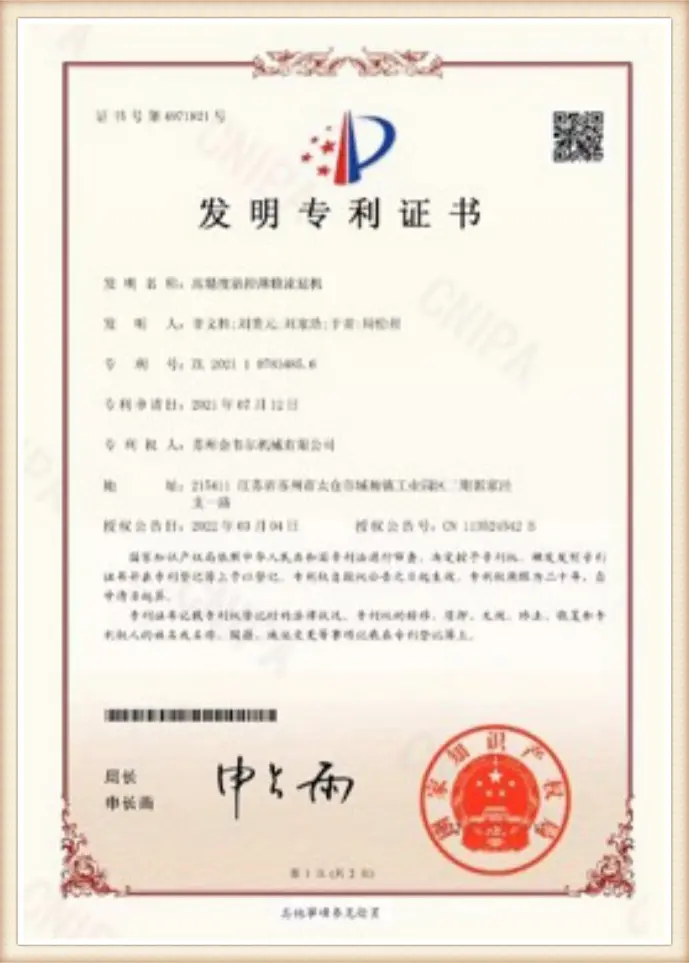
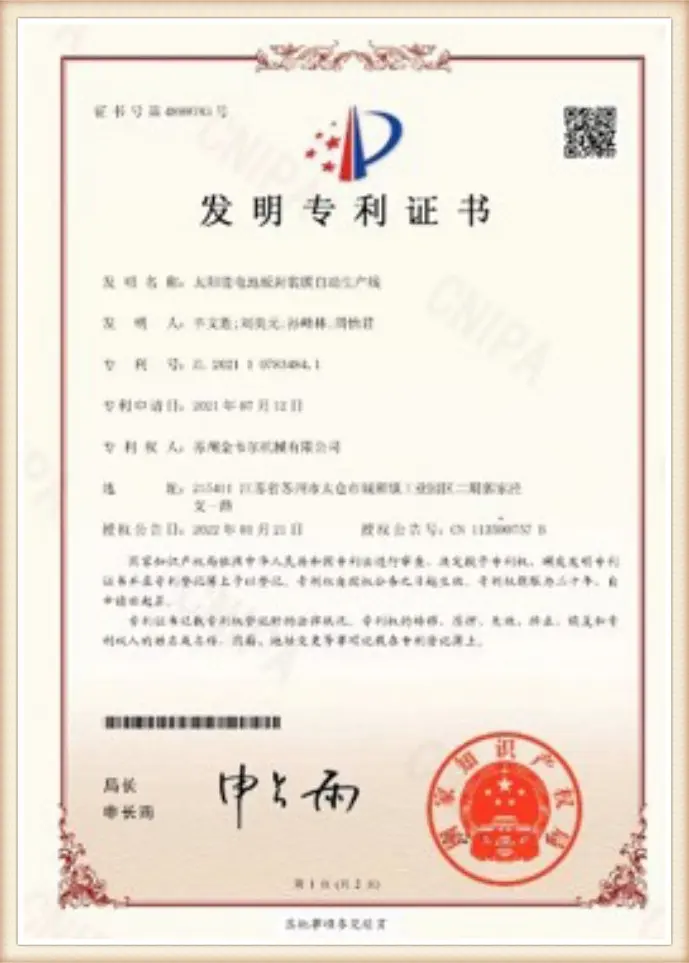
Certification 1
Certification 2
Certification 3
Certification 4
Certification 5

Latest Industrial Extrusion Insights

Stay informed on our new products, trade exhibitions, and advancements in co-extrusion technology.
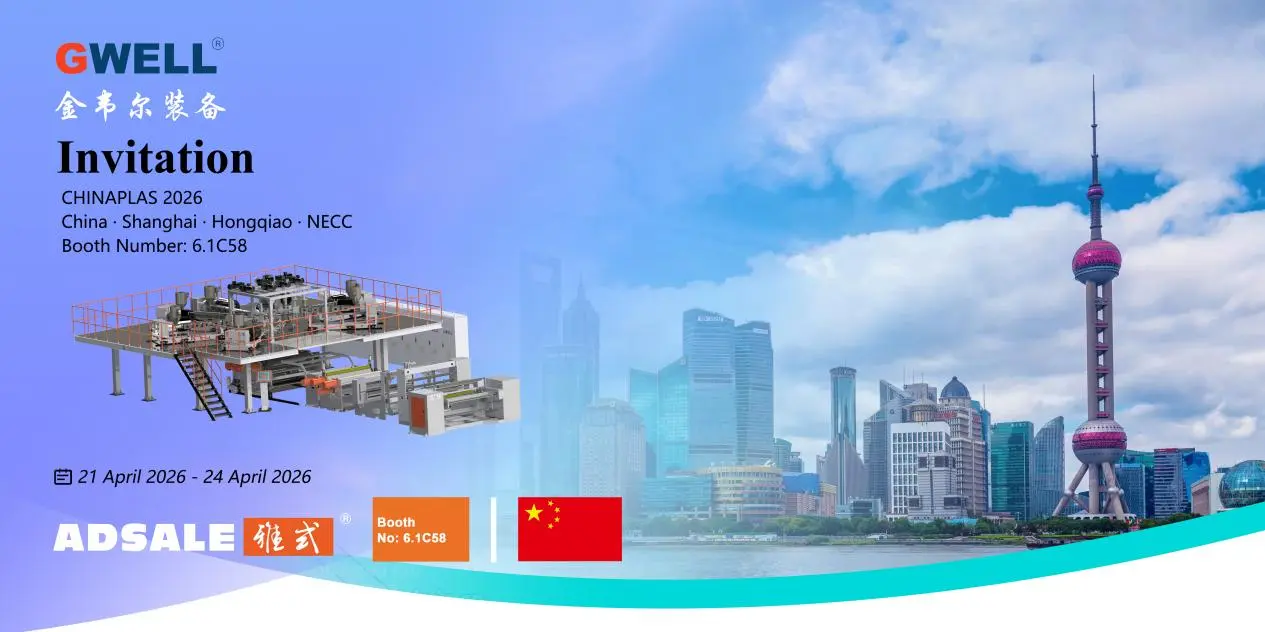
China Gwell Showcase
Apr 14, 2026

CHINA GWELL to Showcase Cutting-Edge Extrusion Systems

Gwell will present its latest multi-layer co-extrusion technologies and digital controls for smart factories at the upcoming industrial expo.

Read Article
POE Leather Line
Feb 11, 2026

Developing POE Synthetic Leather Extrusion Lines

Gwell introduces a solvent-free extrusion line for POE synthetic leather, targeting automotive interiors and consumer goods.

Read Article
PVB Wedge Film Line
Jun 25, 2025

High-Precision PVB Wedge-Shaped Film Systems

Gwell's PVB wedge-shaped film production line balances high precision, speed, and material compatibility for head-up displays (HUD).

Read Article

Expert Q&A: Multilayer GPPS Extrusion Technology

Detailed engineering insights to support technical sourcing, system configurations, and processing performance.

Q1: How does a multilayer co-extrusion feedblock maintain uniform layer thickness in GPPS sheet production?
Multilayer co-extrusion relies on high-precision feedblock geometry and precise rheological control. Polystyrene resins must enter the feedblock at temperatures that balance their viscosities. Advanced systems use adjustable internal flow vanes that fine-tune polymer distribution prior to the die. Real-time monitoring allows operators to keep layer variation within narrow limits, preventing flow instability and edge encapsulation issues.
Q2: Why is bimetallic screw construction essential for processing general-purpose polystyrene?
Although GPPS is not highly corrosive, the processing of recycled scrap, additives, and mineral masterbatches can cause significant abrasive wear. Bimetallic screws feature a welded wear-resistant alloy coating that preserves screw flight profile. This design ensures consistent pressure development, prevents melt reflux, and extends the service life of the screw and barrel assembly.
Q3: What role does the downstream calender roll stack play in GPPS optical sheet quality?
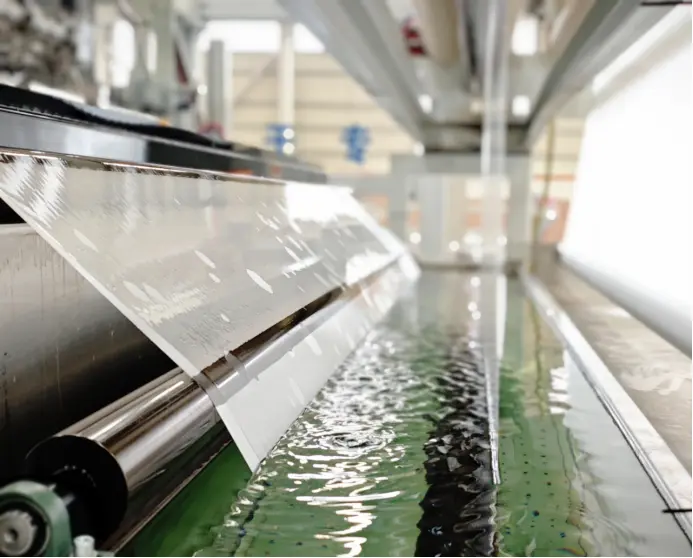
The three-roll calender stack regulates surface quality, cooling rate, and dimensional stability. To prevent internal stress in GPPS, roll temperatures must be controlled using pressurized water tempering systems. High-precision roller surface grinding ensures the sheets remain free from waviness, providing the flat, distortion-free surface required for optical and display applications.
Q4: Can Gwell extrusion lines process biodegradable polymers like PLA on the same machine?
Yes, our systems are highly adaptable. However, because PLA is highly hygroscopic and shear-sensitive, it requires specialized crystallizing dryers and a low-shear screw profile. We offer modular screw designs and dual-purpose venting ports, allowing processors to switch between GPPS, HIPS, and PLA while maintaining optimal throughput.
Q5: How does the automated closed-loop thickness gauge control waste during start-ups?
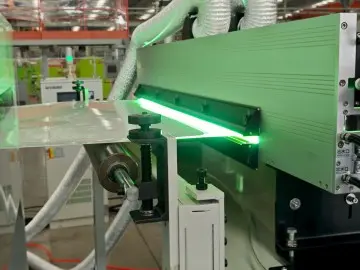
The closed-loop thickness gauge, positioned downstream before the winder, continually scans the sheet. It sends immediate thickness profile data back to the T-die controller. Thermal expansion bolts in the die adjust the lip gap automatically to correct any thickness deviations, bringing the sheet to target specifications within minutes and reducing start-up scrap.

Global Technology Partnerships

We work alongside world-leading instrumentation, chemical, and component suppliers to ensure high quality and long-term reliability.

Partner Logo 1
Partner Logo 2
Partner Logo 3
Partner Logo 4
Partner Logo 5

Submit a Request for Technical Proposal

Speak with our senior design engineers to customize your extrusion line layout, check roll configurations, and discuss pricing parameters.

Send Inquiry Now